Guidelines


Submission Guidelines: Send 1-3 unpublished poems in the body of an email (NO ATTACHMENTS) to nvneditor[at]gmail.com. No simultaneous submissions. Use "Verse News Submission" as the subject line. Send a brief bio. No payment. Authors retain all rights after 1st-time appearance here. Scroll down the right sidebar for the fine print.
Showing posts with label abortion limitation. Show all posts

Wednesday, December 13, 2023

SHEEP-KILLING DOG

by Michelle DeRose


Texas AG Ken Paxton steps in to make a woman’s life hell. Photo credit: DonkeyHotey / WhoWhatWhy (CC BY-SA 2.0)


Big hats welcome but not a Texas uterus
they won’t probe, tell you how
you can wear it in public,
a watched portal to the baby chute
they need it to be. I guess
to make future bullseyes? Because
there’s also not a barrel
they will look down, keep out
of campuses. In Texas
all depends on the tunnel. 
Barrels determine themselves but canals
are hyper-policed. At the end of every story
is a woman bleeding, empty, and an Attorney
General smug and whole as he always was.


Michelle DeRose hopes she can retire from teaching at the college level before she must relive a school shooting, and she is grateful she doesn't live in Texas. She teaches creative writing and African American, Irish, and world literature at Aquinas College in Grand Rapids, Michigan.

Tuesday, April 14, 2020

SORRY, WE'RE CLOSED

A Collection of Shorts on Close Confidants and Secrets Shared in Public Spaces Now Shuttered as Civil Liberties and Lives Lived in Previously Precarious Situations Ripe with Bitter Herbs that Burn Suddenly Collapse in Ruin. Coffee Shops Close. Close Confidants Cancel. Friend. Help. 

by Jen Schneider

Abortion rights advocates asked the Supreme Court on Saturday night to overturn part of the Texas governor’s sweeping ban on abortions during the coronavirus pandemic—the first of similar restrictions to reach the high court. Texas and several Republican-led states that have long led the legal battle to restrict abortion have sought to cut off access as the health crisis escalated in recent weeks, contending the procedure would drain medical resources. —Politico, April 11, 2020. Graphic: a frame from the comic strip “What We Do In a Crisis” by JB Brager at The Nib.


Three weeks late…

Can you talk? It’s urgent. 
Sure, let’s meet at 2. The usual spot.
Thank you, friend.

Secrets shared around tiny, cluttered wood tables. Laden with initials
etched as markers of time and trust, steaming mugs of cocoa—decaf, 
of course,—circular plates of rectangular toast, and square pats of butter. 
Nearby, glass cases protect cinnamon glazed pastries, petit-fours in pale
pinks, greens, and blues, and everything bagels with smears of chive
and onion cream cheese. Origami folded napkins stacked high. Ready.
All perfectly posed and poised for patrons, confidants, and shared secrets.

Public spaces 
pull necessary truths 
outward in shared spaces 
built of security and safety.

Steam soaked air shields salt-soaked tears and paves a path for pure 
talk. Honest voices pour over real options. Plans. Denim clad legs locked 
to silence shaking knees. Brown eyes close quickly as pent up breath 
releases pressing Truth: I need help. Now. A weekend away, one meant 
to heal wounds and smooth scars, turned soft tissue into hard calluses. 
Weak spots and weaknesses for lost laughter and sentimental talk, yield 
decisions with consequences. My regular clock stopped ticking. New life beats.

Now I know. I am in trouble. With bills already unpaid and tempers
that flare daily, I need help. A life in fear of daily taunts, weekly affronts,
and constant slights is a life mine own but not one I choose for the life 
that brews within when the capacity without is full.

As words whimper and fade, secret codes speak clearly. Pointer finger 
taps twice for Yes. Ring finger taps once for No.

Code conveyed on coffee-stained napkins as speakers stream classic rock 
tunes and patron chatter fuels and fires blankets that shield fresh wounds.

Have you told him? Yes. 
What did he say? No.
Are you sure? Yes.
I’ll go with you. 
Thank you, friend.

Three weeks later...

Can you meet? Please. 
I can’t. Nor can you. 
Are you safe? Can we meet online?
Let’s try. Thank you, friend.

Secrets mouthed over cluttered linoleum tabletop piled high with envelopes 
hosting bills overdue and pot-filled sink backdrops. Dog howls and television 
talk filter through climate-controlled air. Shadows loom and linger in adjacent 
room out of view—beyond reach and touch.

Private spaces 
push necessary truths 
inward in shared spaces 
ripe of insecurity and fear

Fingers fiddle chipped coffee cup—a gift from years prior—as laptop screens 
twitch and glitch. Friendly face emerges in pixelated view. Fingers lock and unlock 
in solitary fashion. Seek fodder, find fear. Newfound fears simmer like the skinned potatoes that drop, then boil, on the electric stove. Naked. Alone. Words mouthed 
in hushed whispers. When words endanger, secret codes speak clearly. 
Right eye blinks twice for Yes. Once for No

Procedures deemed no longer urgent as domains of urgency morph 
into spheres set for others to determine. Appointments stalled then paused.
Now ceased. Fears of drained medical resources drain safety nets—and sanity. 
Office shuttered. Governor said No.

Wait. What? Say that again. I can’t hear you.
Drained safety. Drained sanity. Don’t know what else to do.

Messages flick across digital screens. Internet connections also unstable. 
Now lost. Faces freeze. Blink. Blip. Disappear. Shadows from rooms 
adjacent loom larger. Closer. Close. Here. 

Three o’clock. Today.

As thoughts and lives beat on—consumed with an unplanned and uncertain 
future—the usual turns extraordinary and days marked by patterns etched 
in previously fine-turned moves and moods—turn unpredictable, close 
confidants and coffee shop camaraderie turn essential though forbidden.

Civil liberties in question. 
Threads fray as ropes tighten. 
Throats, Bellies, Hearts ache. Help.


Jen Schneider is an educator, attorney, and writer. She lives, writes, and works in small spaces throughout Philadelphia. Recent work appears in The Popular Culture Studies Journal, Bat City Review, Zingara Poetry Review, Streetlight Magazine, Chaleur Magazine, LSE Review of Books, and other literary and scholarly journals. 

Wednesday, June 12, 2019

SANCTIFIED

by George Held


Cartoon by Mark Taylor, The Commoner Call, May 27, 2019


“In Alabama—where lawmakers banned abortion for rape victims—rapists’ parental rights are protected: Alabama is one of two states with no statute terminating parental rights for a person found to have conceived the child by rape or incest . . .” The Washington Post, June 9, 2019


Thank God our holy sperm
has been sanctified
by Christian Alabama law.

That little wench of a niece
better see the light
and let me raise our boy,

with or without her.
So what if she conceived
after a little roll in the hay?

At first she had her way
in court—calling me “rapist”—
but now the law has stepped

in and declared me a proper
parent, confirmed my right
to father my boy,

to teach him to shoot and hunt
and how to treat the ladies
so he’ll know the law

is on his side. Thank God.
Our sperm has been sanctified
by Christian Alabama law.


George Held, a ten-time Pushcart nominee, is a frequent contributor to TheNewVerse.News. His new collection of poems is Second Sight (Poets Wear Prada, 2019).

Sunday, June 09, 2019

A PRAYER FROM LOUISIANA

by Gail White


God bless the oysters
I can eat alive
because they have no heartbeat.

God bless the feral cats
who have no control
over their fertility,
and the women who had it once
but lost it.

God bless the migrant children
who die in US custody
whose lives don’t matter
because they are post-unborn.

God bless the deer
To the hunters,
The fish to the net,
The faithful to their homes,
The children to their mothers’ arms.


Gail White is a formalist poet with work in many journals, including Measure, Light, First Things, and Hudson Review. She is a two-time winner of the Howard Nemerov Sonnet Award. Her latest book Catechism was published in 2016 by White Violet Press.

Thursday, May 30, 2019

NIGHTMARE IN UTAH

by Dawn Corrigan


A sign at an abortion-rights rally in Miami on Thursday. (Lynne Sladky/AP via The Washington Post, May 26, 2019


A particular kind of dystopia has arrived, and we’re beginning to see its fuzzy outlines. It would involve a whisper network on social media. It would entail announcing “Off to go see Navy Pier!” and then going instead to an abortion clinic. Thousands of women would have to learn—or remember—how this all worked before 1973, when desperate women also had occasion to visit their cousins, old friends, and aunties. —Monica Hesse, The Washington Post, May 26, 2019


Last week they closed the border
and ever since we've been on the run,
wearing black clothes, travelling at night,
food and water in packs on our backs.
We've arrived at the state line and stare
longingly into Nevada. The sentries
are scattered but they have a clear shot
at us here. We're not far from the railway.
I've heard they're stopping the passenger trains
but maybe we could hide in a freighter.
Given time and a lot of luck we might wake up
somewhere new, someplace with more rights
and bodily autonomy than we're used to.


Dawn Corrigan works in the affordable housing industry in Pensacola, FL and serves as assistant editor at Otis Nebula.

Saturday, May 25, 2019

REAPED

by Alfred Fournier


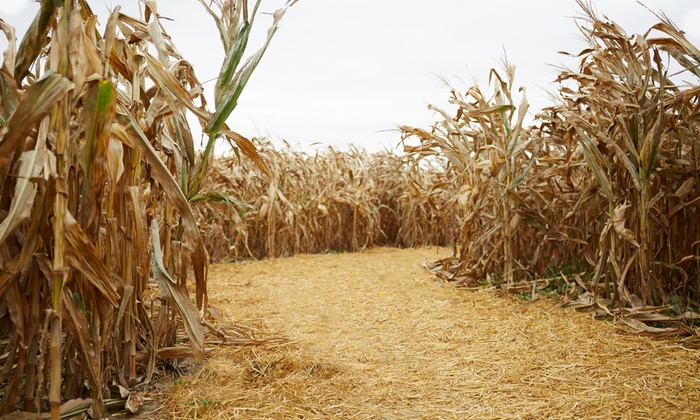
a harvest of unwanted
children
rustle in corn leaves
dry with Alabama dust

songless & ravaged
forced
into being     weakly lean
in blackbird wind

somewhere a bloated fish
of a man grins               his
unwelcomed
white seed swims


Alfred Fournier resides in Phoenix, Arizona. He is an entomologist and a graduate of Purdue and George Washington Universities. His work is forthcoming in Cathexis Northwest Press.

Sunday, May 12, 2019

ABORTION SONNET

by Allison Blevins


In 1973, Ms. magazine published a haunting photo of a woman named Gerri Santoro, who'd died of a back-alley abortion. At the time, no one could have predicted what an impact it would have on the pro-choice movement. —Vice, October 26, 2016

After “Police Photo, Norwich Connecticut, 1964”


I want us all to imagine her dead body rising, jerking
and mechanical, the lurch and halt and sputter of a carnival ride,
how The Whip and Wipeout and Scrambler
move, attempt to start over—put themselves back together
only to be taken, pulled to pieces once again.  I want us to feel
her suffering.  Not how it felt in her
body.  That is unimaginable.  That should remain unspoken.  Let us live
in the suffering of the body clambering back
to feet, body heaving up—empty now.  Let the body be ready to fight.
I want that body like Judith—searching for heads
of men who’d bring all of us
naked to our knees, who’d photograph us
prone and paling from the slow drain.  Let us imagine
all the bodies wandering forward—swords in hand.


Allison Blevins received her MFA at Queens University of Charlotte and is a Lecturer for the Women's Studies Program at Pittsburg State University and the Department of English and Philosophy at Missouri Southern State University. Her work has appeared in such journals as Mid-American Review, the minnesota review, Nimrod International Journal, Sinister Wisdom, and Josephine Quarterly. She is the author of the chapbooks Letters to Joan (Lithic Press, 2019) and A Season for Speaking (Seven Kitchens Press, 2019), part of the Robin Becker Series. Her chapbook Susurration (Blue Lyra Press) is forthcoming.  She lives in Missouri with her wife and three children where she co-organizes the Downtown Poetry reading series and is Editor-in-Chief of Harbor Review.