Guidelines


Submission Guidelines: Send 1-3 unpublished poems in the body of an email (NO ATTACHMENTS) to nvneditor[at]gmail.com. No simultaneous submissions. Use "Verse News Submission" as the subject line. Send a brief bio. No payment. Authors retain all rights after 1st-time appearance here. Scroll down the right sidebar for the fine print.
Showing posts with label escape. Show all posts

Saturday, December 13, 2025

SEASON OF THE WITCH, 2025

by Laurie Rosen


Usha Vance official portrait


The straw brush of my fireplace broom broke free. I refuse 

to throw it away, someone must surely need it. I could refit it, 

attach it to a long branch. I dream of bringing it to Usha Vance, 


insisting she take the broomstick and make for a speedy escape. 

I assure her that sisters and aunties will rise to guide her and her 

children to freedom. 


I might be wrong in offering Usha more protection than I do 

Melania, who seems ruthless, caring only for herself, money 


and comfort. Who can forget: “I really don’t care, do you?”

Usha stays quiet, appears surprised by where she’s been taken 

hostage––her eyes full of terror like a deer in my meadow, 


during hunting season, who looks up from her grazing, realizes 

I’m staring at her. Nudging her fawn, they run for safety. (Though 

many men would hurt them, I never would). 


When they met, Usha was an attorney, a democrat, Vance was 

someone else too. But he’s been remaking himself from the 


beginning. He’s a master of reinvention, like Woody Allen’s Zelig 

or F. Scott Fitzgerald’s Gatsby, altering his name and persona 

again and again. I’m guessing he promised Usha that with him, she 


could have it all, career, kids, an opinion. Instead bit by bit, with each

change, he steals her voice then her power, leaving her unrecognizable 

even to herself.  


Usha, I say, save yourself, your children too. Take the broom, and 

fly, fly, fly away. 


Laurie Rosen is a lifelong New Englander. Her poetry has appeared in One Art: a journal of poetry, Gyroscope Review, Oddball Magazine, The New Verse News, The Inquisitive Eater: New School Food, Zig Zag Lit Mag, Minyan Magazine, and elsewhere. Laurie was nominated for a 2025 Pushcart Prize.

Wednesday, October 22, 2025

THE GREAT LOUVRE CAPER

by James Schwartz


I map the security cameras 
Locked windows 
& locations 

Tap
Tap 
Tap 
I disable a camera 

My Amish father 
Is behind me
In hot pursuit 

Tap
Tap


I snare 
The painting
Cubist.

Tap
Tap
Tap


My Amish father
Rolls the dice
Still behind me.

Tap
Tap
The window is locked.

Tap
Tap
Tap

On a winter afternoon
We enjoy the board game 
Clue: The Great Museum Caper.

Tap
Tap
Tap

A teenage memory 
Forgotten until headlines 
Of the Great Louvre Caper.

Tap
Tap
I make my escape.


James Schwartz is a Detroit based poet and author of various poetry collections including The Literary Party: Growing Up Gay and Amish in America (2011) and most recently Big Island Beatnik: Poetry & Photography from the Lower East Rift Zone (Alien Buddha Press, 2025). queeraspoetry.bsky.social 

Saturday, June 21, 2025

WEDDING IN ISRAEL

by Jacqueline Coleman-Fried


The green cotton nightgown—clean, 

stuffed next to sweaty 

T-shirts—is going home.

I hope not to hear again

the phone alert go off

in my gut, a morbid tuning fork.

I thank the cousins—sojourners 

with me to this fête—who,

bent over phones, found 

the fixer, the vans, the flights.

Thank the lover back home—pounding

head, twisted stomach—who pleaded,

Keep going 

On the road to Amman, another siren.

We enter a concrete capsule

by a gas station.

Close the door.


Author’s note: Recently I traveled to Israel for a family wedding. Just hours after the last dance, Israel and Iran began attacking each other. Israel’s airport closed, trapping me, and the whole country, under barrages of missiles and drones. On the road to Jordan, and a flight out, I endured one final air raid siren and shelter. Even escaping, there was no escape.


Jacqueline Coleman-Fried is a poet living in Tuckahoe, NY. Her work has appeared in The New Verse News, Sheila-Na-Gig, Nixes Mate, and Streetlight Magazine.

Sunday, August 11, 2024

BOWSER THE RUNAWAY TORTOISE

by Cecil Morris


Slow and steady runaway tortoise crosses highway before Portland police rescue —Oregon Public Broadcasting. August 2, 2024


This summer’s heat beat his hard shell
like a hammer on an anvil,
and even the dandelions
were discouraged onto wilting,
so he decided he had to go
like OJ in his white Bronco,
slow-mo escape through open gate.
He thought he’d find a place both lush
and cool, the greens still succulent,
the dandelions crisp delight.
He thought Cool Hand Luke shaking it.
He hummed slow tortoise on the run,
felt the sun like cymbals on him,
heard passing cars as electric
guitars. In two days gone, he went
a mile and crossed the 205.
This was his flight, his fancy free,

til he was caught. Should we say found?
Now Bowser’s back in the yard,
a new tracker on his arm,
and wishing like all of us
to taste freedom one more time.


Cecil Morris, a retired high school English teacher, has poems appearing or forthcoming in Ekphrastic Review, Hole in the Head Review, The New Verse News, Rust + Moth, Sugar House Review, Willawaw Journal, and elsewhere. He and his patient partner, the mother of their children, divide their year between the cool Oregon coast and California’s relatively dry Central Valley.

Sunday, April 07, 2024

TO THE TOTAL ECLIPSE

by Bill Meissner


Though we don’t know exactly why,

we travel from afar just to see it. 

We’ll journey a hundred miles. A thousand. Ten


thousand or more. For some reason we don’t understand,

we want to turn our heads

toward the sun and see it slowly disappear, the same way

our hunched Neanderthal ancestors did, when they noticed  

a sudden strange moment of night just outside the mouth of the cave.


But we are modern, and civilized. We drive SUVs to Texas or Maine,

find the exact location with our GPS.

In case of a traffic jam, we pack the car with

rations and necessities: water, snacks, and cell phones.


We realize it will not be an easy journey.   

It will be almost like a war zone—

those four or five million people

all flocking to the narrow path  

where the eclipse

makes its total promise to the sky.


We don’t know exactly why, but something calls us to leave

the bright landscape where we live

and go there, to the land where the sun dims, and, eventually,

surrounds itself

with a thin gold wedding ring.


We’re drawn to that place, a place where we can finally put

our cell phones down, tilt our faces toward the sky,

hold hands with those we love,

and be primitive again, and full of something we don’t understand,

as we escape the world

for those four minutes and twenty-one seconds

of frightening, beautiful darkness.


Bill Meissner is the author of 12 books, including five collections of poetry and three novels. His most recent book of poems is The Mapmaker’s Dream (Finishing Line Press). His new carnival-themed novel The Wonders of the Little World features a fortune-teller mother who, with her precocious 11-year-old daughter, goes on a search for her tightrope walker husbandHis previous novel about the effects of the Vietnam War on a family in a small Midwest town is Summer of Rain, Summer of Fire.

Monday, September 11, 2023

ESCAPE

by Paul Hostovsky


He crab-walked up and out of there
and I can’t help admiring him a little for that

especially since they keep replaying it on TV 
and thousands of cops are combing Pennsylvania 

and they haven’t found him yet. And I can’t help
rooting for him a little as though he were

the underdog, and not a killer who stabbed
his girlfriend to death in front of her children.

My God. They will never get over that. Have you
ever found yourself rooting for the wrong 

side? Crab-walking is moving sort of sideways
and diagonally in an awkward, furtive manner. 

Please pass the popcorn. I wonder if they’ll ever
find him. Voyeurism is sort of furtively taking

pleasure in disaster, catastrophe, pain, and without
ever feeling the pain, or ever getting caught.


Paul Hostovsky's poems have won a Pushcart Prize, two Best of the Net Awards, the FutureCycle Poetry Book Prize, and have been featured on Poetry Daily, Verse Daily, The Writer's Almanac, and the Best American Poetry blog.

Friday, August 25, 2023

SILENCE AFTER THE MAUI FIRE

by Christian Hanz Lozada


I deconstruct the “Santa’s Village” Lego set
and the house has been quiet all day
 
while Hawaiian Uncle with stage 4 lungs watches the news
and the house has been quiet all day
 
the county asks family of the missing to submit DNA to match ashen remains
and the house has been quiet all day
 
after the fire Hawaiian Uncle escaped by sleeping on the shore
and the house has been quiet all day
 
and by crossing an ocean and by needing his niece’s husband to clean his ass
and the house has been quiet all day
 
long enough for health insurance ones and zeroes to change Hawaii to America
and the house has been quiet all day


Christian Hanz Lozada (he/him) is the son of an immigrant Filipino and a descendent of the Southern Confederacy. He knows the shape of hope and exclusion. He authored the poetry collection He’s a Color, Until He’s Not (2023) and co-authored Leave with More Than You Came With (2019). His poems have appeared in Hawaii Pacific Review (Pushcart Nominee), Bamboo Ridge Press, 34 Orchard, Mud Season Review, among others. Christian has featured at the Autry Museum and Beyond Baroque. He lives in San Pedro, CA and uses his MFA to teach his neighbors and their kids at Los Angeles Harbor College.

Wednesday, April 20, 2022

NADEZHDA OF KRAMATORSK

by Moira Magneson


The Kramatorsk railway station was hit by Russian missiles at about 10:30 local time (07:30 GMT) on Friday, April 8. Ukraine’s governor of Donetsk, Pavlo Kyrylenko, has said the death toll has risen to 50. That number includes five children… The mayor of Kramatorsk said there were 4,000 people, most of them elderly, women and children, at the station at the time of the attack. —The Guardian, April 9, 2022


Only yesterday Nadezhda had gone with her mom to pick up the red
eyeglasses. Once they'd been fitted, looped around her ears, snugged
to the bridge of her nose, she stepped into the street and the sudden
 
fanfare of the world rose to meet her—linden trees lining the sidewalks,
their green clear song—the sharp corners of buildings, the pebbled earth, the perfect
yellow rings of the blackbird's eyes.
 
Why had no one told her life could look like this?
 
At five a.m. today, glasses on, she was strangely happy packing up her belongings
alongside her mom and sister—a duffel, two suitcases, her sister's stuffed pink
hippo, a carrier for her cat.
 
Their neighbor dropped them off at the train station, promising to see them soon—
 
When the war is over.
 
Hundreds queued on the platform, bundled in down, watchcaps, scarves, and coats, some wearing surgical masks, westward bound to Lviv and safety.
 
Jostling shoulder to shoulder, hip to hip, one long winding caterpillared creature, one breath steaming in the morning air.
 
Nadezhda reveled in the dazzle, color, and length of it, heartswelling, newfound sight
taking in each detail, scrap, and shape, vowed to love everyone, even
the lead-grey pigeons hobbling in the dust.
 
It was half past ten when she heard the cat's mewl and twisting cry.
 
It was half past ten when she saw the birds wheel up into the cobalt sky.
 
Half past ten when she felt the wave of wind shove through her skin.
 
She turned to her sister to say—
 
How do the birds know to rise as one?  
 
The words stilled forever on her tongue.
 
Red eyeglasses spilled on the red stained brick.


Author's note: When I read about the Kramatorsk train station bombing on my phone's news feed, the videos and photographs of people's personal belongings—children's stuffed animals, juice boxes, eyeglasses strewn pell-mell across the blood-stained brick—filled me with horror, driving home all over again the cruelty and pointlessness of war. I wondered what it must be like to be a child living and traveling in wartime. How might a child see the war? How could she possibly make sense of it? This poem—with its imagining of a child I call Nadezhda—emerged from these questions.


Moira Magneson's work has appeared in a variety of journals and anthologies, including Plainsongs, Canary, The Rumpus, The Tule Review, California Fire and Water—a Climate Crisis Anthology, and Halfway to Halfway and Back. Her chapbook He Drank Because was published by Rattlesnake Press.

Sunday, March 20, 2022

LEAVING IRPIN

by Eugene Datta                                           


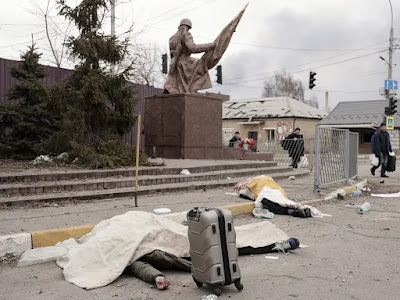
Photograph by Jérôme Sessini / Magnum for The New Yorker, March 7, 2022


He was going away; he was leaving 
Irpin—his suitcase still upright, waiting—
 
a trustful dog next to the master’s body:
the hand that held it, half-open, blood-
 
smeared, the right foot pointing away. 
Who’s the one lying close by? A friend? 
 
A brother? A co-escapee? Half-covered, half 
on the sidewalk, across curbstones painted 
 
yellow and white, plastic waste strewn 
around. What’s on the mind of the soldier 
 
kneeling on the monument? Head bowed
in grief, flag in hand, flowers in front of him, 
 
two bodies behind—it’s much harder, he’s 
learned the hard way, to do good than bad; 
 
so many more ways for things to go wrong 
than right. Three men with bags in hands 
 
leaving now—lucky to be late, to be in time, 
lucky to be leaving. A willow weeping 
 
behind a shattered roof, a slate-gray sky 
crisscrossed by overhead lines—
 
a farewell exhaled in haste covering the body, 
the suitcase still upright, waiting—


Eugene Datta's writing has appeared in The New Verse News, Poetry Bay, the Richmond Review, the Far Eastern Economic Review, the Quarterly Literary Review Singapore, West Coast Line (currently Line), and Poetry Salzburg. He lives and works in Aachen, Germany.

Wednesday, March 09, 2022

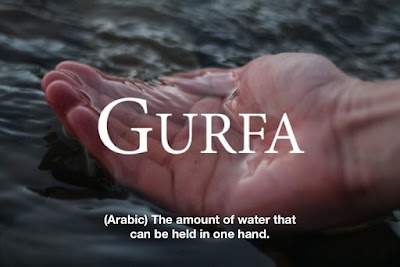
GURFA

by Joan Mazza


From one remaining gallon of water,
precious drops pooled in the palm.
The fighting continues after two long weeks,
the air filled with dust and the stench
of rotting bodies.

Water and electricity have been turned off,
no food and no way to cook any food remaining
in half a house that has been shelled. Next door,
a home on fire, two dogs howling, left behind.
How to escape?

Three children, but only two hands to hold
onto them. Who will carry what they’ll need
wherever they might land? Which way is safe
passage, a welcome waiting from strangers?
How to escape?

Tanks line up for miles, out of gas, ammunition
spent. Phone dead. Each vehicle with a driver,
no more than a trapped boy, his stomach growling,
howling. No water. He cries for his mother, his bed.
How to escape?

Who asked for this war? One man with a few drops
of power he wants to hold. No matter who
suffers, dies. Didn’t other leaders kill millions?
Stalin. Hitler. Pol Pot. He can, too. Confident.
No need to escape.


Joan Mazza has worked as a microbiologist and psychotherapist, and taught workshops  on understanding dreams and nightmares. She is the author of six books, including Dreaming Your Real Self, and her poetry has appeared in Rattle, Valparaiso Poetry Review, Prairie Schooner, Poet Lore, and The Nation. She lives in rural central Virginia.

Friday, March 04, 2022

TO GUINEA, WITH LOVE

by Indran Amirthanayagam


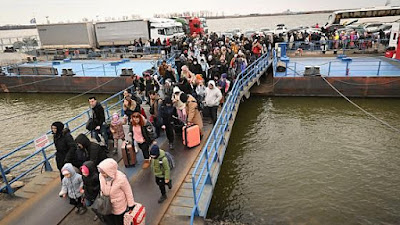
Amid Ukraine Exodus, Reports Emerge of Bias Against Africans —VOA, March 2, 2022


The tradesman from Guinea has lived in Odessa for fourteen years. He is
afraid. In one day all of Ukraine's airports shut down. In one night heavy
bombs fell just ouside of town. They are falling now. Russian soldiers
landed on the beach and are marching towards Kyiv. The horror. The sadness.
It is happening. Shock and awe. Awful. Wrath. Madness. Chernobyl, symbol
of nuclear death has been captured. No reports yet on the state of the concrete.
Where are we going? I listen to the trembling voice of my friend from Guinea.
He says he will watch and wait for another day or two, huddle at home
by his television in the apartment block. If fighting comes to his neighborhood
then he will call Guinea. Ask to be flown out. How many diplomats has
Guinea posted in Ukraine? How many cars and planes? Airports are shut.
But the sea flows by Odessa. He has lived in Odessa for fourteen years.
He knows people with boats. He has sold them housewares. He will
ask them to take him away. Past the battleships. To Guinea.


Indran Amirthanayagam's newest book is Ten Thousand Steps Against the Tyrant (BroadstoneBooks). Recently published is Blue Window (Ventana Azul), translated by Jennifer Rathbun.(Dialogos Books). In 2020, Indran produced a “world" record by publishing three new poetry books written in three languages: The Migrant States (Hanging Loose Press, New York), Sur l'île nostalgique (L’Harmattan, Paris) and Lírica a tiempo (Mesa Redonda, Lima). He writes in English, Spanish, French, Portuguese, Haitian Creole and has twenty poetry books as well as a music album Rankont Dout. He edits The Beltway Poetry Quarterly and helps curate Ablucionistas. He won the Paterson Prize and received fellowships from The Foundation for the Contemporary Arts, New York Foundation for the Arts, US/Mexico Fund For Culture, and the MacDowell Colony. He hosts the Poetry Channel on YouTube.

Friday, February 25, 2022

WINTER BREAK

by Katie Kemple


On my Instagram feed, one family
posts smiling photos from ski slopes,
snowy white backgrounds that match
perfect teeth. Another family travels
to a tropical paradise: bikinis, blue
waters and palm trees. And then, a
photo of a family packing their car
trunk in Kramatorsk, Ukraine. Coats
on and loading plastic bags of their
belongings. What to leave? Baby teeth,
cleats, a wedding dress. The oven's
set to nothing for the winter. The clock
goose steps the seconds forward.
Each last look like a photo now,
the kind on film with limited takes. 


Katie Kemple's poems have appeared in recent issues of Atlanta Review, Ligeia Magazine, and The Shore

Sunday, October 10, 2021

THE CALL

by Maria Lisella


The call came
A three-story roof,
not a big building
serious enough
to break bones.
A day later,
another call comes.
A room
at Jacobi.
 
I plan.
He drives.
I’m the passenger.
She’ll be there, you know.
I know, I hear myself say,
the mother is always there.
 
I hate
the stereotype, but it fits.
The mother takes him back.
He doesn’t get better.
He never leaves except
this way.
 
The cycle—failure,
salvation, failure,
a passive remote control.
Patched up.
Lateral moves
ward to ward.
Suicide watch.
 
From the parameter,
I watch.
Stepmother
not blood
not natural.
Despair respects no borders
legal, illegal.
 
You love what you touch,
love more what touches you.


Maria Lisella is the recipient of a Poet Laureate Fellowship from the American Academy of Poets and the author of Thieves in the Family (NYQ Books), Amore on Hope Street (Finishing Line Press) and Two Naked Feet (Poets Wear Prada). She co-curates the Italian American Writers Association readings and is a travel writer by trade.

Tuesday, April 27, 2021

ON MARS WE'RE BRIEFLY FLYING

by Chris Vola


The winds declined to rip
the helicopter to pieces,
its carbon-fiber blades
spinning furiously,
defiantly, churning
for a few seconds
in the flushed sky,
even though sooner or later,
like all expensive toys,
its sunken parts would be left
to fill with dust,
even though a storm
would eventually
take an antenna,
the circuitry would garble,
landing gear would be
plucked like scabs.
Still, NASA applauded.
Elon Musk re-tweeted.
Someone proclaimed
“a red-letter day on the Red Planet!”
From 178 million miles away,
another data burst confirmed
that the helicopter
had touched softly
back down on the rutted 
ground, where only rovers
dared to tread.
The waiting was finally over
for the engineers,
who, giddy from their screens,
began to believe the future
could be tolerable.
They immediately forgot 
the gorgeous sunlight that
filtered through the oaks
outside the command center,
or the clogged freeways 
where blood & plastic 
spilled like SpaceX
propulsion fluid across
our still-living desert.
The Earth's concerns
had become irrelevant  
to them, like a neighborhood
with unknown sirens & sickness,
or the bus-stop profile 
of a sleeping family.
The Earth itself, unmoved
by progress
on another sphere,
would only turn
& brace its stem
against its own putrid winds.
Most of us would continue
to stay in the homes
we’d been staying in 
& busy ourselves
with the swipe-&-click
routines that could never
really sustain us,
pretending not to hear
the whirring in our heads,
or see the ugly
bubble cockpit
of a much different chopper,
one fueled by muzzle-flash,
& boredom,
& lungs twisted
full of loss,
its impact heavier
than a verdict,
emptier than the spacesuits
we’d never wear 
while prancing
in the Martian gravity,
awaiting Elon’s rise
from cryogenic slumber
to save us
on the third day.
We'd long
given up wondering
why it came
for us this way or
if we might escape
it, its appetite whetted,
its wide blades
ready to grind us into
the only dust
we’d ever know. 


Chris Vola is the author of six books, most recently I is for Illuminati: An A-Z Guide to Our Paranoid Times (William Morrow, 2020). His recent poems appear or are forthcoming in New Pop Lit, The Collidescope, The Main Street Rag, Anti-Heroin Chic, and Horror Sleaze Trash. He lives in New York. 

Friday, March 19, 2021

ESCAPE PLANS

by Barbara Simmons


We do it without thinking, sighting those red block letters, 
reassuring our leaving places we have found ourselves,
or, more precisely, where we’ve found ourselves lost, 
in theaters, malls, relationships, 
those gathering spaces where, 
not sure sometimes why we're there, 
we fold away small notes to self, including routes by which we’ll leave.  
It's been a year since we took leave
from what? Routines, connections, worn out paths of
customary comings, anticipated goings,
a year of changing patterns, forswearing the habitual,
creating novel ways to meet, to share, to love, to spend
time trying not to think where we should have been, 
envisioning new plans to leave the here and now
without abandoning ourselves. What's left
when signs are not available? The word itself lies next to
others in the dictionary, including existential, 
become new guides for taking leave, and flight, and hold
of who we are
as we discover what
it is to paint our own way out of boxes, out of corners,
over all walls that restrict our freedoms
finding what we've missed seeing, how we've missed living.
 
 
Barbara Simmons grew up in Boston, now resides in California—the coasts inform her poetry. A graduate of Wellesley College, she received an MA in The Writing Seminars from Johns Hopkins. Retired educator, she savors smaller parts of life and language, exploring words as ways to remember, envision, celebrate, mourn, and try to understand more. Publications have included Santa Clara Review, Hartskill Review, Boston Accent,  The New Verse News, Soul-Lit, 300 Days of Sun, Capsule Stories, and Journal of Expressive Writing.

Monday, February 22, 2021

THE NUN WAS TORTURED

by Karol Nielsen


The nun founded the Torture Abolition and Survivors Support Coalition International (TASSC).


The American nun, who was gang raped and tortured in Guatemala, died of cancer in Washington, DC. She had been helping indigenous Guatemalans when she was captured. The government suspected the indigenous of left wing subversion, with the United States backing the Guatemalan military in its civil war. The nun was burned by cigarettes, exposed to dead bodies and rats, and forced to mutilate another captive with a machete. She jumped out of a car as the man with accented Spanish drove her to a new location. She fled to the United States and struggled to remember her life there. She sued a Guatemalan general who was studying at Harvard. A judge ordered him to pay millions but he escaped to Guatemala. She told a reporter that even though she was Catholic she struggled to forgive.


Karol Nielsen is the author of two memoirs and two poetry chapbooks. Her first memoir was shortlisted for the William Saroyan International Prize for Writing. Her poetry collection was a finalist for the Colorado Prize for Poetry. 

Thursday, December 31, 2020

D&D IN 2020

by Patricia Davis


On the one hand we’ve got Phandalin
a fantasy mining town besieged by dragons.
We are trying to learn the rules at the dining room table—
attributes, quests, etc. Then we move on

to real life, sitting in front of the fire,
exploring the properties of air on sparks.
Then Anna goes to bed

and I check Twitter for #MartialLaw
just like every night for the past two
months.  Half of America
(or a tenth of America and an industrious
factory of Russian bots) clamor for their rights
to be doused.  Choose your adventure.

They implore the president to JUST DO IT
Do Martial Law.  Save the Republic.
The only real thing is the fire
crackling on dry logs,
my daughter stretched out
with our remaining cat,
telling me the plot of her story—

how can four teenagers escape after creating
a distraction? One a light wielder, one a wielder
of shadows, one a wielder of time, one of frost
and a mindreader and telekinetic.

I tell her how powerful they are.
Of course they can rescue the captured one.
Of course they can escape.   


Patricia Davis’ poetry has appeared in Poet Lore, The New Verse News, Smartish Pace, Third Coast, The Atlanta Review, Salt Hill, Crab Creek Review, and other journals and has been nominated for a Pushcart Prize. She has an MFA from American University, where she was a Lannan Fellow. She is currently translations editor for Poet Lore.  

Sunday, May 31, 2020

DOWN ON BENDED KNEE

by Sari Grandstaff


Sari Grandstaff is a high school librarian in the Catskill Mountains/Mid-Hudson Valley of New York State. Her poetry has appeared in many print and online journals such as TheNewVerse.News, Eastern Structures, and Chronogram. During National Poetry Month 2020 her haiku was chosen to be featured by poets Danez Smith and Jane Hirshfield on National Public Radio’s All Things Considered.

Thursday, May 30, 2019

NIGHTMARE IN UTAH

by Dawn Corrigan


A sign at an abortion-rights rally in Miami on Thursday. (Lynne Sladky/AP via The Washington Post, May 26, 2019


A particular kind of dystopia has arrived, and we’re beginning to see its fuzzy outlines. It would involve a whisper network on social media. It would entail announcing “Off to go see Navy Pier!” and then going instead to an abortion clinic. Thousands of women would have to learn—or remember—how this all worked before 1973, when desperate women also had occasion to visit their cousins, old friends, and aunties. —Monica Hesse, The Washington Post, May 26, 2019


Last week they closed the border
and ever since we've been on the run,
wearing black clothes, travelling at night,
food and water in packs on our backs.
We've arrived at the state line and stare
longingly into Nevada. The sentries
are scattered but they have a clear shot
at us here. We're not far from the railway.
I've heard they're stopping the passenger trains
but maybe we could hide in a freighter.
Given time and a lot of luck we might wake up
somewhere new, someplace with more rights
and bodily autonomy than we're used to.


Dawn Corrigan works in the affordable housing industry in Pensacola, FL and serves as assistant editor at Otis Nebula.