Guidelines


Submission Guidelines: Send 1-3 unpublished poems in the body of an email (NO ATTACHMENTS) to nvneditor[at]gmail.com. No simultaneous submissions. Use "Verse News Submission" as the subject line. Send a brief bio. No payment. Authors retain all rights after 1st-time appearance here. Scroll down the right sidebar for the fine print.
Showing posts with label journey. Show all posts

Saturday, July 04, 2026

OH BEAUTIFUL

by Chris Reed


AI-generated graphic by NightCafé for The New Verse News.


For the country’s 250th birthday celebration

my sister texts a collage of photos of our mother

in her last years before dying at 100.

At first it seems a strange birthday message

for the nation, until I start looking at the photos.

In my mother’s face, her seated posture, 

often holding flowers or her cat on her lap,

I see the inevitable wear of years, time’s destruction,

a loss of elasticity and nimbleness, 

a loss of focus, purpose and endless energy,

a loss of fitting in to how things work and get done.


Yet in her eyes and smile in photo after photo,

I see acceptance and memories of past joys

and loves, her ocean sailings, mountain climbs, 

her shore walks, and dance among multitudes.

I see a hint of denial, pretending that her place

in the family of things is not coming to an end,

only her eyes betraying her knowledge 

that the journey has already started.

Her face tells me all this, but also tells me 

that amid her brokenness and joys and losses,

ever courageous, she is finding new love

and meaning in this, her season of endings.


With no flowers for you, let me still say,

Happy Birthday America.


Chris Reed cared for her mother in her last two years of life and found beauty in her mother's decline in health and purpose.  Finishing Line Press recently published a chapbook of Reed's poems about this time, Two Years and Two Months.

Thursday, May 29, 2025

CUAUHTÉMOC

by Jennifer Hernandez


For the crew members who lost their lives in the tragic crash of the Mexican tall ship into the Brooklyn Bridge. The ship, Cuauhtémoc, was named after the last Aztec emperor.

 
Sometimes the power goes out. 
Sometimes, it’s smallpox. 
 
The most inconsequential events 
can change the course of a river, 
the course of a life. 
 
We never know 
where the journey will end. 
Nor when. 
 
The leader this morning 
might be gone by nightfall. 
 
Through it all, the currents 
keep pushing us forward. 
 
Each moment we are closer 
to the finale. So we must 
choose to resist 
with all our might. 
 
Like Cuauhtémoc—
to never give up, 
never give in, 
never compromise 
who we are and 
what we believe 
to be true. 
 
We must don the fairy lights, 
wave the big, beautiful flag. 
 
We must stand on the bow, 
watch as the sunset plays 
between clouds at dusk, 
glimmers on the water’s surface.
 
Life is fragile. 
Life is glorious. 
 
La vida siempre 
vale la pena vivirla.


Jennifer Hernandez lives in Minnesota where she teaches immigrant youth and writes poetry, flash, and creative non-fiction. Once again, her recent writing has been colored by her distress at the dangerous nonsense that appears in her daily news feed. She is marching with her pen. Pushcart-nominated, her work appears in such publications as Sleet Magazine, Heron Tree, Northern Eclecta, and Silver Birch PressShe is working on a chapbook of hybrid writing about teaching as a political act.

Sunday, September 01, 2024

CRY OF A HEART IN DISTRESS

by Roodly Laurore & Bichini Laurore


Generations follow one another.

Same causes, same effects.

Chained hearts, slaves to hatred.


The wind of fear contaminates thought,

turns it into violence, sows mourning.


Anguished souls, thirsty for peace,

In the middle of a barren desert.

cry for the end of a painful pilgrimage.


Exhausted body, dejected mind 

find their peace

in a journey of no return.  


Roodly Laurore was born and raised in Haiti. He is an engineer and poet. His poems, widely published, are included in: Spirit Fire Review; Welter University of Baltimore; Taos Journal of Poetry; Kosmos Journal; Autism Parenting Magazine; Solstice Literary Magazine; Synchronized Chaos; The New Verse News; Jerry Jazz Musician and others.


Bichini Laurore, born in Haiti, is the son of Roodly Laurore. He is a lover of accounting and poetry with a passion for writing poetry in English & French. He has recently collaborated with his father Roodly Laurore in Taos Journal of Poetry. Bichini was 3rd place winner of an interschool competition in Port-au-Prince in 2020.

Sunday, April 07, 2024

TO THE TOTAL ECLIPSE

by Bill Meissner


Though we don’t know exactly why,

we travel from afar just to see it. 

We’ll journey a hundred miles. A thousand. Ten


thousand or more. For some reason we don’t understand,

we want to turn our heads

toward the sun and see it slowly disappear, the same way

our hunched Neanderthal ancestors did, when they noticed  

a sudden strange moment of night just outside the mouth of the cave.


But we are modern, and civilized. We drive SUVs to Texas or Maine,

find the exact location with our GPS.

In case of a traffic jam, we pack the car with

rations and necessities: water, snacks, and cell phones.


We realize it will not be an easy journey.   

It will be almost like a war zone—

those four or five million people

all flocking to the narrow path  

where the eclipse

makes its total promise to the sky.


We don’t know exactly why, but something calls us to leave

the bright landscape where we live

and go there, to the land where the sun dims, and, eventually,

surrounds itself

with a thin gold wedding ring.


We’re drawn to that place, a place where we can finally put

our cell phones down, tilt our faces toward the sky,

hold hands with those we love,

and be primitive again, and full of something we don’t understand,

as we escape the world

for those four minutes and twenty-one seconds

of frightening, beautiful darkness.


Bill Meissner is the author of 12 books, including five collections of poetry and three novels. His most recent book of poems is The Mapmaker’s Dream (Finishing Line Press). His new carnival-themed novel The Wonders of the Little World features a fortune-teller mother who, with her precocious 11-year-old daughter, goes on a search for her tightrope walker husbandHis previous novel about the effects of the Vietnam War on a family in a small Midwest town is Summer of Rain, Summer of Fire.

Friday, April 15, 2022

ARE WE THERE YET?

Passover 2022
by Anita S. Pulier


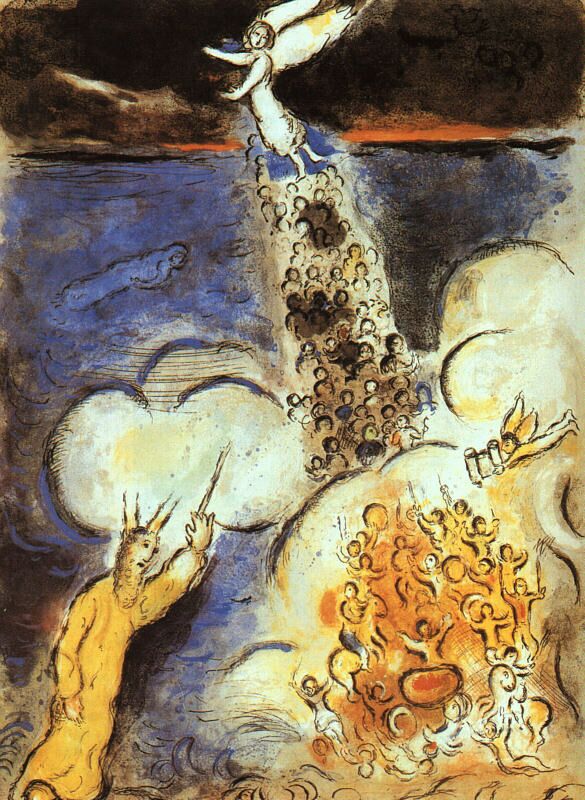
Marc Chagall's "Passover Haggadah"


Celebrate forty years of wandering.
40 years of searching.

Read Haggadah to the children,
give thanks,

sing praises
for the tribe surviving.

Focus on the ancients,
not the news.

Ignore ICE, as it issues
this warning: if officers

view you as Other,
hear a foreign accent,

take notice of shabby clothes,
you will be wrangled

like cattle into pens
and, paperless or not, deported.

To where? Weep, explain
you have lived here

since you were two,
this is your home.

Your wife, your children,
your aged mother

may never see you again.
Glory be to what?

Listen! Angry screams nurtured
by hatred, drown out the cries

of kids in Florida, or Texas, or next door.
How many more will be force fed this poison

in the name of a merciless God
punishing the sin of survival?

Tonight, we Jews co-opt words;
suffering, pain, freedom.

I imagine the day that
anyone’s God

will deliver enlightenment,
angels will sing,

heavenly light will shine
on the cruel irony of the self-righteous,

the day each of us will be revealed
as the supplicant,

each of us the Other.
The day our ancient journey,

our Passover celebration,
will not fall so woefully short

of the promised land.


Anita S. Pulier’s chapbooks Perfect Diet, The Lovely Mundane, and Sounds of Morning and her books The Butcher's Diamond and Toast were published by Finishing Line Press. Anita’s poems have appeared in many journals and her work is included in nine print anthologies. Anita has been a featured poet on The Writer's Almanac.

Tuesday, July 06, 2021

FOSSIL FUGUE

by Dustin Michael


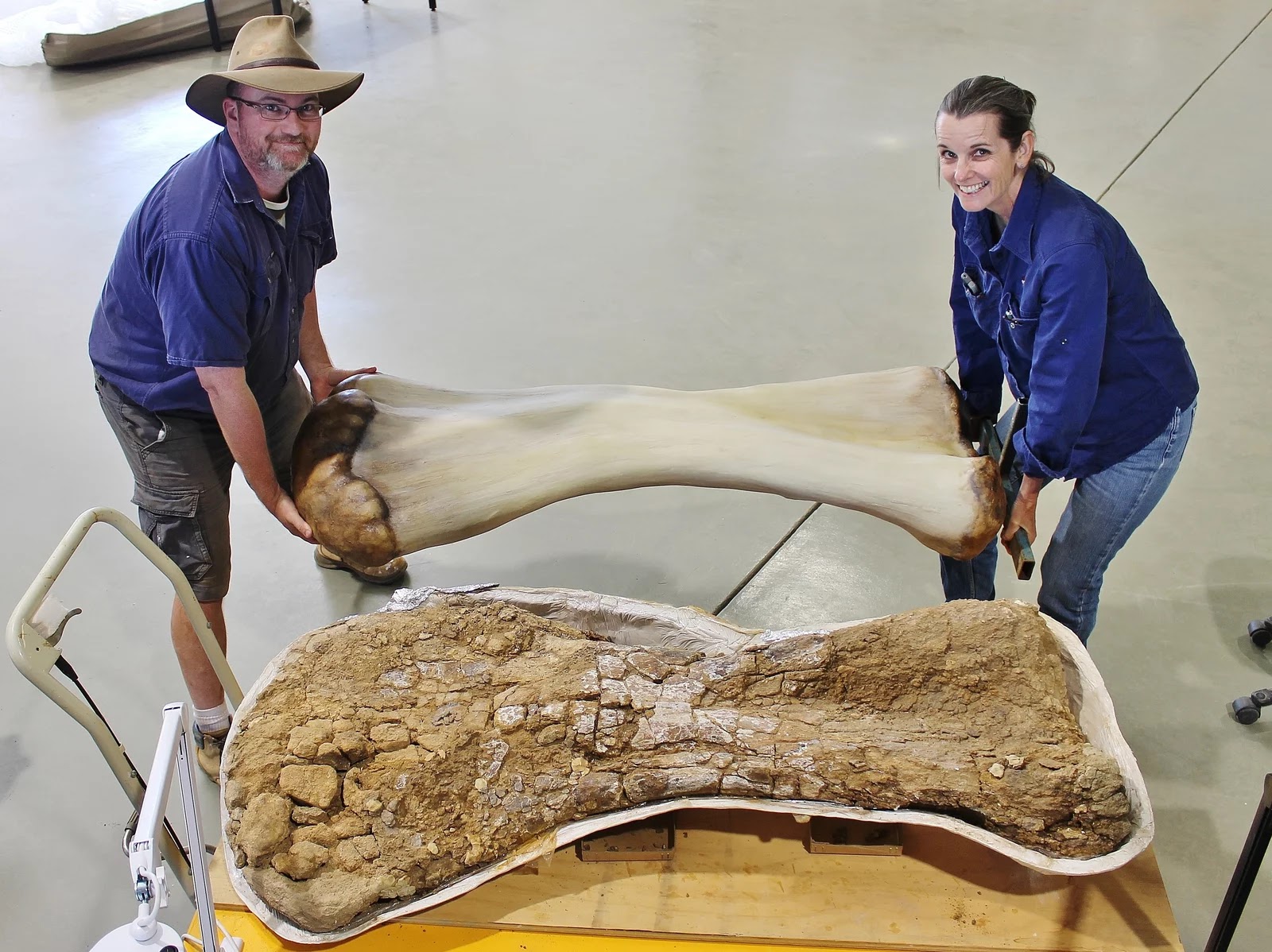
Researchers in Australia have confirmed the discovery of Australia's largest dinosaur species ever found. Australotitan cooperensis was about 80 to 100 feet long and 16 to 21 feet tall at its hip. It weighed somewhere between 25 and 81 tons. For comparison, the Tyrannosaurus rex was about 40 feet long and 12 feet tall. Photo: Scott Hocknull and Eromanga Natural History Museum Director Robyn Mackenzie hold a model of what the humerus of the dinosaur would have looked like next to the fossilized remains of the humerus. Credit: Eromanga Natural History Museum via NPR,June 8, 2021.


What is the price for a puppet show with 
fewer puppets but more stories? Always 
the same story endlessly staged, 
every age’s marionettes and the same 
tired tale, a shifting cast of shadows 
behind the age-old screen.

Study any desert, and behold 
that same sun blistering their backs,
baking their bodies and bones, the breadcrumbs 
of immigrants, their grim trail markers and that same
the docile plodding rhythm, a drumbeat of footsteps 
from the fossil record ringing through time. 

Here is another variation. 
They walked, shielding their young 
with their own bodies, their necks 
like cracked leather, craned high
toward new skies, the breath
of hunger, thirst, and danger fogging 
each footfall, their scaled feet disturbing 
the dust, scattering already ancient rocks, stale
wind whistling faint melody in the world’s eternal 
fugue.

The news reports these dinosaur bones came 
from creatures as big as basketball courts
whose Patagonian ancestors crossed connected 
continents and arrived in Australia. 
No boats to be turned back, no papers to be denied, 
no armed agents or bureaucratic barriers to halt them—
only land in stretches longer 
than even their tales and necks,
and vengeful heat, and hungry earth
whispering Not to worry, not to worry, 
even if they never find all of your bones
the story of your journey 
will always be retold. 


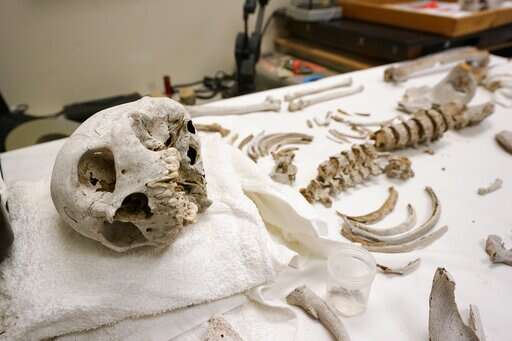
Faith-based groups are working to protect migrants and honor those who have died while attempting to cross the southern border from Mexico into the United States. Humane Borders is an organization that sets up water stations in the Arizona desert on routes used by migrants to cross the border. The group also works with Pima County chief medical examiner Dr. Gre Hess to document the discovery of bodies of those who died on the journey. According to the Associated Press, Hess's office received the remains of 79 border-crossers this year as of late May. In 2020, Humane Borders documented 227 deaths, the highest in a decade after a record hot and dry summer in Arizona. Activists fear this year will be even worse. —Newsweek, July 5, 2021. Photo: Unidentified bones found in the desert and suspected to be that of a migrant are assembled together for examination at the Pima County Medical Examiner's forensic labs in Tucson, Ariz. Credit: Ross D. Franklin/Associated Press via The Journal, July 5, 2021.


Dustin Michael lives in Georgia and teaches college writing and literature. His work has appeared in numerous literary journals and his favorite dinosaur is stegosaurus, not that anyone asked.

Saturday, July 13, 2019

CONTINUOUS MIGRATION

by Joanne DeSimone Reynolds 


“[At McAllen TX detention center on July 12, 2019] VP saw 384 men sleeping inside fences, on concrete w/no pillows or mats. They said they hadn’t showered in weeks, wanted toothbrushes, food. Stench was overwhelming. CBP said they were fed regularly, could brush daily & recently got access to shower (many hadn’t for 10-20 days.) Facility we saw earlier in the day with children was new & relatively clean and empty. There were cots & medical supplies & snacks. Children watched TV and told Pence through translator they were being taken care of. But at least two said they’d walked for months to get here.” —Josh Dawsey @jdawsey1 White House @WashingtonPost

The species depends on the freedom of movement
It's in the DNA
Wings of the fathers and fathers and of the mothers and mothers too
All come for one milk
Metabolizing a weed's poison to foil enemies
Five generations to complete the journey
Butterflies like bees tell the harvest

The species depends on the freedom of movement
It's in the DNA
Baja or ports of call or the Bering Strait
All come for one milk
Who knows the many generations to complete the journey
Fear a poison to a nation's people
Children like blossoms tell the harvest


Joanne DeSimone Reynolds is the author of a chapbook, Comes A Blossom published by Main Street Rag in 2014.

Thursday, June 20, 2019

INTERTWINED

by Marguerite Guzman Bouvard


The highly publicized federal case against humanitarian aid worker Scott Warren, who was accused of helping migrants at the US-Mexico border, ended in a mistrial on June 11. Warren, a volunteer with the humanitarian aid group No More Deaths, was charged with one count of conspiracy to transport and two counts of harboring undocumented immigrants following a 2018 arrest. He was facing up to 20 years in prison. —“The Trump Administration Is Trying to Use the Scott Warren Case to Scare Activists. It’s Not Working,” Mother Jones, June 15, 2019. Photo: Scott Warren (center) speaks after his high-profile court case ends in a mistrial. Astrid Galvan/AP via Mother Jones.

            for Scott Warren on World Refugee Day


Banks of snow in early June with overflowing
rivers is a story of destruction and
becoming; chunks of water borne earth
still sprouting grass and flower buds

in the middle of the fast moving
river, and then on the banks, roots
of dead trees braid the rocks
together, and higher up the glow

of blue gentians rising from
the cold earth, tiny sparks
of light that always appear,
like the desert in Arizona where

migrants trek, dehydrated,
famished and terrified, fleeing
criminal gangs, drought, and
then border guards, only to find

a hand reaching out to give them
food, water and shelter where
they can rest for a few days,
find hope in their inner selves,

and continue on their arduous journey,
guided through the darkness
of hate, and divisiveness
by sparks of light.


Marguerite Guzman Bouvard is the author of 11 poetry books, two of which have won awards and non-fiction books on social justice and human rights. She teaches online at Archipel U. in Haiti.

Thursday, August 15, 2013

ANUBIS SPEAKS

by Anne Harding Woodworth


I will embalm the gun,
dip it in antimony salts and mercury
to preserve the image
of a life that is no more.
I will detach the grip and the trigger.
Both have fingerprints,
which cannot be erased
thoroughly, but I will try
before I reattach the parts to the body.
History must be able
to interpret the design
and the intention
centuries from now.
I will hook the bullet, pull it
through the barrel nose,
steep it in formaldehyde
and return it to its chamber.
History must be able
to decipher the bullet’s use
as the empowering heart
of a cherished anatomy.
I will wrap the gun in linen strips,
brush them with sweet resin
to conceal the stench of death.
And I will place tokens
within the wrappings,
a sword, a toy, a raven,
a rose, a razorblade.
This is my duty:
to prepare a thing for the journey
across the river,
where it will be judged
for its deeds on earth.


Anne Harding Woodworth is the author of four books of poetry and two chapbooks. Her work is widely published in literary journals and on line in the U.S. and abroad. She divides her time between the mountains of Western North Carolina and Washington, D.C., where she is a member of the poetry board at the Folger Shakespeare Library.