Guidelines


Submission Guidelines: Send 1-3 unpublished poems in the body of an email (NO ATTACHMENTS) to nvneditor[at]gmail.com. No simultaneous submissions. Use "Verse News Submission" as the subject line. Send a brief bio. No payment. Authors retain all rights after 1st-time appearance here. Scroll down the right sidebar for the fine print.
Showing posts with label borders. Show all posts

Saturday, May 17, 2025

WHAT POPE LEO MIGHT BE THINKING

by Lynne Barnes


Your mother was ill and away
when you were very little.
Did this mean that one of your
foundation beams was laid out as clay,
creating that listing psychic gait
that seems to have hobbled you
since toddlerhood?
 
Your early language threw darts
of defense against harm inside
your family’s nest of punishment
alternating with neglect.
You began sharpening knives
of revenge, destructiveness
back then, just to survive.
As you matured, you were mentored
by those who were traumatized like you.
 
Oh, if only your resilient spirit had been
gifted just a little more warmth
at your first hearth, perhaps your sense of
self-worth would not have become pea-sized,
inside and protected by, a hot air balloon.
Heated molecules of fear inflate
that bubble of space around your core.
 
Your borders are so thin and vulnerable
that you must strike first, slur people away
to feel safe, and your re-tells of conversations
all have others referring to you as sir.
 
You use loser, lowlife, liddlelightweight,
for others. And for yourself you say
tremendousperfectwinnergreatest,
and speak with clueless pride
that other humans kiss your ass.
 
You, dear sir, learned so early to strike first,
before anyone could breach your fragile border,
see the size of your ego infirmity,
but now, power has enriched, fused your childhood’s
uranium grains into a global nuclear cruelty.
 
We must fight, drain your power, disarm you whose wounds
block you from the language of human love and care.
As we face off we’re terrified, but also Sad!—witnessing
a fellow human walled off from the beauty of empathy as prayer.


Lynne Barnes is a retired psychiatric nurse and librarian who has lived in San Francisco since 1969. Her poetry memoir, Falling into Flowers (Blue Light Press, 2017) was a finalist for the 2018 Eric Hoffer Book Award.

Saturday, November 09, 2024

CRISIS AT THE HEDGES

by Lisa Seidenberg


In my town they dislike the falling leaves.

Taking up real estate reserved

for pristine green lawns

And tenderly tended flowerbeds.

Crossing borders in disheveled groups,

no respect for property lines,

or the privileged space of fenced-off estates.


Who are they—these usurpers?

Where did they come from?

Spending the day lounging in the sun

as if they had nowhere to go.

Can’t they apply for residency

like proper foliage?


I watch with satisfaction as armies 

of landscapers chase them 

with their high-powered blowers

Into waiting trucks and vans

to be hauled away and out of sight.


Thankfully, the workers, 

most of whom are immigrants,

are there to take care of the problem.


Lisa Seidenberg is a writer and filmmaker residing in coastal Connecticut where there has been a noticeable influx of leaves falling this Autumn, due to the lack of rain. Her recent writing has appeared in Gyroscope Review, Atticus Review, Asymptote Journal, The NewVerseNews, One Art: A Journal of Poetry. She is currently a peer poetry reviewer for Whale Road Review.

Wednesday, March 27, 2024

IMMIGRANT’S SONG

by Jim Burns


Riots broke out in Philadelphia after Nativists burned down a Catholic church in May 1844. This lithograph shows the Know-nothings (in the top hats) clashing with the state militia.


Out of the vapors
of the past
I come
to sing you a song
of the poor and huddled masses
who have gathered at your gates.

I am the inscrutable Chinese,
one of 20,000 from my land
who for a dollar a day built your
grand railway of the golden spike.

I am the drunken Irishman,
the mobbed-up Italian,
the ignorant Pole
who sweated and died
to forge the iron and erect
your palaces of steel.

I am the Shylock Jew 
whose sweatshop toil
made the clothes on your back,
but whose financial acumen you blame
for relieving you of your earnings.

I am the the suspected spy,
the German who had to change my name
to protect me from your Klan
when first our countries fought.

I am the devious Japanese whose family
were reviled as turncoats
and dwelt in your internment camps
while in Europe I fought and died for you.

I am the wild-eyed son of Middle Eastern deserts
denied entry into your land 
and murdered in your cities
because of the evil of a few
who, like me, pray to Allah.

I am of those deemed not human at your southern border,
who braved deserts and human predators
to pick your crops, roof your homes,
tend your lawns,
do the jobs your sons won’t do.

Think of me as you will,
but Lady Liberty, 
raise your torch to me.
I am America,
I am you.


Jim Burns was born and raised in rural Indiana and received degrees from both Indiana State University and Indiana University. He then spent most of his working years as a librarian. A few years into his retirement he turned to a decades old interest in writing, especially poetry, and in the last two years has been fortunate enough to have published 18 poems and two short pieces of nonfiction online, in print or both. He lives with wife and dog in Jacksonville, Florida.

Sunday, June 18, 2023

THE ROLE OF THE POET

by Bonnie Naradzay


Israeli soldiers will not face criminal prosecution for the death of an elderly Palestinian-American man who was stopped at a checkpoint, dragged from a car, bound and blindfolded and then left unresponsive on the ground overnight after apparently suffering a heart attack due to his rough treatment. —AlJazeera, June 14, 2023. Photo: Israeli soldiers in the occupied West Bank village of Qafin on May 30, 2023 [File: Majdi Mohammed/AP via AlJazeera]


I am thinking of the role of the poet

is it to read through the morning news

and try on the horrors of people’s lives

like today reading again about 

the 78year old American stopped 

by IDF soldiers in the West Bank at night

during a “routine incursion” in the village

of Jiljilya since after the man was dragged

from his car for 200 meters he was gagged 

his wrists bound was left face down for hours

in a cold warehouse with others called 

“detainees” by the news report that said

after hours like that he was found dead 

but his death could not be determined 

to be caused “specifically” by anything

the soldiers had done after leaving him 

which was their routine since he was also 

Palestinian and so the case was closed 

or is the job of the poet to imagine being 

forced to cross the border into Belarus 

or Mexico at gunpoint or watch again 

the video of the Greek Coast Guard

rounding up asylum seekers, including

young children, then taking them to sea,

abandoning them on a raft.  Or is the poet

called on to describe the patterns of leaves 

as someone suggested to me without irony.


Bonnie Naradzay’s poems haver appeared in AGNI, New Letters, RHINO, Kenyon Review, Tampa Review, EPOCH, and many other sites. She was awarded the New Orleans MFA’s poetry prize:  a month’s stay in the castle of Ezra Pound’s daughter Mary.  For many years, Bonnie has led regular poetry sessions at shelters for the homeless and at a retirement center, all in Washington, D.C.

Friday, April 22, 2022

350 PAGES

by Thomas J. Erickson


i


The battle for Madrid [during the Spanish Civil War]… was decided in lecture halls, laboratories, and classrooms at the sprawling campus of University City… Brigaders stacked books in the windows as shields from snipers; bullets usually did not penetrate past the 350th page, so they sought out the thickest tomes of German philosophy and Indian metaphysics. —Dan Kaufman, The New York Review, February 24, 2022, on The International Brigades by Giles Tremlett. 
 

If a book can stop a bullet
then it stands to reason that words
can unite a world in ways
that are surprising
to its sense of normalcy
 
On page 351, Tolstoy and Dostoevsky
and Grossman were just getting started
 
If only the power of the grand Russian novels
of war and peace and crime and punishment
and life and fate could prevail across the borders,
from east to west.
 
Of course, that’s not going to happen, I think,
as I lie in bed and check Babel’s Red Cavalry
for thickness.


Thomas J. Erickson is an attorney in Milwaukee.  His latest book is Cutting the Dusk in Half by Bent Paddle Press.

Saturday, March 12, 2022

WHAT MOTHERS KNOW ABOUT WAR

a pantoum by Sandra Anfang


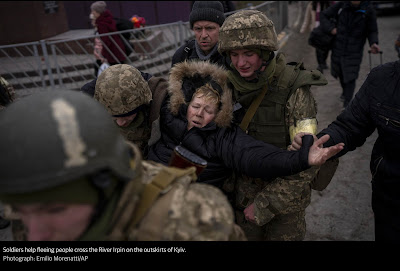
"I’ve never liked my daughter’s stroller. I put it on the baby registry without trying it in person and when it arrived the dimensions felt wrong. The button that was supposed to facilitate one-handed folding did not facilitate one-handed folding. But over the weekend I saw a photograph of this stroller—the same style and color—sitting on the platform of a Polish train station, and this was the thing that finally obliterated what was left of my journalistic steel and made me sob about Ukraine. More than a million Ukrainian refugees have now poured into neighboring Poland, most of them women and children. When Polish mothers learned of this, it seems, they went to the railway stations and border crossings where the refugees were arriving, and they began dropping off baby strollers. A photojournalist [Francesco Malavolta/AP] covering the conflict snapped a picture of seven empty ones waiting at the Przemysl Glowny station [at the border crossing in Medyka, Poland]." —Monica Hesse, The Washington Post, March 9, 2022


I never liked my daughter’s stroller
I bought it unseen from an online store
when the box arrived I opened it and cried   
somehow the dimensions felt all wrong 
 
I bought it unseen from an online store
gave it to the family across the square
somehow the dimensions felt all wrong
today I found it—same model, same make
 
I gave it to the family across the square
I felt ungrateful for I had so much
today I found it—same model, same make 
abandoned with others at the Medyka station
 
I felt ungrateful for I had so much
the sight of it triggered deep despair
abandoned with others at the Medyka station
waiting for refugees’ lives to begin 
 
the sight of it triggered deep despair
as we welcome the mothers—one million and more
waiting for their lives to begin again
storming the border, babes at their breasts
 
As we welcome the mothers—one million and more
who pour into Poland on tides of tears
storming the border, babes at their breasts
all that they own strapped like mail to their chests
 
They pour into Poland on tides of tears
packed strollers await them, fit for a prince
infants strapped like mail to their chests
piled blankets and diapers to warm their new lives
 
Packed strollers await them, fit for a prince
refugees flow in wearing thin cloth coats
piled blankets and diapers to warm their new lives
symbiotic survival—mothers’ hard truth of war
 
Refugees flow in wearing thin cloth coats
after heat was shut off, the water lines cut
symbiotic survival—mothers’ hard truth of war
starved by the greed of the Russian state
 
after heat was shut off, the water lines cut
women were forced to flee and to hide
starved by the greed of the Russian state
victims of men’s urges, tossed like ashes
 
women were forced to flee and to hide
and after their flight, raped and tossed again
victims of men’s urges, tossed like ashes
their bodies are beachheads where battles are won
 
after their flight, raped and tossed again
their bodies as shelter, as instruments of war
their bodies are beachheads where battles are won
the things we don’t mention that all mothers know
 
their bodies as shelter, as instruments of war
I never liked my daughter’s stroller
the things we don’t mention that all mothers know
when the box arrived, I opened it and cried
 

Sandra Anfang is a much-published poet, poetry teacher, and visual artist who lives in Northern California. She's been hosting a monthly poetry series since 2013. She walks and writes daily to process her overconsumption of news stories. Her grandparents hailed from Minsk and Budapest, and she feels a deep connection to Ukraine and Eastern Europe.

Thursday, March 10, 2022

SUNFLOWER PEOPLE

by Robert Knox 


You hide in the subway tunnels
of life’s unending nightmares
You walk, or ride, or hire cabs for thousand-dollar journeys
     to a border crossing
that is no longer open
You struggle down roads, carrying your baggage,
your children,
who belong not only to you,
but to your country,
      and to us all
 
You shelter in rubbled cities,
holes blown in once-solid blocks
of home and hearth,
sacred refuges that once housed human bodies and souls
by the hundreds,
people no more, nor less breakable than any of us,
 
left abandoned and vulnerable,
now that death has come to a land
     where sunflowers bloomed
 
You, who flee
and carry one another’s burdens
along pitted roads to the hope of a tomorrow
somewhere safer than today,
that haven
we have all promised ourselves.
That earthly haven
in which we may celebrate another spring,
another birthday of the earth
 
You carry our lives in your journey
as well as your own,
and those of your loved ones, your ancestors,
and the memory of ours as well,
There is room enough, I know, in your souls,
     to carry all these
 
as there is world enough for you
in ours
Come, walk in our shoes as well:
there is world enough for all. 


Robert Knox is a poet, novelist, Boston Globe correspondent, and the author of House Stories, a recently published collection of linked short stories. As a contributing editor for the online poetry journal Verse-Virtual, his poems appear regularly on that site. His essay on Putin's war on Ukraine is up on Medium.

Tuesday, March 08, 2022

INTERNATIONAL WOMEN'S DAY
8 MARCH 2022

by Mary K O'Melveny


Today, please celebrate all
the women we have lost.
In every war and cease fire.
On slaver’s ships. On thirsty
desert treks to walled borders.
In back-alley rooms without
anesthesia. Locked in basements,
without papers or escape routes.
Asleep in bed. Hitching a ride.
Nursing bruises or starving babies.
 
Our losses rise like mountain peaks.
Ukrainian women huddle in subways,
clutch children, family pets, a few
hastily gathered objects from lives
they will likely never know again
or tattered photographs of loved ones
they may never see again. Even in
safer worlds, friends die of causes
that repurposed money, refocused
attention could have remedied.
 
Some fade away from neglect,
inattention, dreams downsized
by school guidance counselors,
religious zealots, patriarchy.
Others drop dead without a whimper
on a sun-dappled afternoon. One friend’s
memories vanished by midnight
stroke; another’s by subtle daily
erasures. Open our mouths wide in
praise of all. Let songbirds loose.


Mary K O'Melveny is a recently retired labor rights attorney who lives in Washington DC and Woodstock NY.  Her work has appeared in various print and on-line journals. Her most recent poetry collection is Dispatches From the Memory Care Museum, just out from Kelsay Books. Her first poetry chapbook A Woman of a Certain Age is available from Finishing Line Press. Mary’s poetry collection Merging Star Hypotheses was published by Finishing Line Press in January, 2020.

Friday, February 04, 2022

CHESS AT THE END OF THE WORLD

by Claire Matturro


We ran and jumped and bounced
over monkey bars in sandy school yards
then raced inside at the bell’s
shrill scream and covered our heads
as we crouched beneath wooden
desks that smelled of crayons and
fruit punch while outside
the open jalousie windows
cardinals and mockingbirds sang
their sweet wild songs
as soulless men hid
missiles in Cuban silos and
played chess with the end of the world
but we didn’t worry
because we were seven
and our mothers stockpiled
food and juice in pantries
and our fathers turned
the TV low so not to wake us.
 
We ran and jumped and lobbed
volley balls in sandy school yards
and the slap of leather against
our hands made us laugh
while soulless men
tested nuclear bombs and
played chess with the end of the world
but we didn’t care
because we were thirteen
and besides one of us had
a left-over bomb shelter
in her broad backyard where
we once played dolls and drank
canned juices from stockpiles
hidden behind concrete and steel.
 
I no longer run or jump and
the sandy school yard is silent
with pandemic and children gone
inside and the bomb shelter
long traded for a swimming pool
and its stockpiled juices tossed
into landfills yet soulless men still
play chess with the end of the world
as troops mass at borders and
the hurricane which will find
me in my glass house
breeds silently in melting ice
and the oil keeps flowing and
the coal keeps burning and
the missiles stockpiled in places
where children hide
their heads under thin arms
guarantee the collateral damage
we’ve learned to turn away from
as cardinals and mockingbirds
go quiet in the world outside my windows.


Claire Matturro has been a journalist, a lawyer, and a legal writing teacher at Florida State University and University of Oregon. She is the author of seven novels, including a legal thriller series published by HarperCollins, and is the co-author of a recent novel. She is an associate editor at Southern Literary Review and lives in Florida.

Friday, January 28, 2022

TWENTY-ONE WORDS ON A WINDY NIGHT

by Penelope Scambly Schott


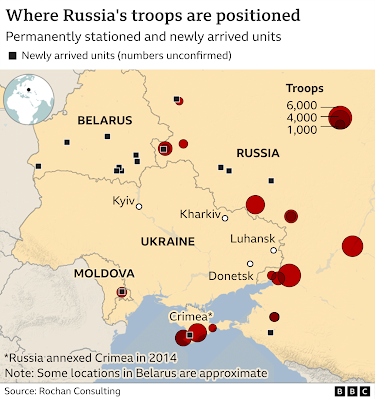
BBC Graphic January 26, 2022


Empty bird feeder
starts banging,
keeps banging
against my window.
News report:
troops at borders.
Birds and I
share bad dreams.


Penelope Scambly Schott is a past recipient of the Oregon Book Award for Poetry. Her newest book is On Dufur Hill, poems about the cycle of the year in a small wheat-growing town.

Tuesday, July 06, 2021

FOSSIL FUGUE

by Dustin Michael


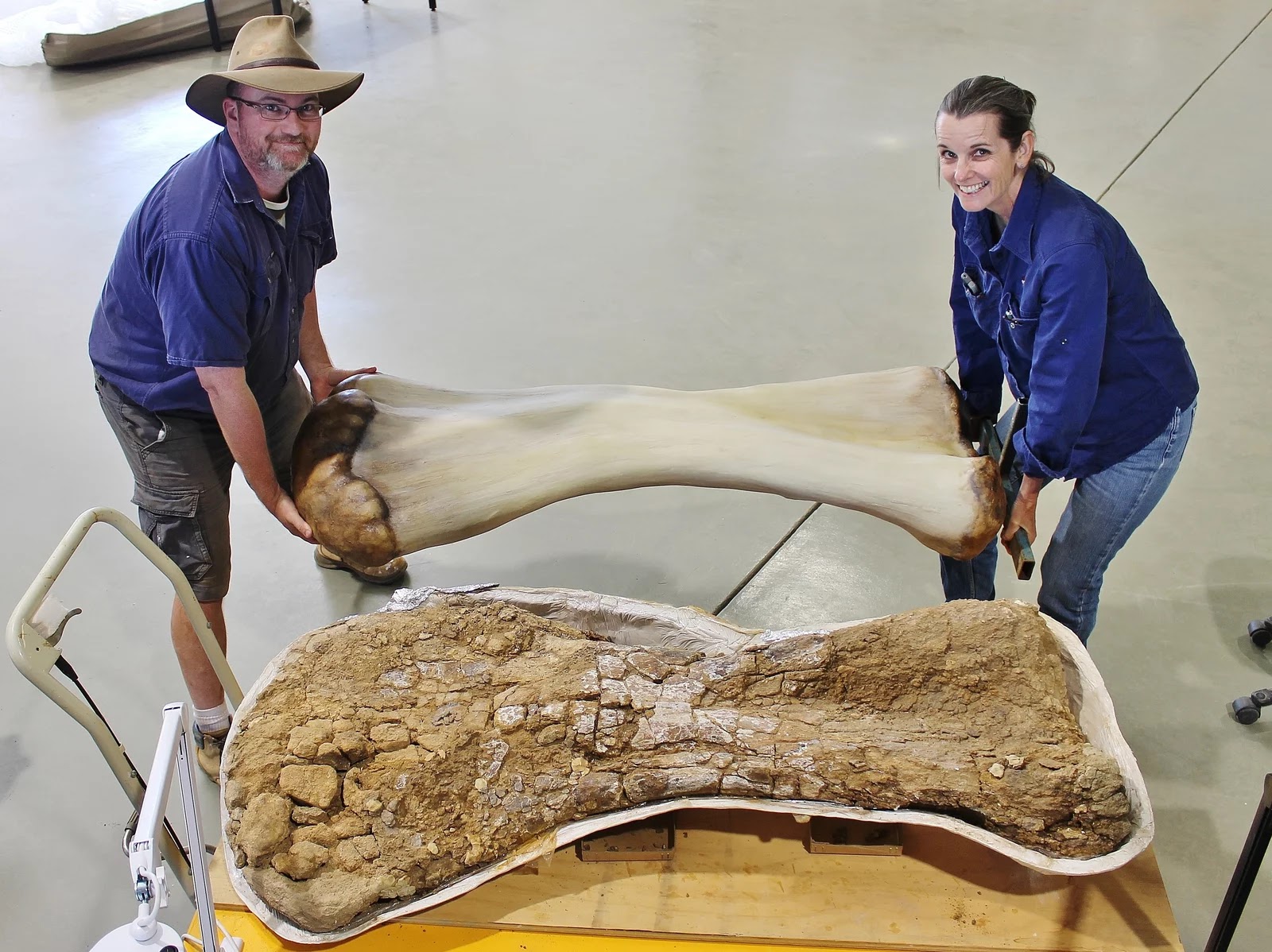
Researchers in Australia have confirmed the discovery of Australia's largest dinosaur species ever found. Australotitan cooperensis was about 80 to 100 feet long and 16 to 21 feet tall at its hip. It weighed somewhere between 25 and 81 tons. For comparison, the Tyrannosaurus rex was about 40 feet long and 12 feet tall. Photo: Scott Hocknull and Eromanga Natural History Museum Director Robyn Mackenzie hold a model of what the humerus of the dinosaur would have looked like next to the fossilized remains of the humerus. Credit: Eromanga Natural History Museum via NPR,June 8, 2021.


What is the price for a puppet show with 
fewer puppets but more stories? Always 
the same story endlessly staged, 
every age’s marionettes and the same 
tired tale, a shifting cast of shadows 
behind the age-old screen.

Study any desert, and behold 
that same sun blistering their backs,
baking their bodies and bones, the breadcrumbs 
of immigrants, their grim trail markers and that same
the docile plodding rhythm, a drumbeat of footsteps 
from the fossil record ringing through time. 

Here is another variation. 
They walked, shielding their young 
with their own bodies, their necks 
like cracked leather, craned high
toward new skies, the breath
of hunger, thirst, and danger fogging 
each footfall, their scaled feet disturbing 
the dust, scattering already ancient rocks, stale
wind whistling faint melody in the world’s eternal 
fugue.

The news reports these dinosaur bones came 
from creatures as big as basketball courts
whose Patagonian ancestors crossed connected 
continents and arrived in Australia. 
No boats to be turned back, no papers to be denied, 
no armed agents or bureaucratic barriers to halt them—
only land in stretches longer 
than even their tales and necks,
and vengeful heat, and hungry earth
whispering Not to worry, not to worry, 
even if they never find all of your bones
the story of your journey 
will always be retold. 


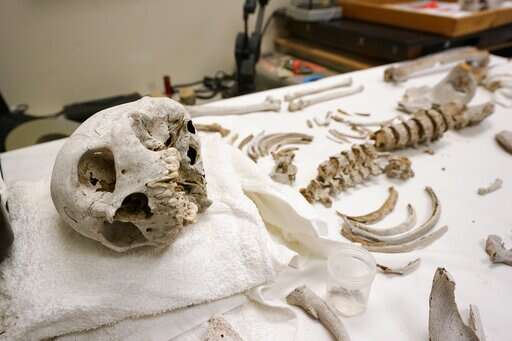
Faith-based groups are working to protect migrants and honor those who have died while attempting to cross the southern border from Mexico into the United States. Humane Borders is an organization that sets up water stations in the Arizona desert on routes used by migrants to cross the border. The group also works with Pima County chief medical examiner Dr. Gre Hess to document the discovery of bodies of those who died on the journey. According to the Associated Press, Hess's office received the remains of 79 border-crossers this year as of late May. In 2020, Humane Borders documented 227 deaths, the highest in a decade after a record hot and dry summer in Arizona. Activists fear this year will be even worse. —Newsweek, July 5, 2021. Photo: Unidentified bones found in the desert and suspected to be that of a migrant are assembled together for examination at the Pima County Medical Examiner's forensic labs in Tucson, Ariz. Credit: Ross D. Franklin/Associated Press via The Journal, July 5, 2021.


Dustin Michael lives in Georgia and teaches college writing and literature. His work has appeared in numerous literary journals and his favorite dinosaur is stegosaurus, not that anyone asked.

Saturday, October 31, 2020

OH BEAUTIFUL

 by Shyla Shehan


The last we saw our king his head was deep 
in the crotch of some alabaster city gleam 
tweeting love notes to his adoring fans
twisting our once beloved patriot dream. 

While our halcyon skies are shrinking
spilling grief across our amber plains
he gathers up his Proud Boys
and hides his capital gains.

Our borders littered with families separated
huddled masses he has reviled
and presses portentous his own agendas
his unwrought thoughts run wild.

America. America! You are still beautiful 
and mine. There is space inside my heart—
a hope for you, again, to shine.

As our thoroughfares of freedom are stretched 
thin across from all cities to the sea.
America, I beg of you now!
Please show your grace his leave. 


Shyla Shehan is an analytical Virgo who has spent the majority of her life in the midwest. She holds an MFA in Writing from the University of Nebraska and lives in Omaha, Nebraska with her husband, children, and four wily cats. Shyla spends most days tending to a healthy household and is pleased with her role as Managing Editor for The Good Life Review.

Thursday, July 16, 2020

FROM PAX AMERICANA TO PAX AMERIQUE

by Joan Leotta


Do you recall the era—
Pax Americana—
after World War II when American passports
were king? We traveled everyone, alone, in groups.
some discerning some disdaining.
Our journeys were bathed
in the glow of Pax Americana,
peace to the world, good will toward us, a protection
bestowed on us not merely by troops sweeping in on
winds of war, but by good will
floating on the gentle breeze
of peace through Marshall Plan, Berlin Airlift.
I studied then, traveled, picked up
mail at American Express, secure
in the knowledge my country uber alles
had molded a peace so all could
move freely, safely, from place to place.
Our new era, not even dignified by Latin,
instead simply pas Amerique, non ai americani
No, no , no, no. Now we can’t go—anywhere.
We are barred from their sacred
places, our passports, worthless paper.
Can we console ourselves with
America the beautiful? Would that we could.
Instead, pandemic hotspots
boil over from sea to shining sea.
Our purple mountains offer no safe majesty.
Pax America no longer applies within
our borders or without.
Shootings, riots in the streets, virus
feverishly consuming young and old.
All of this, all of this in four short years.
Survival is still within our reach,
it takes only a small act of faith, kindness,
and reliance on the science
God has given us—wear a mask,
wash your hands, stay apart.
Even in Dante’s time, these things were
known, yet so many ignore them,
marching like lemmings into
ventilators.
Pax Americana,
how I mourn your passing.


Joan Leotta is a writer and performer. She writes about and performs tales of food, family, and strong women—and is often touched by  how moments in history affect the daily lives of ordinary people.

Friday, January 31, 2020

BRITAIN AND I

by Nina Parmenter


Image source: Meijburg & Co


Back, back we go,
Britain and I,
back to those heady days
when we sat in our studies
gruff and moustachioed
and barked at the children.

Out, out we go,
Britain and I,
out to our verandas
in rakish hat-and-slacks combos
to take pot shots at Johnny Foreigner.
Ruff-ruff-huzzah!

Off, off we go
Britain and I,
to shake hands with petty despots
and trade their spice and silks
for gold, favours
and averted eyes.

So goodbye, Gerhardt,
farewell, François,
and so long, bland, borderless tomorrow.
Hand me my hunting stick, Britain,
and let us stride on
to glory.


Nina Parmenter is a mother to two busy boys. In her spare time, she is a marketing manager. Her poetry has appeared in Light and Lighten up Online, and on her blog, itallrhymes.com. She lives in Wiltshire, UK, and is currently working on her first children’s novel.

Wednesday, January 02, 2019

GOOD FENCES MAKE BAD NEIGHBORS

by Gil Hoy


Last night I dreamed, 

workers painting my house

Brought all of their children

to work in the morning

With brushes and buckets 

of water, to wash and to clean

To scrub and to scour
the faces,

Like paintings on canvas,

That had appeared overnight
on the walls of my house.

Black faces, white faces,
yellow, red and brown

Faces of every hue and tone,
every size and shape,

And the children all the while
washing and scrubbing

But never hurting the faces.

And me, all the while watching
the children hard at work.

And then, in my dream,
the parents and their children

Began to tear down the Wall
surrounding my house.

By the end of the day,
they had torn down every boulder

And every stone, torn down
the ground-swell beneath,

Until nothing remained of my wall
but green grass and brown earth.

And me, all the while watching
the families hard at work

With a growing sense
of contentment

Coming from deep inside.


Gil Hoy is a Boston poet and trial lawyer who studied poetry at Boston University through its Evergreen program. Hoy received a B.A. in Philosophy and Political Science from Boston University, an M.A. in Government from Georgetown University, and a J.D. from the University of Virginia School of Law. He served as a Brookline, Massachusetts Selectman for four terms. Hoy’s poetry has appeared most recently in Chiron Review, Ariel Chart, Social Justice Poetry, Poetry24, Right Hand Pointing/One Sentence Poems, The Penmen Review, I am not a silent poet, TheNewVerse.News and Clark Street Review.

Thursday, December 27, 2018

CASAS SEGURAS: A MESSAGE FROM THE CARAVAN

by Sarah Edwards


Elvira Choc, 59, Jakelin Amei Rosmery Caal's grandmother, rests her head on her hand in front of her house in Raxruha, Guatemala, on Saturday 15 December 2018.) Jakelin was the first of two Guatemalan children detained by U.S. Customs and Border Protection who died in government custody this month. Felipe Alonzo Gomez died in custody on Christmas Eve. (AP Photo/Oliver de Ros via The Independent [UK])


You live in safe houses,
get mail in a box outside your door.
You walk on streets, paved and lit.
Your homes have walls and roofs,
bedrooms to wrap babies in blankets,
kitchens that smell like clean.

We live in no houses.
Our address is the same for all,
Pueblo San Fronteras
Village Without Borders.
Streets are numbered by how far
we can push them ahead each day,
by what work we find
for money to eat,
buy space to sleep.

We travel on paths worn down
as thin as our sandals,
carry barefoot children on our backs.
We make a caravan together
because it is fearful to walk alone,
speak and not be heard.
We seek what you call asylum.
To us, it is asilo, a home safer
than we have ever known.

Step after step, day after day,
hope of welcome paves our way.
Then we will get mail,
build walls and roofs,
bedrooms to wrap babies in blankets,
kitchens that smell like clean.


Sarah Edwards is a retired pastor in the United Church of Christ with many publication credits, including two books of poetry, Pandora, Let's Talk and the newly-released What the Sun Sees. She is outraged at the treatment and disregard for people who want to find safety and make a life in the United States. The so-called freedoms that we espouse are only figments of our egocentric imagination unless we understand them to belong to everyone.