Guidelines


Submission Guidelines: Send 1-3 unpublished poems in the body of an email (NO ATTACHMENTS) to nvneditor[at]gmail.com. No simultaneous submissions. Use "Verse News Submission" as the subject line. Send a brief bio. No payment. Authors retain all rights after 1st-time appearance here. Scroll down the right sidebar for the fine print.
Showing posts with label dinosaur. Show all posts

Friday, September 23, 2022

NEW FOSSILS

by Dustin Michael


It's not often you find a bright side to drought, but in Texas, the heat and lack of rain have uncovered dinosaur tracks from 113 million years. The tracks were unveiled at Dinosaur Valley State Park in Glen Rose, Texas — about an hour's drive from Fort Worth. The park is known for its dinosaur tracks, but these newer ones are usually covered with water from the Paluxy River and aren't visible. NPR, August 25, 2022


In the photograph you perch atop your tall chair,
a Mesozoic predator with a smaller dinosaur–in this case
a plastic stegosaurus mailed to you by your Uncle Richie.
Your skin pallid, papery like a new fossil exposed to air,
your lifeless smile a museum skeleton, you were four years old, 
my son, and it was just spring, and no one knew you
had leukemia or how close to death you were. 

The floods arrived, tests and tears, swift currents 
sweeping you across town to the children’s hospital 
clutching your favorite things. I discovered you each day 
washed up on the bank of your hospital bed, wires and tubes 
twisted around your withered limbs like prehistoric vines.
  
For our home, you became a mysteriously vanished creature, 
a question sleeping at the end of a trail of footprints,
and I became a scientist logging your every trace,
following your ancient tracks, cataloging your fragments 
while your nurses and doctors reconstructed you. 

Now, each time I think I have you adequately described 
and slouch toward the podium of my heart to proclaim,
“I hereby present my findings so the world will know
this child, my little boy, who roamed this very Earth—”
more evidence appears, the sediment of my hours 
is scoured away to reveal more mundane marks 
made sacred by distance, disaster, the old economics 
of despair: your preschool mat on the floor like a shed skin, 
your crayon drawing of our family, crumpled, a primordial leaf, 
your t-shirt sleeve peeking like an ancient tooth 
from the laundry pile, and the wondrous sets of trackways 
I found one afternoon when I collapsed face-down on the floor 
near where you and your puppy used to play, 
the tiny footprints tell where you both scurried in 
from a sudden storm, faint mud on laminate flooring, 
puppy and boy, a cataclysm of joy frozen in time. 

Spring was a hundred million years ago and in every second since
I have lived a life of hope and mourning. These new tracks emerged 
from behind my tears like your toys when I would drain the bath. 
Where do they lead? Perhaps to the children’s hospital 
and your den of blankets and tubes, or to the counter 
and the photo of your dying child’s smile,
or into an uncertain future where I 
cannot see you, surely because
you are only bounding ahead. 


Dustin Michael lives with his family in Georgia, where he teaches English writing and literature. He and his wife share blogging duties at https://phinphans.blogspot.com/, where they write about their son, Phin, who was recently diagnosed with acute myeloid leukemia.


Tuesday, August 23, 2022

LIZARD DAYS

by Alejandro Escudé


A lizard, small, on my walk along 
the largest airport in the country,
dead, curled, fetus-like, so swift
they are as they shoot back toward
the ivy mounds. At times I imagine
how many trash bins would the 
lizards fill if they were all collected
from the overgrowth—so I take
with my iPhone a photo of him,
Cretaceous little being, extinct, 
and think about the latest warning
issued to all Apple users, a hack
where they could take control,
absolute control, the newscaster
asserts, of your phone. I yearn
for a return to those lizard days
when I couldn’t carry around
a sea of digital pirates, both legal
and illegal, a neon mind-maze,
yet enough data to assume society’s 
panoptic perch. I choose to keep 
from running another space race
with my phone, contemplate
the deadness of a dead lizard
on the sidewalk as monolithic 
shadows of planes, like the foot-
prints of a dinosaur accelerated 
in time, mesh onward to the west.


Alejandro Escudé published his first full-length collection of poems My Earthbound Eye in September 2013. He holds a master’s degree in creative writing from UC Davis and teaches high school English. Originally from Argentina, Alejandro lives in Los Angeles with his wife and two children.

Sunday, March 13, 2022

JURASSIC PARK, FINAL EPISODE

by Indran Amirthanayagam


The age of dinosaurs is over—ferocious ones who ate
meat, tearing off opponents' skulls, stomping on them
for breakfast, predecessors of Atilla the Hun, Bokassa
who ate human blood, and the island potentate who
negotiated surrender of the remaining Tiger leaders to shoot
them down while they held white flags. No. Not on our watch.
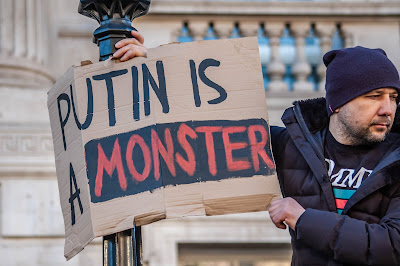
The new dinosaur, killing by thousands in the neighbor's house
of Ukraine, will be stopped in one way or via the highway,
that glorious road leading not to exile or a humanitarian
pause, but as with dictators of childhood nightmares—Hitler,
Stalin, Tonton Macoute, wherever we draw our fears—into
the light we shine on his crimes as we put him on the dock
in absentia, not by 'Frisco Bay but in the Hague, while some
of our family members stagger out of the cave, blinking, still alive.


Indran Amirthanayagam's newest book is Ten Thousand Steps Against the Tyrant (BroadstoneBooks). Recently published is Blue Window (Ventana Azul), translated by Jennifer Rathbun.(Dialogos Books). In 2020, Indran produced a “world" record by publishing three new poetry books written in three languages: The Migrant States (Hanging Loose Press, New York), Sur l'île nostalgique (L’Harmattan, Paris) and Lírica a tiempo (Mesa Redonda, Lima). He writes in English, Spanish, French, Portuguese, Haitian Creole and has twenty poetry books as well as a music album Rankont Dout. He edits The Beltway Poetry Quarterly and helps curate Ablucionistas. He won the Paterson Prize and received fellowships from The Foundation for the Contemporary Arts, New York Foundation for the Arts, US/Mexico Fund For Culture, and the MacDowell Colony. He hosts the Poetry Channel on YouTube.

Tuesday, July 06, 2021

FOSSIL FUGUE

by Dustin Michael


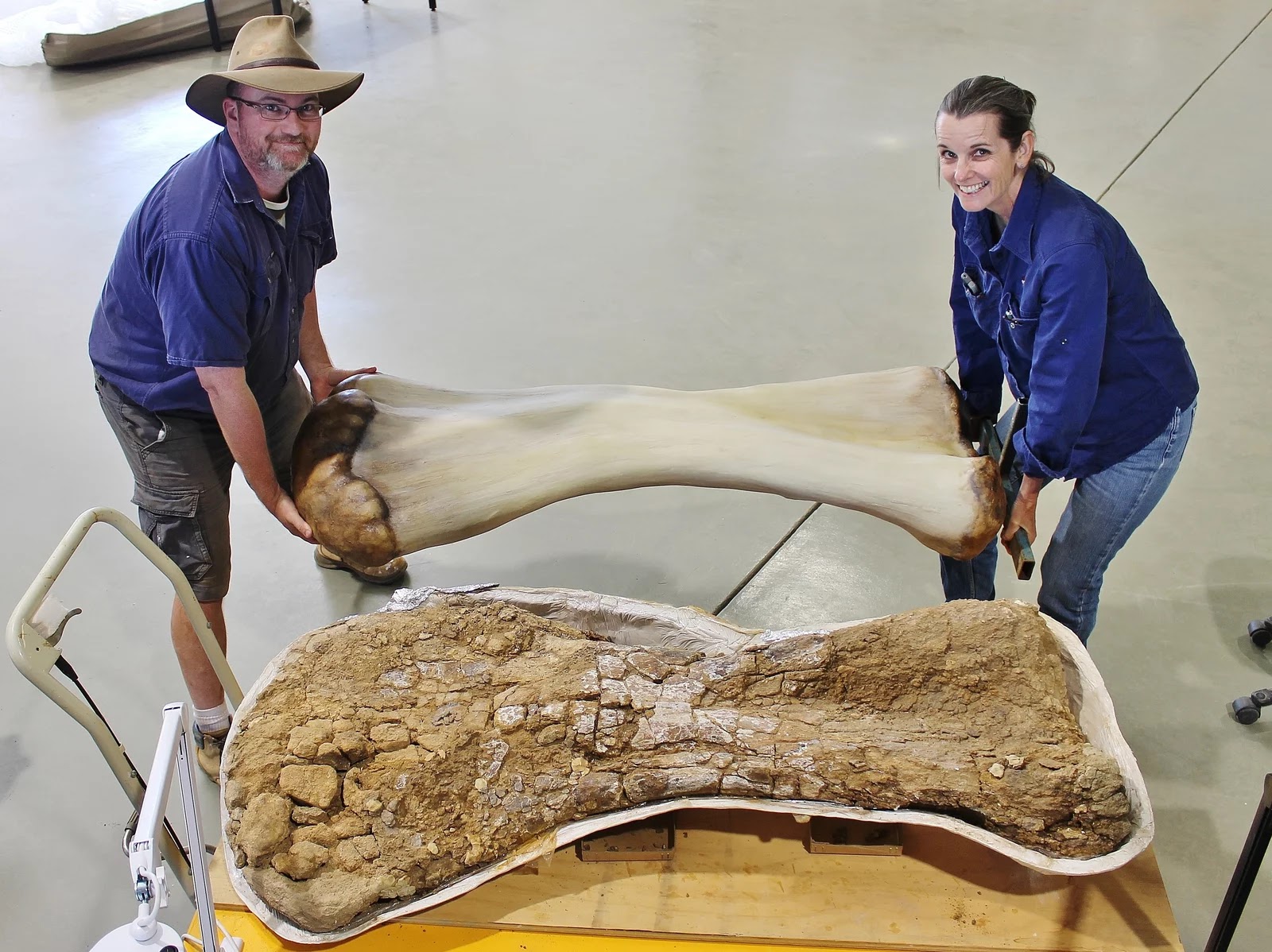
Researchers in Australia have confirmed the discovery of Australia's largest dinosaur species ever found. Australotitan cooperensis was about 80 to 100 feet long and 16 to 21 feet tall at its hip. It weighed somewhere between 25 and 81 tons. For comparison, the Tyrannosaurus rex was about 40 feet long and 12 feet tall. Photo: Scott Hocknull and Eromanga Natural History Museum Director Robyn Mackenzie hold a model of what the humerus of the dinosaur would have looked like next to the fossilized remains of the humerus. Credit: Eromanga Natural History Museum via NPR,June 8, 2021.


What is the price for a puppet show with 
fewer puppets but more stories? Always 
the same story endlessly staged, 
every age’s marionettes and the same 
tired tale, a shifting cast of shadows 
behind the age-old screen.

Study any desert, and behold 
that same sun blistering their backs,
baking their bodies and bones, the breadcrumbs 
of immigrants, their grim trail markers and that same
the docile plodding rhythm, a drumbeat of footsteps 
from the fossil record ringing through time. 

Here is another variation. 
They walked, shielding their young 
with their own bodies, their necks 
like cracked leather, craned high
toward new skies, the breath
of hunger, thirst, and danger fogging 
each footfall, their scaled feet disturbing 
the dust, scattering already ancient rocks, stale
wind whistling faint melody in the world’s eternal 
fugue.

The news reports these dinosaur bones came 
from creatures as big as basketball courts
whose Patagonian ancestors crossed connected 
continents and arrived in Australia. 
No boats to be turned back, no papers to be denied, 
no armed agents or bureaucratic barriers to halt them—
only land in stretches longer 
than even their tales and necks,
and vengeful heat, and hungry earth
whispering Not to worry, not to worry, 
even if they never find all of your bones
the story of your journey 
will always be retold. 


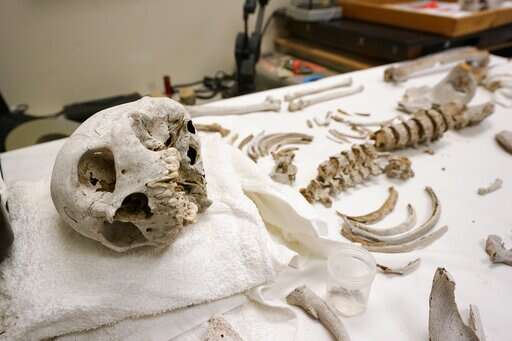
Faith-based groups are working to protect migrants and honor those who have died while attempting to cross the southern border from Mexico into the United States. Humane Borders is an organization that sets up water stations in the Arizona desert on routes used by migrants to cross the border. The group also works with Pima County chief medical examiner Dr. Gre Hess to document the discovery of bodies of those who died on the journey. According to the Associated Press, Hess's office received the remains of 79 border-crossers this year as of late May. In 2020, Humane Borders documented 227 deaths, the highest in a decade after a record hot and dry summer in Arizona. Activists fear this year will be even worse. —Newsweek, July 5, 2021. Photo: Unidentified bones found in the desert and suspected to be that of a migrant are assembled together for examination at the Pima County Medical Examiner's forensic labs in Tucson, Ariz. Credit: Ross D. Franklin/Associated Press via The Journal, July 5, 2021.


Dustin Michael lives in Georgia and teaches college writing and literature. His work has appeared in numerous literary journals and his favorite dinosaur is stegosaurus, not that anyone asked.