Guidelines


Submission Guidelines: Send 1-3 unpublished poems in the body of an email (NO ATTACHMENTS) to nvneditor[at]gmail.com. No simultaneous submissions. Use "Verse News Submission" as the subject line. Send a brief bio. No payment. Authors retain all rights after 1st-time appearance here. Scroll down the right sidebar for the fine print.

Tuesday, January 23, 2024

A FABLE

by Kevin Carey


Shutterstock A-I generated image


A long, long time ago a very bad wolf,
probably the worst wolf ever,
did some very bad things to some lambs,
some of the worst things ever done to
lambs anywhere. As a matter of fact, this
very bad wolf had wanted to eliminate all the lambs.
The lambs who were saved from elimination
made a pact with some very big bears
(who helped save them from the wolf)
 and together they decided to push  
some rabbits from their nests so the lambs could have a land
to call their own. It’s worth noting that these rabbits
had nothing to do with the very bad deeds of the very bad wolf.
.
So the lambs took a mile,
but then they wanted two, then three and so on and so on.
The rabbits who were being pushed from their nests fought
back and were called very bad rabbits.
The lambs who wanted even more land
made even more big bear friends
and this gave them even more power,
which they used to keep pushing more rabbits from their nests.
The rabbits had no bear friends
so they fought back again,
and they were called very very bad rabbits.

And so the story goes. But this story
has no end. The lambs are still pushing the rabbits
from their nests and soon they will
have eliminated all the rabbits
and when that happens
the lambs will have done  
what the very bad wolf had wanted to do to them.

The moral of the story: a rabbit with no big bear friends is easy to push from a nest.


Kevin Carey is Coordinator of Creative Writing at Salem State University. Books include: The Beach People, The One Fifteen to Penn Station, Jesus Was a Homeboy, Set in Stone, Murder in the Marsh, and a new novel Junior Miles and the Junkman (September 2023 from Regal House / Fitzroy Books) and a new co-written poetry collection Olympus Heights (October 2023 – Lily Poetry Review). He is the co-founder of Molecule: a tiny lit mag.

METAMORPHOSIS

by Imogen Arate


The White House is campaigning to spin Biden’s support for Israel’s war while actively facilitating the slaughter. —The Intercept, January 17, 2024


Bid farewell in the rearview
the world you invented

A paper house unfurls
oil-slicked plumes 
as flags of surrender 

The chartreuse shutters
you proudly claimed
the victory of your refinement
curl to the lap of an inferno
nursed on sated falsehoods

And the Astroturf spits
its faux blades onto
the white pickets still
defending your illusions 

What aftertaste regurgitates now 
of the celebratory bubblies imbibed 
What terroir offers the graves 
of those you condemned

Limp now into a future that 
your past has trampled 

Let your nostrils collect the iron 
of dried blood drained to solidify 
the quicksand swallowing your flailing 
proclamations of pristine intentions


Imogen Arate is an Asian-American poet in search of hope: that humanity will overcome our self-destructive tendencies to work together against the onslaught of the climate crisis. She's also the Executive Director of Poets and Musesan award-winning multimedia platform that has featured diverse contemporary poetic voices from around the globe. She believes that we will only be able to value lives equally when we lend our ears and hearts to the life stories of those we don't readily recognize as our kin.

Monday, January 22, 2024

STEELING

by Adele Evershed


Cwtched up in my bed in a Connecticut winter I listen to the news about Port Talbot Steelworks. It seems they are to be closed down, stealing three thousand jobs. Other facts are thrown out like breadcrumbs—the blast furnaces pump out too much muck and not enough money—the future is in recycled steel. And all that might be true but I remember the steel works at night winking in the gloom like a magical fairy village. I’d imagine Queen Mab being driven on a plume of smoke in her hazelnut coach over the bay to make mischief as we slept—birthing dreams and promising things that made the cold light of day seem less cruel. All these years later I like to believe it was Mab who whispered in my ear that even if you are from a small grey place in South Wales you could still sparkle and believe you deserve so much more.


the coldest month

I steel myself 

for another change...


Adele Evershed is a Welsh writer who now lives in America. Her prose and poetry have been widely published in journals and anthologies such as Every Day Fiction, Grey Sparrow Journal, Anti Heroin Chic, Gyroscope, and Janus Lit. Adele has been nominated for the Pushcart Prize for poetry and short fiction and Best of the Net for poetry. Finishing Line Press published her first poetry chapbook Turbulence in Small Places. Her second collection The Brink of Silence is available from Bottlecap Press and her novella-in-flash Wannabe was published by Alien Buddha Press in May.

Sunday, January 21, 2024

THE GIRL I TRAPPED INSIDE MY BODY

by Cameryn Barnett


ACLU graphic


is suffocating. 


It’s impossible to breathe 

When the world doesn’t believe 

That you exist. 


She writhes in my gut 

And claws at my lungs 

Gasping for her savior 


To tell her she is real. 


She wears chic heels 

And a curly purple wig 

And tries to stand 


But I hold her down; 


I push her head into the sand 

After every headline 

About how another trans person died 

About how sports are gender segregated now 

And another governor 

Chose votes over our rights. 


Again she tries to stand 

And again I lock her up 


Because it’s so much easier     (for them) 

If I just agree 


To be the bigger man. 


Cameryn Barnett is a poet, short story writer, and essayist living in South Carolina. They have been published in several student magazines at the University of Iowa, identify as gender fluid, (they/them pronouns) and are currently working on several anthologies.

Saturday, January 20, 2024

TO THE iPHONE FALLING 16,000 FEET FROM AN AIRPLANE

by Fran Davis


Representative image created using AI via India Today

Cuong Tran is the man whose iPhone fell out of Alaska Airlines Flight 1282 when the plane lost a door plug during the flight, which was going from Portland, Oregon, to Ontario, California, on January 5. His phone was recovered on the side of a road and miraculously survived the drop of thousands of feet: It still had half of its battery's charge and was in airplane mode, opened to an email containing a baggage claim receipt.— Business Insider, January 13, 2024


A fierce gust 

ripped out like a rude birth

to incomprehensible air

propellered by wind

strong steel case

glinting sun

blue sky

dark earth


turning and turning

the hawk’s gyre

compass berserk with spinning

electrons scattered

hectic static stilled


freefall

calm at the farthest edges

deep silence of

time unscaled


violent jolt

jiggering compass

shuddering apps

readjustments

where is

where is

the tower


glass face swept clean

thumbs probing

questions

that can’t be answered


Fran Davis is a journalist living on California’s South Coast. Her writing appears in magazines and travel books. Her prose and poems have been published in New Verse NewsCalyxThe Chattahoochee ReviewThe Vincent Brothers Review, Reed Magazine, Passager, and several anthologies. She is a winner of the Lamar York prize York prize for nonfiction and a Pushcart Prize nominee.


Friday, January 19, 2024

SONNET FOR E. JEAN

by Diane Elayne Dees


E. Jean Carroll arrives at Manhattan federal court, Wednesday, Jan. 17, 2024, in New York. Less than a year after convincing a jury that former President Donald Trump sexually abused her decades ago, writer E. Jean Carroll took  the stand again to describe how his verbal attacks affected her after she came forward. (AP Photo/Ted Shaffrey)


E. Jean Carroll spoke for many women—
the victims of each silent, vile assault—
their grandmothers, who lunched in hats and linen,
and convinced themselves that it was all their fault—
their mothers, who knew no one would believe them,
so they blocked it out, convinced they could forget—
their daughters, who can easily deceive them,
and numb their feelings with the Internet.
The first-time date, the boss, the husband’s friend,
the English teacher, long-time neighbor, pastor,
have inflicted wounds that sometimes never mend
on a girl or woman in your life—just ask her.
In speaking, E. Jean found her liberty;
And in doing so, she also spoke for me.


Diane Elayne Dees is the author of the chapbooks, Coronary Truth (Kelsay Books), The Last Time I Saw You (Finishing Line Press), and The Wild Parrots of Marigny (Querencia Press). Diane, who lives in Covington, Louisiana, also publishes Women Who Serve, a blog that delivers news and commentary on women’s professional tennis throughout the world.

Thursday, January 18, 2024

HOWL FOR THE OWL

by George Salamon


The survival of one owl species hinges on the demise of another. That’s what the U.S. Fish and Wildlife Service argues in its proposal to allow the agency to shoot hundreds of thousands of barred owls (above) over the next 30 years in West Coast forests. The service says the barred owl, which is not native to the region, is crowding out the spotted owl, a close genetic relative… Human influence—as European settlers spread west—likely caused the barred owl to colonize the Pacific Northwest. Now, the proposal raises questions about how far people should go to save a species and the costs of righting a historic ecological wrong. —NBC News, December 25, 2023 


When the first owl flew
into our world it was at
noon, as the sun blinded
human vision to the world's
horrors, but the wise owl saw
the horrors of yesterday, and
those of tomorrow.


George Salamon thinks he understands why owls don't hang out much in the metropolitan St. Louis (MO) area.

Wednesday, January 17, 2024

NO WORDS FOR ESCAMBIA COUNTY

by Richard Fireman


It has come to this: Escambia County, Florida, schools have banned the dictionary. Five dictionaries are on the district’s list of more than 1,600 books banned pending investigation in December 2023, along with eight different encyclopedias, The Guinness Book of World Records, and Ripley’s Believe it or Not—all due to fears they violate the state’s new laws banning materials with “sexual conduct” from schools. —PEN America, January 9, 2024


If thine eye offend thee pluck it out
says the Bible, and we know 
the Florida governor is a righteous man, with principles
and not much thought. His laws
just made one county remove the dictionary
from library bookshelves. Now 
where do the children find their answers
except in the abundancy of misinformation?
Plenty of that to go around, no worry. 
You say the kids can ask their parents what the truth is
but they’re the ones who voted the fool into office 
so not much help there. It seems 
they’ll have to wait till they can vote 
if they can figure out how to do that
if there even is a vote by then
if there even is a world. 
But meantime they’ll just have to remain
in their literally meaningless limbo
and we have to wonder if it’s a coincidence
that the state’s initial is the grade its education deserves.


Richard Fireman, writing for over fifty years, has given readings at several libraries and Barnes & Noble, and has published over a hundred poems. In 2009 he contributed a chapter to the bibliotherapy book Writing Away the Demons. In September 2022 ten of his poems (five of which had previously been published) were featured in The Thursday Poets' Anthology: Dreams and Realities, along with those of eight of his fellow online writing circle members. His first poetry collection Constellations was published by Prolific Pulse Press in December 2022.

Tuesday, January 16, 2024

BLACK AND WHITE

by Donna Katzin

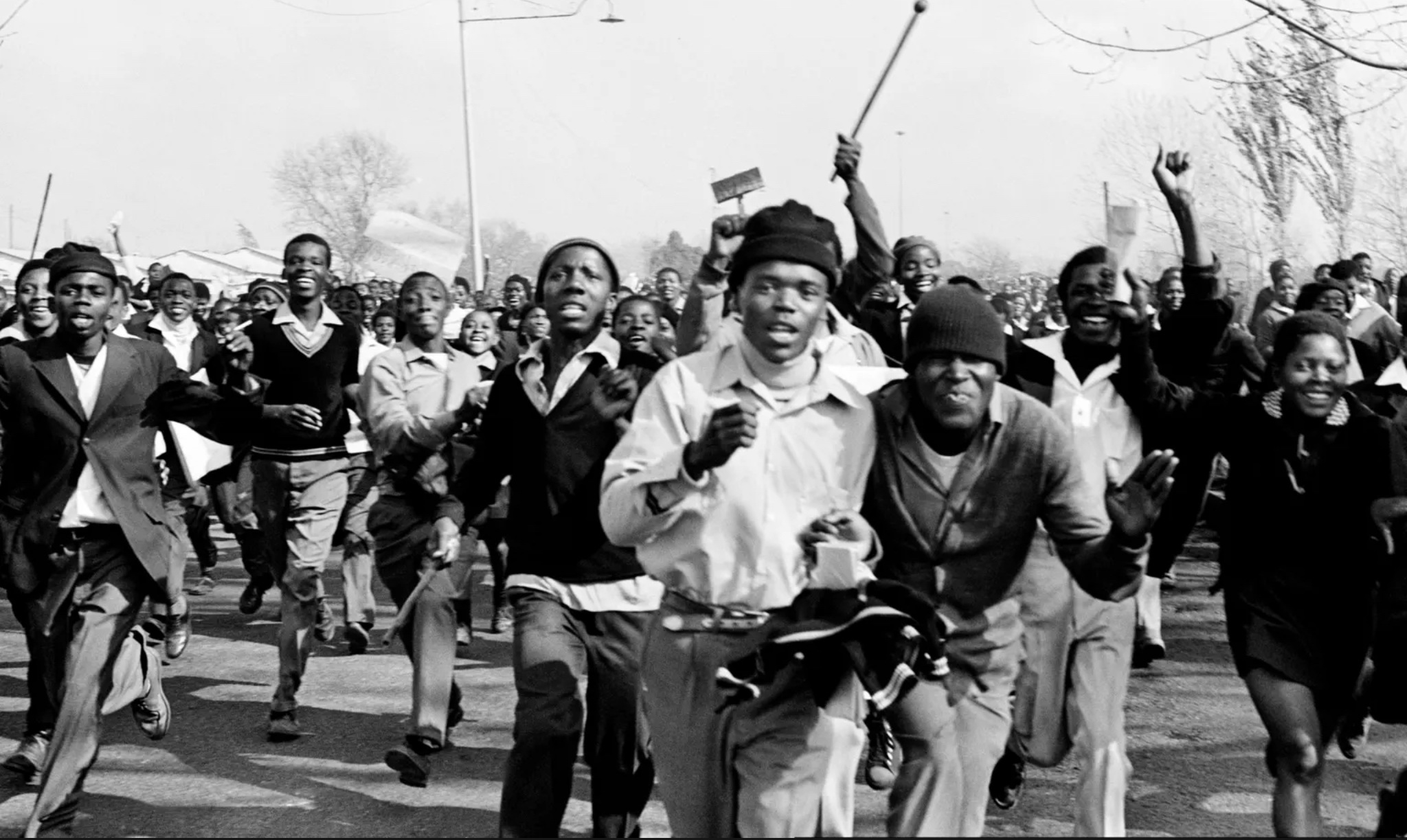
for Peter Magubane


Born in Johannesburg in 1932, Peter Magubane documented the brutality of apartheid and suffered from banning orders, solitary confinement and beatings as a result. From teaching himself as a boy with a Brownie camera, he went on to work for the influential magazine Drum and became Nelson Mandela’s official photographer. He died on New Year’s Day aged 91.  Photo: The Soweto uprising on 16 June 1976, when more than 15,000 children protested against an editct making Afrikaans the medium of instruction in black schools. At first, the refused to be photographed but Magubane said a struggle without documentation was no struggle and they had to show the world what was going on in South Africa. The students agreed and this picture was taken by Peter Magubane. —The Guardian, January 12, 2024


With shadow and light
you engrave enduring images
in our collective consciousness,
lend us your eyes as microscope 
that bores deep beneath the skin,
telescope that scans beyond the stars.
 
Broken bodies scattered at your feet—
one camera concealed in a milk carton,
another in a loaf of bread or Bible—
you chronicle histories of struggle,
reveal the beast that lurks within
and humanity that is possible.
 
Confined to solitary
blocks of cold cement,
you do not let them hold
or break your indomitable will, 
bequeath your hammering heart
to our beleaguered world.
 
You squint far beyond the time
you have seeded with your vision,
reclaim the radiance of rainbows,
splendor of the setting sun,
knowing, somewhere,
it will rise again.
 

Donna Katzin has served as the founding and former executive director of Shared Interest, a 30 year old non-profit organization that facilitates access to credit for low-income Black Southern Africans. In that capacity, she was privileged to meet and collaborate with Peter Magubane, and honor him. She currently co-coordinates Tipitapa Partners, which helps feed impoverished children and empower their mothers in Nicaragua. She also serves on the Board of the Fund for Community Change, as well as the Tikun Olam Commission of Reconstructing Judaism—working on reparations in the U.S.  A proud wife and mother, she is a contributor to The New Verse News and author of With These Hands—poems about the "new" South Africa giving birth to itself.

Monday, January 15, 2024

THE PEOPLE IN GAZA KEEP DYING

by Richard Jeffrey Newman


Crowds of displaced Palestinians at a UNRWA-affiliated school in Deir al-Balah, in the central Gaza Strip, on December 19th, 2023. Photo: Majdi Fathi/NurPhoto via AP at Jewish Currents.


“You don’t need overt bloodshed to cause significant violence that ends people’s lives. Many people will die unnecessary deaths due to deprivation.” —Yara Asi quoted by Maya Rosen in “The Epidemiological War on Gaza,” Jewish Currents, January 5, 2024

 
This morning on my daily walk
I met a long-haired shepherd
with ambiguous eyes.
I slowed my pace,
watched the dog’s walker
rein the animal’s curiosity in,
winding tightly around her hand
the tether we tell ourselves
protects people like me,
who believe all others
will of course welcome the friendship
we assume they assume we intend,

and in that moment, the rage
I thought I’d put behind me
at the words of the poet
whose book I was asked to review
sent its own tether out,
and I heard myself again
reading his lines aloud
as I sat some months ago
alone among my books,
confirming I’d not misread
his refusal of history,
the willful pleasure he took
in a hatred I disowned long ago,
no differently, I have no doubt,
than that dog, under
the right circumstances,
would disown its leash,
and perhaps its master as well.

I don’t remember much
about my own opportunity,
except that I was standing
in my sophomore dorm hallway
while a man from a country
I knew nothing about,
except that I knew nothing,
looked at me with disbelief.
“You really believe those mothers
love their sons so little
that they bring them into the world
just to make them martyrs?”
I had not said exactly that,
but it was my meaning,
as its hatred was,
in poem after poem,
the lie that poet embraced.

I started to ask if the dog was friendly,
but the woman spit out, “Come!”
and pulled him hard into the gutter.
I let my question sink back into silence,
which I thought at first
was how I should respond
to that poet’s betrayal
of this art that saved my life,
but then I wrote the review.
It’s in the world. I want to know
what difference it has made.


Richard Jeffrey Newman has published three books of his own poetry, T’shuvah (Fernwood Press 2023), Words for What Those Men Have Done (Guernica Editions 2017), and The Silence of Men (CavanKerry Press 2006), as well as three books of translation from classical Persian poetry, Selections from Saadi’s Gulistan, Selections from Saadi’s Bustan (Global Scholarly Publications 2004 & 2006), and The Teller of Tales: Stories from Ferdowsi’s Shahameh (Junction Press 2011). He curates the First Tuesdays reading series, is the Executive Director of Newtown Literary, and is Professor of English and Creative Writing at Nassau Community College.

Sunday, January 14, 2024

TWO WIDOWS OF UKRAINE

by Jacqueline Coleman-Fried


I live only for the child, Daryna. He’ll never ride his father’s shoulders again. Our wide bed makes me cry. But this is my country. Someone must pick clean the soil sown with bullets, missiles, mines. Find the brainwashed children, the looted paintings and Scythian gold—some older than the Russian empire. I will finish my husband’s war, our war. In that, I may find purpose. In that, I may find purpose.
 
You are foolish, Nadiya. The sky is thick with missiles; our army is thin. And even if the Russians leave, like vampires, their lust will survive. They’ll come back to seize our farms, our ports, our women. We are soldiers’ wives; do you think they’ll shower us with roses? No, my children and I must go. I want to forget cities smashed to pebbles. Winters lit by candles. Men turned to crosses. I want everything new. I want everything new.


Author's Note: Fighting Russian aggression has taken the lives of many, many Ukrainian soldiers and created many war widows—often young women with children, who are devastated. Support groups have sprung up to help them cope. In this poem, I imagined two possible ways of coping: staying in Ukraine to help rebuild it, and leaving Ukraine to start a completely new life somewhere else. I also invented two women, Nadiya and Daryna, to personify the two approaches. 
 
 
Jacqueline Coleman-Fried is a poet living in Tuckahoe, NY. Her work has appeared in The New Verse News, Topical Poetry, Consequence, The Orchards Poetry Journal, Sparks of Calliope, and pacificREVIEW.

Saturday, January 13, 2024

THE EARRING

by Heather H. Thomas


Hamas fighters stormed the Nova festival on 7 October and killed hundreds.


The evening river is gray jade, 

the tree line charred pink. 


Rose quartz earring

rescued from the roadside, 

shelters in my palm.


I remember Jerusalem—the golden

Dome of the Rock hazed out

in dust storms, random stabbings 


canceling my trip 

to the Temple Mount

also called Al-Aqsa Mosque. 


Different people worship the same places, 

sometimes under different names.


Red alert on D’s phone—incoming 

missile—D says she leapt

from her car into a ditch. 


My birthday, I sit alone in a Tel Aviv café, 

alarm shrieking—yet none move

to shelter, everyone chatting, trusting 


the Iron Dome to intercept.


Few can speak of it now: 

trance music, dawn cocktails, 

missile light mistaken for fireworks, 


then sudden noises of death—


After, women’s bodies mutilated, 

some missing the bottom half—


Survivors almost not 

here—eyes hollow, 

speechless they shake                         


with the silence of living.


The darkness you saw, we’re going to bring back 

the light, therapists tell them. 


Sometimes only a small body 

part remains, a finger, a foot, a hand, 


trace of mascara on eyelashes, 

an earring she put on that morning.


Author’s NoteThe poem blends details, which were reported in The New York Times and BBC, of the violence at the Nova festival with memories of my 2015 visit to Israel. The detail of the earring was reported by the BBC as an example of tiny objects, along with actual body parts, which were all that remained of some victims.  


Heather H. Thomas is a poet from Reading, Pennsylvania, the author of Vortex Street(FutureCycle Press) and five other poetry collections. Recent work has been published in Barrow Street, Cutthroat, New Verse News, Pedestal Magazine, and The Wallace Stevens Journal. Her work is translated into six languages, including Arabic.