Guidelines


Submission Guidelines: Send 1-3 unpublished poems in the body of an email (NO ATTACHMENTS) to nvneditor[at]gmail.com. No simultaneous submissions. Use "Verse News Submission" as the subject line. Send a brief bio. No payment. Authors retain all rights after 1st-time appearance here. Scroll down the right sidebar for the fine print.
Showing posts with label Ethiopia. Show all posts

Tuesday, September 23, 2025

STICK BOYS

by Lynne Schilling

© Bidouze Stephane | Dreamstime.com


Like a tower of graceful giraffes, Ethiopian  

boys on bamboo stilts walk high over the land.


The boys smile; some have intricate designs

painted on their faces or long, straight legs. 


Their aerial travel allows them to spot the cows 

in high grass, avoid the bites of venomous snakes.


It makes me think of those who bend the knee,

smudge the line between right and wrong—


the bottom-lined CEOs, the well-endowed

university presidents, the media moguls,


the politicians and puffed-up agency heads, 

the bonus-hungry citizens—


They look weak and cowed on the ground

among the vipers.


While Lynne Schilling has been writing poetry on and off for forty years, she began writing  seriously four years ago at age 75.. She has published in Quartet, The Alchemy Spoon, Rue Scribe, MacQueen’s Quinterly, Lucky Jefferson and others. She has a poem forthcoming in contemporary haibun online. 

Saturday, February 10, 2024

GATHERING (CLOUDS)

by Indran Amirthanayagam


We are gathering in Kansas City,

poets and publishers, writers

and editors: our people, friends,

colleagues, rivals. But I am

skipping the encounters. I don't

want to rub anything or anyone

except for the keyboard where

I compose this letter of resig-

nation, aware of the moving


staircase, the precipice, rocks

falling from the sky, aware

of train. bus and car wrecks

to come, bombs dropped

on friends' homes and cultures,

fireballs rolling through Chile's

Viña del Mar, vine now of fire

and mourning, through hills

near Valparaiso where


I fear cobblers and tailors

and hardware stores with

their giant signs have 

become ash, in memory, 

thy kingdom come, thy will…

how can we explain our 

suicidal impulse, this expelling 

of hot gas, assaulting 

of children and women 


in Gaza, famine threatening

that strip, and Ethiopia 

again in 2024. Are you 

ready for Live Aid 

once more, the concert 

for Bangladesh? How 

can we reply when the prompt 

calls for murder, 

by climate, by dictator?


Indran Amirthanayagam is the translator of Origami: Selected Poems of Manuel Ulacia (Dialogos Books). Mad Hat Press has just published his love song to Haiti: Powèt Nan Pò A (Poet of the Port). Ten Thousand Steps Against the Tyrant (BroadstoneBooks) is a collection of Indran's poems. Recently published is Blue Window (Ventana Azul), translated by Jennifer Rathbun. (Dialogos Books). In 2020, Indran produced a “world" record by publishing three new poetry books written in three languages: The Migrant States (Hanging Loose Press, New York), Sur l'île nostalgique (L’Harmattan, Paris) and Lírica a tiempo (Mesa Redonda, Lima). He edits The Beltway Poetry Quarterly and helps curate Ablucionistas. He hosts the Poetry Channel on YouTube and publishes poetry books with Sara Cahill Marron at Beltway Editions.

Monday, November 06, 2023

SEND THEM BACK

by Paul Hostovsky


Yes, let’s all go back
to where we all came from—
all of us—a few hundred thousand years ago,
back to the Great Rift Valley in Africa
where Mitochondrial Eve 
first opened her skirts 
and had enough daughters in a continuous chain
for her mitochondrial DNA 
to survive. Let’s all go back, every last one of us,
by foot or by boat–whichever way we 
came—no cars, trains, airplanes—
those of us who left
reuniting with those who never left. Plenty
of room now for all of us 
in the vast network of valleys 
that stretches between the Red Sea and Mozambique
where the giant rift is slowly tearing apart–
the Nubian tectonic plate
and the Somalian tectonic plate 
ever so slowly pulling apart, and at the same time
separating from the Arabian plate in the north. 
Let’s meet in Ethiopia where the three plates meet.
And though it will take us all a long time
to get there—8 billion of us and counting—
that’s okay because it will take a long time
for the fractures in the earth’s crust
to open up completely and form
a new ocean. But when they do
we will all be there. And then let's
all line up and hold hands
and go jump in a lake
together.


Paul Hostovsky's poems have won a Pushcart Prize, two Best of the Net Awards, the FutureCycle Poetry Book Prize, and have been featured on Poetry Daily, Verse Daily, The Writer's Almanac, and the Best American Poetry blog.

Friday, April 08, 2022

THE WORLD IS FULL OF WAR AGAIN

by Penelope Scambly Schott


More than 100 people have drowned in the Central Mediterranean in one week while at least 130 others have been forcibly returned to Libya. In the same week, MSF teams rescued 113 people from a rubber boat that was taking on water. Médecins Sans Frontières (MSF) condemns Italy and Malta’s failure to assist boats in distress and urges Frontex and other European vessels in the area to reveal the circumstances of these tragic events.  —Médecins Sans Frontières, April 6, 2022


No, the world is always full of war.
The thing is, this time it’s white people
killing white people, so we pay attention.
When it’s those people with darker skin
and we’re not sure exactly where they live,
we pay less attention. Can you point
to Ethiopia on a map? But really,
what good does our attention do? I mail
my pittance to Doctors Without Borders
on my way to shop at Safeway. Am I being
cruel? Yesterday I listened to my friend
lament for an hour on the phone.
I brought homemade bread to the neighbor
who calls it date night at the cemetery
when he brings a chair to his wife’s grave.
And look at me here with my fresh coffee
in a mug with dancing dogs. Don’t I think
I'm just so goddamn kind?


Penelope Scambly Schott is a past recipient of the Oregon Book Award for Poetry. Her newest book is On Dufur Hill, poems about the cycle of the year in a small wheat-growing town.

Friday, October 22, 2021

ETHIOPIAN DÉJÀ VU

by Phyllis Wax


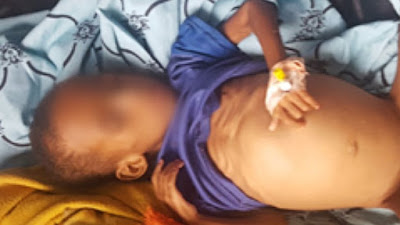
Despite mass starvation occurring in Ethiopia's northern region of Tigray, senior international aid officials are tiptoeing around declaring a famine nearly a year after the civil war erupted. Photo: This is one of the malnourished children being treated at Ayder Hospital this week —BBC, October 16, 2021


We’ve seen them before,                             
living skeletons,
bones like knobby sticks,
 
carrying children too weak
to brush flies
from their faces,
 
so hungry
they’ve been eating
leaves.
 
A hooded figure
strides among them,
his sharp scythe ready.
 
Trucks with life-
saving food and medicine
have been blocked.
 
Our feet seem stuck            
in concrete. 


Social issues are a major focus of Milwaukee poet Phyllis Wax. Her work has appeared on The New Verse News in the past, as well as in numerous other journals and anthologies, both online and in print.

Wednesday, March 31, 2021

A WOMAN IN TIGRAY

by Sarah Mackey Kirby


Britain's Channel 4 recently aired a devastating report on these atrocities. One survivor recounted a harrowing 10-day ordeal to the network during which she said she and five other women were gang-raped by Eritrean soldiers. She said the troops joked and took photos as they injected her with a drug, tied her to a rock, stripped, stabbed and raped repeatedly her. Doctors who've treated Tigrayan women have said one woman's vagina was stuffed with nails, stones and plastic. —CBS


is filled with stones,
nails. By her captors.
If she is not human,
if she must be bloodline-cleansed
from existence,
then why does crying matter.
 
The sun rises all over the world
as if it doesn’t know.
And sets apricot embers
each evening.
In darkness, a woman in Tigray
is filled with stones.
Filled with soldiers.
Alone below Orion’s belt,
sharp in the night sky,
glowing fire
three stars in a row.


Sarah Mackey Kirby's first poetry collection The Taste of Your Music (Impspired) will be published in May 2021. Her poems have appeared or are forthcoming in Ploughshares, Chiron Review, Connecticut River Review, Impspired Magazine, and elsewhere. She and her husband live in Louisville, Kentucky.

Wednesday, September 04, 2019

BIRTHRIGHT CITIZENSHIP

by Alejandro Escudé


The face of the oldest species that unambiguously sits on the human evolutionary tree has been revealed for the first time by the discovery of a 3.8 million-year-old skull in Ethiopia. Above: A partial facial reconstruction using the fossil. Photograph: AFP/Getty Images via The Guardian, August 28, 2019.


“President Donald Trump said Wednesday he was looking ‘very seriously’ at ending the right to citizenship for babies born to non-U.S. citizens on American soil. Trump spoke to reporters as he departed the White House for a speech in Louisville, Kentucky. He said birthright citizenship was ‘frankly ridiculous.’ —Time, August 21, 2019

“All persons born or naturalized in the United States and subject to the jurisdiction thereof, are citizens of the United States and of the State wherein they reside.” —The 14th Amendment to the Constitution of the United States


He died beside a river
and now, four million years later,
his cranium—his face, eyes looking through us
as if we were the moon in fog
four million years ago, a Wednesday,
though there were no Wednesdays and no
citizenship, only toddlers climbing trees,
only the chewing of grist,
the rock, the rock, the rock, the tree, the tree, the tree.
For what is birthright? Who belongs to what nation?
Can a nation really exit? Exit what?
Ask Australopithecus anamensis. He will tell you,
that loopy grin, earthy beard. Skin of our skin.
Heart of our heart. What do we feel
for him? Love? Ignorance is intolerance.
Historical, the complete skull.
No Lucy counterpart, a separate being.
What of the son born in a common territory
across the sea? Will he climb trees
with his brothers and sisters? Will he murder
other species of human? Or mate?
We may never know the ancient map-way
of genes that led here— the trail
of skulls shattered by time,
but we have that face, his face,
and we have the love that dissolves time,
and understanding, yes,
our birthright going back to Ethiopia,
our citizenship papers rolled
within the hollow bones of the birds.


Alejandro Escudé published his first full-length collection of poems My Earthbound Eye in September 2013. He holds a master’s degree in creative writing from UC Davis and teaches high school English. Originally from Argentina, Alejandro lives in Los Angeles with his wife and two children.