Guidelines


Submission Guidelines: Send 1-3 unpublished poems in the body of an email (NO ATTACHMENTS) to nvneditor[at]gmail.com. No simultaneous submissions. Use "Verse News Submission" as the subject line. Send a brief bio. No payment. Authors retain all rights after 1st-time appearance here. Scroll down the right sidebar for the fine print.
Showing posts with label famine. Show all posts

Saturday, July 05, 2025

DISPATCH FROM GAZA, JUNE 2025

by Carolyn Martin

With thanks to Yasser Abu Rida


Maria


From inside a desert tent––how I do not know––
he posts comments on my Facebook page.
“Lovely”: the Easter lilies bursting in my yard.
“Always creative”: his response to my latest poetry.
 
While I sit in the luxury of blossoms and words,
he messages me Khuza’a, his village, is gone.
What’s left: a wife, three kids, and the courage to survive.
“Endless displacements”: he calls his current address
and “Like zombies,” he says, “who don’t look 
left or right, people run toward flour trucks.”
Famine weakens hope.
 
Yet, he asks me to celebrate Maria’s birthday.
“Two,” he wrote, “and she has never seen
anything beautiful in this world.”
I ask him to give her a kiss and show her 
that Easter lilies exist somewhere 
on this tattered Earth.

 
Carolyn Martin is blissfully retired in Clackamas, OR, where she gardens, writes, and plays with creative friends. Her poems have appeared in more than 200 publications around the world.

Friday, January 03, 2025

NEW YEAR'S EVE IN GAZA

by Donna Katzin


Part of the humanitarian zone, around Al-Aqsa University, west of Khan Yunis. February 2024, compared to December 2024. Credit: Planet Labs PBC via Haaretz, December 31, 2024


There is no shelter to keep out the cold                                     
in Deir al-Balah—no water
safe to drink or mouthfuls of food…
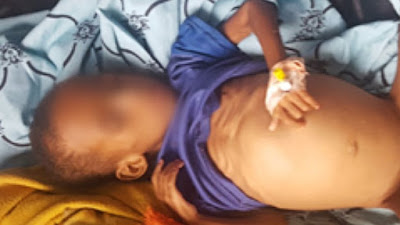
famine claims the children one by one,
even infants who, though barely named,
are loved.
 
Winter winds do not appear to notice,
rip through shreds of plastic
pretending to be tents,                                       
that can no longer hold together
as unspoken words and stifled prayers
stab at throats too dry to utter them.
 
Without knocking, rain pours through the openings,
soaks clothes and bedding to the skin
for days and nights that never close their eyes,
like a lethal benediction
claiming tiny souls of unblessed babies
freezing in their mothers’ arms.
 
A world away, one million revel in Times Square 
awash in bright lights and bubbly 
on the eve of the New Year.
 
 
Donna Katzin is founding and former Executive Director of Shared Interest, investing in South Africa's democratic development, and co-coordinator of Tipitapa Partners, working with Nicaraguan mothers to feed their children.  She is also a member of the Reconstructionist Movement's Tikkun Olam (Repair the World) Commission, and a published poet honored to have been included in The New Verse News.

Saturday, April 20, 2024

DECLAIM

by Mark Svendsen

for the children


PBS, March 8, 2024


Standing at the crossroads, black with traffic

Waiting for the little green man to tell me I could go

When a child, quick as a nightmare, broke from its mother’s hand

Ran beside me, looking back at her, shrieking, into the road.

Without thought I dived, catching at the child

Bringing it to me and to its mother,

Just as you in my place would have done.

Sometimes, my people, your child becomes my child

Your love becomes my love

Your blood is mine.


But now! What are we thinking now, my people?

For years the children have played, been pushed

Into the middle of the road

And we have turned our face away.

But now, when we are forced to see them

When we are forced to see

We turn our face again?


What are we thinking my people?

Let tears wound our cheeks

For what we’ve done.

Let fear wound our minds

That we think so.


Tell me you love them my people, or I am lost.

Show me you love them my people, 

Or all we are together is gone.


Mark Svendsen prefers concrete to other more porous materials with which to pave his mind but, even then, cracks eventually appear and poems, like weeds of the mind, take root and must be dealt with summarily. He lives in Zilzie, Australia with his partner. There, she writes music, and he writes things – in an attempt to maintain homeostasis.

Wednesday, April 17, 2024

WHERE NO ONE COUNTS

by Lynn White


Source: The Guardian


When will we count the dead in Gaza?
Those buried in named graves we know, 
all the tens of thousands of them,
those buried in the rubble,
the disappeared 
with no one left to name them,
are still unknown
uncounted.

Then the other Disappeared,
prisoners of war
if it were a war,
but with only the rights
of terrorists
who have no rights at all
in this unequal conflict
that some call ‘war’.

And how can we count the injured in Gaza
when there are no hospitals left
and its people don’t count
so no one can count those numbers.
and perhaps no one will
in a country where people don’t count.

Now the starved and starving 
have joined them,
the bags of baby bones
the unaccounted numbers
of intentional famine
in Gaza where still
no one counts.


Lynn White lives in north Wales. Her work is influenced by issues of social justice and events, places and people she has known or imagined. She is especially interested in exploring the boundaries of dream, fantasy and reality and writes hoping to find an audience for her musings. She was shortlisted in the Theatre Cloud 'War Poetry for Today' competition and has been nominated for a Pushcart Prize, Best of the Net and a Rhysling Award. Her poetry has appeared in many publications including: Apogee, Firewords, Peach Velvet, Light Journal, and So It Goes.

Friday, January 05, 2024

RESIGNED

by Indran Amirthanayagam


Having now seen how quickly the truth can become a casualty amid controversy, I’d urge a broader caution: At tense moments, every one of us must be more skeptical than ever of the loudest and most extreme voices in our culture, however well organized or well connected they might be. Too often they are pursuing self-serving agendas that should be met with more questions and less credulity. —Claudine Gay, The New York Times, January 3, 2024


Some attribution errors, not deliberate,

in academic essays, and her posture
of defending freedom of expression

in campus rallies, for this the first

black woman to head the country's

most famous university resigned?


For the witch-hunt of our McCarthy

times, communism replaced by

anti-Semitism, even if Palestinian


people are also Semitic, even if

murder of twenty-two thousand

civilians, including eight thousand


children in Gaza does not mean

a holocaust, even if now

on the entire earth there


are about 700,000 thousand

people in a state of famine,

of whom 577,000 live in Gaza,


four out of every five Palestinian.

And at Harvard University (also

at Penn), female leaders resigned.


Indran Amirthanayagam is the translator of Origami: Selected Poems of Manuel Ulacia (Dialogos Books). Mad Hat Press has just published his love song to Haiti: Powèt Nan Pò A (Poet of the Port). Ten Thousand Steps Against the Tyrant (BroadstoneBooks) is a collection of Indran's poems. Recently published is Blue Window (Ventana Azul), translated by Jennifer Rathbun. (Dialogos Books). In 2020, Indran produced a “world" record by publishing three new poetry books written in three languages: The Migrant States (Hanging Loose Press, New York), Sur l'île nostalgique (L’Harmattan, Paris) and Lírica a tiempo (Mesa Redonda, Lima). He edits The Beltway Poetry Quarterly and helps curate Ablucionistas. He hosts the Poetry Channel on YouTube and publishes poetry books with Sara Cahill Marron at Beltway Editions.

Monday, November 07, 2022

IF I HAD A HAMMER

by Akua Lezli Hope


AI image… assisted by Akua Lezli Hope


all over this land oh over this Land all over this land/ we are dissolute and
unwise we are fractured and fracturing we are falling failing falling/ into an
exegesis of convenience/ of a grasping not at straws but at unreason/ creeping
decrepitude in our body politic/ a petulant dementia/that sanctions Breaking
and entering Breaking and entering    harm/ waging one million tiny Wars
inflaming warped hearts/ causing this conflagration that burns votes and
batters husbands in their homes/ endangering everything in this too late
hour/where we teeter totter slip on blood  blood pooling  bleeding
everywhere/ the deaths of our defenders responders resisters/ our climate
screaming at us slaying us/ flooding the water-full drying the drought stricken
shaking the fractured earth burning tinder-full  forests/ all at once  all fiercely
now/ and somehow I weep for that old man alone at home/struck in the head
and falling                down
  

Author's Note: On October 28, Paul Pelosi, 82. was attacked by a man undertaking “a suicide mission” to kill his wife, speaker of the house, Nancy Pelosi.  The nightly news has been assaultive, as 33 million Pakistanis face despair UN Secretary-General Antonio Guterres said, “I have seen many humanitarian disasters in the world, but I have never seen climate carnage on this scale.”  1.3 million in Nigeria are displaced by floods. Somalia, like much of the Horn of Africa, is facing its worst drought in 40 years. Following the failure of four successive rainy seasons more than 7 million of the country’s 15 million people are experiencing severe hunger. Experts warn that the next rainy season between October and December will also likely fail, pushing several parts of the country into famine before the end of the year, unless aid efforts are urgently ramped up.


Akua Lezli Hope is a creator and wisdom seeker who uses sound, words, fiber, glass, metal, and wire to create poems, patterns, stories, music,  sculpture, and peace.  A paraplegic, third-generation New Yorker, her honors include the NEA, two NYFAs, NYSCA, SFPA, Elgin, & Best of the Net, Rhysling & Pushcart Prize nominations.

Sunday, March 06, 2022

THE GHOST OF THE OLD COUNTRY

by Kathryn A. Broderick


My grandmother is from the Old Country
A land of winding cities, valorous heroes, and ancient towers
Across the green-glass seas.
 
She whispers words that flow like water
As she sparks to life stories in that distant place
—But lowly and in secret, shamed by her foreign tongue.
 
Yet her secrets drip into the new life she’s crafted here
Coloring the edges of suburbia in Anywhere, USA
A resilient stain that assimilation cannot wash away.
 
The dust of butter-rich tea cakes
Cling to her withered fingers
As she weaves tales of her faraway home.
 
She tells me of the wild Baba Yaga
A witch that lives in a hut atop a mighty bird’s leg
And the ways to escape her enchantment.
 
She often weaves together the push-pull of escape and return
Haunted by the melancholia of self-imposed exile
As she tries to accept her unwilling divorce from the Old Country.
 
In her garden, soniashnyk bow their golden heads toward the sun
She calls the flowers her little kings with many-petalled crowns
She rests in their shadows as she paints pictures of her lost home.
 
My grandmother died before I knew the Old Country meant Ukraine.
She told me tales of its beauty. I never knew of its death.
She fled from its capital as a child.
 
Her father did not survive the journey
—at least, not as the same man.
Ghosts lingered in his heart.
 
The famine turned into skeletons those that remained.
Their bones returning to the embrace of earth in unmarked graves.
“Have another tea cake,” she’d say. “You look hungry.”
 
What was it like to be Slavic and living in America during the Cold War?
Living under the hostile glare of suspicious eyes branding you an enemy?
Surviving against your will as your family withered away?
 
I sit in the shadow of her sunflowers
Listening to news of Russia’s unprovoked attack
And I feel her fingerprints upon the pulse of the Old Country.
 
The heroic threads and tragedy lining each of her secret stories
Now shout at me from modern headlines.
We dwell in dark times—but in the darkness heroes rise
At least, as my grandmother said, they do in the Old Country.


Kathryn A. Broderick’s work has appeared in First Line and Mirror Dance. Her second novel Gorgon Crown will be released in June 2022.

Friday, February 25, 2022

90TH BIRTHDAY IN KYIV

by Corey Weinstein


In just four weeks in the summer of 1941 the German Wehrmacht wrought unprecedented destruction on four Soviet armies, conquering central Ukraine and killing or capturing three-quarters of a million men. This was the battle of Kyiv–one of the largest and most decisive battles of World War II and, for Hitler and Stalin, a battle of crucial importance. Hundreds of thousands of Soviet prisoners of war were taken in the aftermath of the battle of Kiev, but very few would survive German captivity. —Arthur Grimm, “Kiev 1941: Hitler's Battle for Supremacy in the East,” Semantic Scholar


I live in a breadbasket,
That’s the whole problem,
Fields of wheat, of barley
for the soup the family loves,
Carrots, onions, meat scraps
or beets for borscht that stains,
Blood reluctantly on our hands.
None of them: the Whites, the Reds,
the Iron Crossed Pure Whites,
the new Green with wallets and promises,
None of them know our voices,
taste our beautiful farms,
Now still again the Reds attack,
and we are stained again
with what must be done,
I was nine standing at the pit’s edge,
Some cheered, not me, some retched,
The ground heaved and belched for a week,
Father cooked their lunches, never recovered,
A drunk in Kyiv gutter dirty to the end.
Again the shrieks of bombs and moms,
Blasts and dust and blood in the air,
These Reds of famine and orders and lies
roll over our wintered earth to plant
their seeds of our despair, now still again.


Corey Weinstein is a retired homeopathic physician whose poetry has been published in Vistas and Byways, The New Verse News, Forum, California State Poetry Society, and Jewish Currents. He currently attends writing classes at Osher Lifelong Learning Institute in San Francisco and hosts their Poetry Circle. Weinstein has also been published in a number of medical/academic publications. He was an advocate for prisoner rights as the founder of California Prison Focus, and he led the American Public Health Association’s Prison Committee for many years. In his free time, he plays the clarinet in a local jazz band, his synagogue choir and woodwind ensembles.  

Wednesday, February 23, 2022

WAITING FOR ARMAGEDDON

by Gail White


All times are times of impending doom,
If one knows how to read the signs.
But old gods walk through the living room
And lay down nets and fishing lines.

Clutching the mesh, I begin to seek
Wonders and signs I’ve let slip by:
The fish impaled on the heron’s beak
Miraculous as the butterfly.

Between war and depression the end will come.
With plague and famine we take our chance.
But the cat moves her kittens one last time,
And the sandhill crane does a mating dance.


Gail White is a formalist poet and a contributing editor to Light. Her most recent collections are Asperity Street and Catechism. She lives in Breaux Bridge, Louisiana, with her husband and cats. 

Friday, October 22, 2021

ETHIOPIAN DÉJÀ VU

by Phyllis Wax


Despite mass starvation occurring in Ethiopia's northern region of Tigray, senior international aid officials are tiptoeing around declaring a famine nearly a year after the civil war erupted. Photo: This is one of the malnourished children being treated at Ayder Hospital this week —BBC, October 16, 2021


We’ve seen them before,                             
living skeletons,
bones like knobby sticks,
 
carrying children too weak
to brush flies
from their faces,
 
so hungry
they’ve been eating
leaves.
 
A hooded figure
strides among them,
his sharp scythe ready.
 
Trucks with life-
saving food and medicine
have been blocked.
 
Our feet seem stuck            
in concrete. 


Social issues are a major focus of Milwaukee poet Phyllis Wax. Her work has appeared on The New Verse News in the past, as well as in numerous other journals and anthologies, both online and in print.

Wednesday, October 17, 2018

DEJA VU

by Phyllis Wax


'WORST FAMINE IN 100 YEARS' COULD SEE 13 MILLION PEOPLE STARVE IF SAUDI-LED COALITION KEEPS BOMBING YEMEN: U.N.” —Newsweek, October 15, 2018. The United States supplies bombs and other support for the war that’s killed civilians and is creating famine. Children in Yemen are acutely malnourished. Those who survive will often be stunted for the rest of their lives, physically and mentally. Photo Credit: Hammadi Issa/Associated Press via The New York Times, September 26, 2018.


Some of us remember the photos
when the camps were liberated

skeletons
lethargic from lack of food
legs and arms just fleshless bones
ribs perceptible without x-rays                       
                                                                     
In Yemen
it’s the children—
big-eyed
visibly starving                           
                                                     
pinned in place
by warheads
made in the USA
targeting markets
funerals    schools


Social issues are a major focus of Milwaukee poet Phyllis Wax. Among the anthologies and journals her work has appeared in are Portside, Obama-Mentum, TheNewVerse.News, Surreal Poetics, Ars Medica, Naugatuck River Review, The Five-Two, Star 82 Review and Mobius.  When she’s not writing you might find her escorting at a local abortion clinic. She can be reached at poetwax38 (at) gmail.com.

Thursday, September 28, 2017

THEY DON'T REMEMBER WHEN WE WERE . . .

by Maria Lisella


… the immigrants, the sharecroppers,
the unskilled laborers standing on corners
waiting for work, maybe it was the Hell’s Gate Bridge
or the dangerous bowels of the subways.

Sharing low-lit tenements with men piled high
swapping pillows, sheets and beds as they returned
from the morning shift, the evening shift

The stench of those men-filled quarters
No women to dress for, to clean for,
to shave for, a society of men clammy

in winters, sultry in summers, saving
meager wages split with padroni
and landlords, before sending bits and pieces

Home to bring wives and children
here to this foreign place, trying
to remember why they left home,

Was it that bad? Yes it was, wives don’t tell
the men in their letters, of the famine,
the deaths, a silk thread of hope spanning

The Atlantic, to feel whole again
not so alone, to be human instead
of imitating animals in the daily routine:

Wake, work, sleep, nothing in between
no rises or falls or celebrations or
clean towels or bread on the table

Set for four, six or set at all.
Eating while standing becomes a skill
on the corners waiting for the work

If the policeman doesn’t move them
to another corner, stepping into strangers’
cars, a dangerous deal for a day’s work

Now the men speak with accents from:
Mexico, Guyana, India but they are not
so different from our grandfathers and uncles

Shifting from one foot to the other to keep warm
expecting a day’s pay by nightfall, but who can tell?
they have no choice.

My mother recalls the stories of her father, brothers.
She cannot understand the nieces, nephews
who don’t see their ancestors’ faces before them.


Maria Lisella is the sixth Queens Poet Laureate 2015-2018. Twice nominated for a Pushcart Poetry Prize, her collections include Thieves in the Family, Amore on Hope Street, and Two Naked Feet. She co-curates the Italian American Writers Association readings, is a NY Expert for USA TODAY, and contributes to La Voce di New York.

Friday, March 17, 2017

CHRONICLES

by Judith Terzi


They are taking something away in America.
They have stolen all the cows in South Sudan.

They are hawking their egos on minor stages.
They have forced villagers to flee South Sudan.

They will forsake the poorest among us.
Their women cup hands in dust in South Sudan.

They will not succumb to offerings of reason.
Their women search for grain under straw in South Sudan.

They camouflage their fortunes under the radar.
They offshore in the West stolen assets from South Sudan.

They inhabit the wilderness of equivocation.
They create wastelands out of farms in South Sudan.

They speak in fiction to preserve potency.
They have massacred for power in South Sudan.

Now, they are taking compassion away in America.
Now, one hundred thousand facing famine in South Sudan.


Judith Terzi's poems have recently appeared or are forthcoming in BorderSenses, Caesura, Columbia Journal, Raintown Review, Spillway, Unsplendid, and Wide Awake: The Poets of Los Angeles and Beyond. Her poems have been nominated for Best of the Web and Net, shortlisted in the Able Muse Write Contest, and included in Keynotes, a study guide for the artist-in-residence program for State Theater New Jersey. Casbah is her latest chapbook from Kattywompus Press.

Friday, June 13, 2014

A HOPE IN PERILOUS TIMES

      by Buff Whitman-Bradley


    "Woman With Child & Calla Lilies" (oil) 24" by 30" by Renee Thompson.


      On my way to the grocery store
      Brooding about famine and endless war
      Environmental catastrophe and economic collapse
      I notice a young pregnant woman
      Her head held high
      Striding up the block like the whole brass band
      Following her big beautiful drum majorette of a belly
      Toward a future that I hope will be there
      To embrace her child


Buff Whitman-Bradley is the author of four books of poetry, b. eagle, poet; The Honey Philosophies; Realpolitik; and When Compasses Grow Old; and the chapbook, Everything Wakes Up! His poetry has appeared in many print and online journals. He is also co-editor, with Cynthia Whitman-Bradley and Sarah Lazare, of the book About Face: Military Resisters Turn Against War.  He has co-produced/directed two documentary films, the award-winning Outside In (with Cynthia Whitman-Bradley) and Por Que Venimos (with the MIRC Film Collective).  He lives in northern California.