Guidelines


Submission Guidelines: Send 1-3 unpublished poems in the body of an email (NO ATTACHMENTS) to nvneditor[at]gmail.com. No simultaneous submissions. Use "Verse News Submission" as the subject line. Send a brief bio. No payment. Authors retain all rights after 1st-time appearance here. Scroll down the right sidebar for the fine print.
Showing posts with label freed. Show all posts

Wednesday, April 26, 2023

DOES TIME HAVE COLOR TOO?

by L. Smith


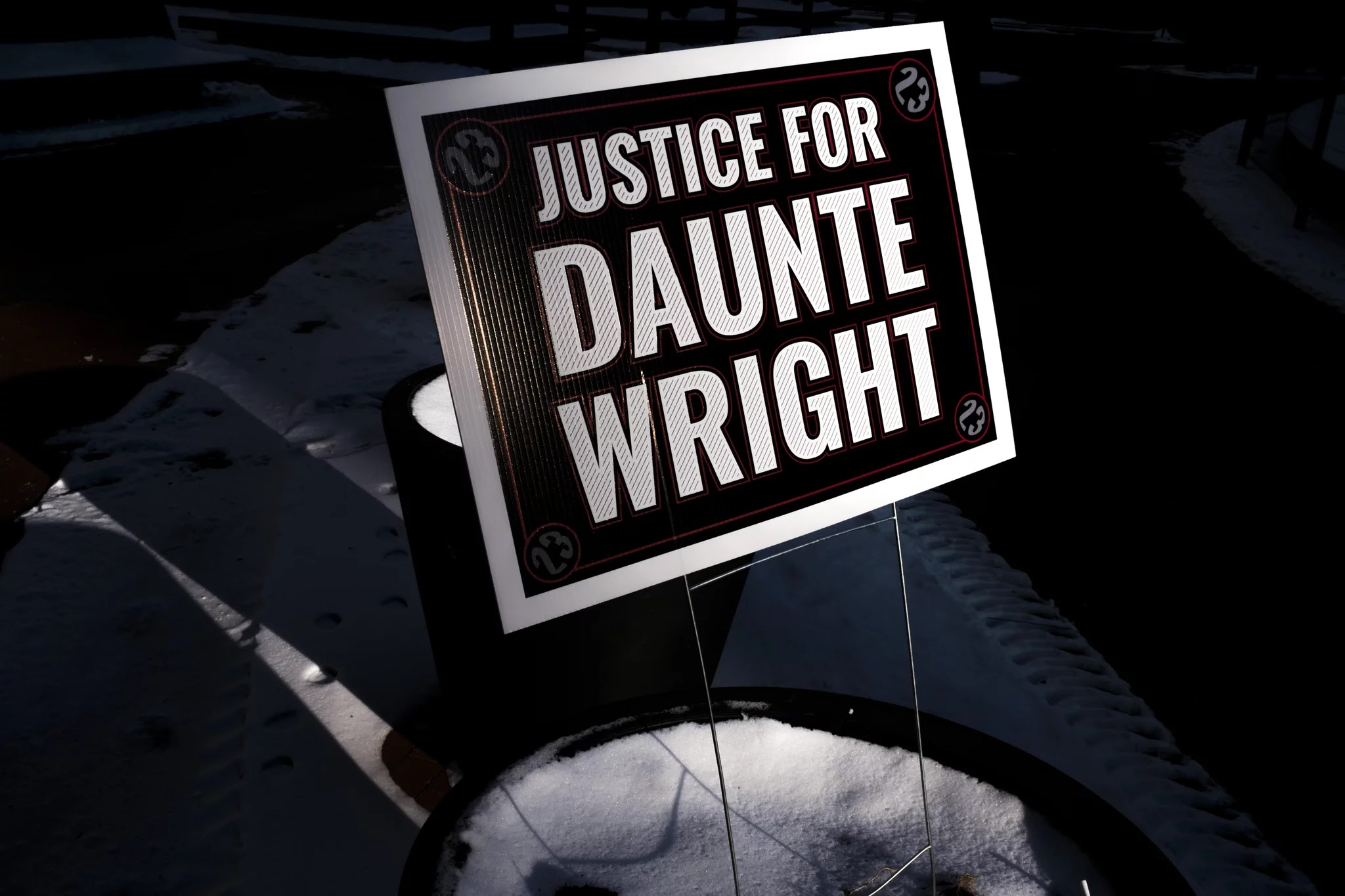
Disgraced Minnesota police officer Kim Potter walked free from prison after serving just 16 months for shooting dead Daunte Wright when she mistook her gun for a Taser during a traffic stop. Potter, 50, was released from Minnesota Correctional Facility-Shakopee in the early hours of Monday morning to serve the remainder of her sentence on supervised release. —The Independent (UK), April 24, 2023


So, does time have color, too?
Why do they get less time for the same offense that, say, we might do?
Is their time more valuable than, say, mine?
I mean, ain’t we living on the same clock? Same timeline? Same century?
Maybe we need to leave the time up to the jury, because the judge is too easily nudged by emotion. Are you sentencing the crime, or are you sentencing the color? Are you sentencing the crime, or are you crying for a mother? Are you sentencing the crime, or are you sympathetic to the other?
 
Is one color more fragile than the other? You know the phrase, right? —"Don’t do the crime,
if you can’t do the time.” Does that not apply for every color?
What? Y’all think we got a time machine? Think time go by for us at warp speed?
Is time not supposed to affect the brother like it does the other?
Y’all don’t age the same, but them years don’t go by no faster for us.
We age on different scales, but them years go by the same. 
 
I thought time was about alignment, about the crime,
about time to match the crime—not the color. Not how sullen one is once seized.
But it seems the brother gets more time than the other because of his color.
Does color determine risk? After all, who has the means to take the most risk?
The brother? Or the other?
 
Or is it: don’t do the crime, unless you got the right color? 
I mean, can y’all meet us in today? Can we at least decide time like we living in the same decade?
Whose family will suffer most under the cloak of the time?
During the absences, the voids, the gaps, the setbacks brought on by the time? Whose family is already behind?
 
Why can’t white time and black time be on the same damn black line?
I didn’t know time had color, too.
I guess time, like fairness, are both abstract, are just a construct. 
Time being obstruct for the fair-skinned,
abundant for the brother, but absent, lightened, or lifted for the other.
Intangible for the other, hard-lived for the brother.
Time itself is colored obtuse.
Color makes time profuse.
For the colored, time is abused.
And in today, time is a noose.
I didn’t know time had color, too.
And since it does, why can’t our time have the color of you?


L. Smith, a New Orleans native, is a writer, multi-certified, English and master reading teacher, who has freelanced for local newspapers. Her poems “Black Man Running” and “Worse Than Rodney King” have also been published in The New Verse News. She has an anthology of poems and prose set to publish spring 2023 that her mother and daughter created space for her to write. She also has begun this blog for writer teachers.

Friday, July 02, 2021

ON BEING STUCK AND STACKED DECKS

by Jen Schneider


Dave Granlund cartoon via Milford Daily News.


1. Something bitter. Noun. Plural.
2. Something sour. Noun. Plural.
3. Something sweet. Noun. Plural.
4. Something vulnerable. Noun. Plural.
5. Someone who is vulnerable. Noun. Plural.
6. Something that is increasing in number. Noun. Plural.
7. Something else that increases in number. Noun. Plural.
8. A Whole number. Greater than six and less than eleven.
9. A whole number. Less than six
10. An antonym for permanent.
11. A synonym for the adjective just 
12. Another word for exonerated


Breaking news alerts proliferate. 
Prosper, too. Prime time menus 
of mixed reviews mingle and morph 
amongst clam covered 
palms and sweat stained pits.
Stomachs ache 
of __1__ and __2__. 
 
Memories of __3__ fade into
forever setting suns as storm 
clouds crystallize. Frowns
form. Red and blue ink
blur. Times New Roman
font crosses paths with Lato.
Wet signatures dry. Personals 
pay final respects. Records
are released. 
 
Wild prey wait on nearby wires. Dollars
wait in nearby banks. Electric
energy both watching and waiting. 
Lighting strikes in predictable patterns
and on predictable prey.
 
The vulnerable press. Charge, too.
No matter. Mathematics makes
for logical work and two consonants 
(F / R)
and two vowels 
(E / E) 
yield a limited
number of combinations. 
Permutations, too.
 
Reef(s) hover at or near
the surface of stormy seas. 
Barriers built to protect those
in need - __4__
and __5__ weaken
until those in need become
no more than numbers. 
 
Data most revealing. 
Most numbers grow - 
__6__ and __7__
while others diminish. 
Brute force always finds a way
to unlock combinations long
proffered as secure. Sentences
often flip, then flop. __8__ turns
to __9__with a subtle twist.
Zippers release and seams snap.
Nylon curtains drop and faux
satin sheets fall. Silver
linings dissipate.
Accounts empty then fill.
 
Golden standards have always been tarnished.
Gambling has always been a predetermined 
proposition. Printing presses turn out F.R.E.E.
passes as pressed charges turn off the lights.
Light, too. Games systems everywhere.
 
Not all Aces are pure. 
Not all Spades are sacred. 
To win is not always ___10___.
To be free, not always __11__.
 
Hands reveal hidden tricks
and luck turns. Locks turn left 
and engines run. Game on 
and now over. Energy depleted.
 
To be free 
is not to be __12__.


Jen Schneider is an educator, attorney, and writer. She lives, writes, and works in small spaces throughout Philadelphia. Her work appears in The Popular Culture Studies Journal, unstamatic, Zingara Poetry Review, Streetlight Magazine, Chaleur Magazine, LSE Review of Books, and other literary and scholarly journals.

Tuesday, April 07, 2015

ALABAMA JUSTICE

by Wilda Morris


Anthony Ray Hinton free after nearly 30 years on Alabama Death Row —AL.com


     For Anthony Ray Hinton
“the ball of free will dropped from my hand”
~ Ishmael, in Moby Dick by Herman Melville


black male, poor
innocent, as if that matters
when the DA wants a crime solved quickly

call him a suspect
find his mother’s gun
from which the bullets were not fired
stuff him in a cell

don’t worry if his lawyer
is inadequate
don’t worry if his expert witness
is so inexpert he can hardly see
through the forensic microscope
has little experience in ballistics
is so lamentable the jury
laughs at him

ask for the death penalty
send him off to prison
to live in solitary on death row

without his family
without his friends
without his free will

fight all the way to the Supreme Court
to keep him there

until after his mother is dead
after his youth is gone
after he has almost forgotten
the feel of a loving touch
after decades of not making
significant decisions

when the court bounces
the ball of free will back to his hands
after thirty years


Wilda Morris, a past president of Illinois State Poetry Society, is workshop chair of Poets & Patrons of Chicago. She has won awards for free verse and formal poetry and haiku. She leads poetry workshops for children and for adults and has been widely published. She is retired from a career of teaching graduate student and coordinating a not-for-profit peace and justice organization. Her blog provides monthly contests for poets.