Guidelines


Submission Guidelines: Send 1-3 unpublished poems in the body of an email (NO ATTACHMENTS) to nvneditor[at]gmail.com. No simultaneous submissions. Use "Verse News Submission" as the subject line. Send a brief bio. No payment. Authors retain all rights after 1st-time appearance here. Scroll down the right sidebar for the fine print.
Showing posts with label revolution. Show all posts

Monday, February 02, 2026

THE REVOLUTION IS BEING TELEVISED

by Alex Stolis


after Gil Scott-Heron


You cannot escape it by staying home 

the revolution is alive

the revolution is a nuclear sun melting black ice

the revolution will not let you rest.


There are no news highlights

there is no news, only revolution,

no memes, no theme song, no uniforms,

no military-industrial complexion.


The revolution is being televised

in B&W

in Technicolor

in IMAX 3D.


The revolution is being televised as you read this

the revolution does not care about talking heads,

doesn’t believe in DHS or FBI or ATF or 

any other alphabet-despotic soup.


The revolution is being televised

while you eat, sleep, make love, 

while you want to believe things are normal,

ignore the revolution at your own peril.


The revolution is being televised

coast to coast, station to station

a commercial free telethon streaming 24/7

it is Bot-proof, cleared of influencers.


This revolution takes no prisoners

it names names & kicks ass, it spins 

spin back to truth, it’s a Springsteen song 

written & recorded in 48 hours.


There will be no taping or film at 11:00

no reruns,

tune in or turn out

the revolution is being televised.


There will be no ctrl-alt-delete

lock screen, reboot

this revolution is being televised

is being televised live.


Author’s noteLast week, Bruce Springsteen wrote a song in protest of the ICE actions in my hometown, Minneapolis. It brought to mind Public Enemy's song "Revolution" which brought to mind Gil Scott-Heron's song "The Revolution Will Not Be Televised" which, in turn, brought this poem to me. I am reminded of how art is connected, the power of words and how we, the people, do have the power to direct history.


Alex Stolis has had poems published in numerous journals. Two full length collections, Pop. 1280 and John Berryman Died Here were released by Cyberwit and available on Amazon. His work has previously appeared or is forthcoming in Piker’s Press, Ekphrastic Review, Louisiana Literature Review, Burningwood Literary Journal, and Star 82 Review. His chapbook Postcards from the Knife-Thrower's Wife was released by Louisiana Literature Press, RIP Winston Smith from Alien Buddha Press, and The Hum of Geometry; The Music of Spheres in by Bottlecap Press. He lives in upstate New York with his partner, poet Catherine Arra.

Sunday, September 14, 2025

NO MERCY

by Steven Kent


Nick Fuentes has denied speculation circulating on social media his followers, known as “Groypers,” were responsible for conservative activist Charlie Kirk’s death, after messages on unfired casings written by Kirk’s alleged shooter Tyler Robinson appeared to be linked to the far-right movement. —Forbes, February 13, 2025


A revolution always eats its young,

Devouring true believers in its urge

To prove itself more faithful to the cause.

With cries of heresy on every tongue,

There has to come a fateful final purge,

And then the end. Same as it ever was.


Steven Kent is the poetic alter ego of writer and musician Kent BurnsideHis work appears in 251, Asses of Parnassus, Light Poetry Magazine, Lighten Up Online, The New Verse News, The Orchards Poetry Journal, Philosophy Now, Pulsebeat Poetry Journal, The Road Not Taken: A Journal of Formal Poetry, Snakeskin, and Well Read. His collection I Tried (And Other Poems, Too) was published in 2023 by Kelsay Books.

Sunday, October 30, 2022

COLLAGE: THIRTEEN WAYS OF LOOKING AT A REVOLUTION

by Marianne Peel


Illustration by Roshi Rouzbehani for The New Yorker, October 9, 2022


“…it is the conscious articulation of time.” —Hans Richter

                                                                                                      
I.                    Rahumpour, who lived in Iran from age six to sixteen,
remembers the panic she felt as a child.  Gusts of wind
pulled her headscarf down, exposing her hair.  A frenzied rush
to adjust the fabric.  To hide her hair beneath the hijab. 
 
II.                 Hadis, a child of twelve, is taken into custody.  A few wisps of hair
had escaped from her headscarf.  Three women covered in heavy chadors
spit a lecture in a dark room downtown:  you have sinned, you have
not learned the lessons of the Quran, you will go to hell.  She is instructed,
educated, to pull out a string of hair.  If that hurts, imagine getting hanged
by your hair for all eternity.  School dismissed.
 
III.              Mahsa Amini, twenty-two, is arrested by the Morality Police
for improperly wearing her hijab.  In custody, they beat and bruise her
into a coma.  Corpulent blows to the head. Skull fractures embroider
her x-ray.  Official government cause of death:  heart attack.
 
Photos of Mahsa weigh down the internet. Lying in a hospital bed.
Tubes and wires all over her body.  Blood pooling from one ear. 
Rivulets of blood tattoo the starched, white pillowcase.
 
Her mother cries:  I am her mother.  I am dying from grief.
Her father cries: Everything is a lie.  No matter how much I begged,
they wouldn’t let me see my daughter.
 
IV.              In the public square of Kuma, a young masked woman balances
atop an electrical box.  She lowers her head to one side.  Slices off
her long locks with sheers.  A ritual sacrifice, this self-shearing. A denial
of ancient poetry where hair guarantees immemorial beauty, chains of binding
love, shrouds of truth.  Now women walk around uncovered, brandishing
shorn heads in the lethal sun.  A beautiful, proud wound.
 
V.                Schoolgirls with backpacks and black Converse sneakers march
down Tehran streets waving school uniform veils in the air. They wave
headscarves in circles, block traffic in every roundabout.  They shred
images of the Ayatollah, hurl his jigsawed face fragments into the street,
shouting Death to the Dictator.  Shouting Bisharahl, the Persian word
for lacking any honor.
 
VI.              Women without hijabs set crates and trash bins on fire, create a barrier
between themselves and the Morality Police.  The police lob teargas grenades.
Hijab-less women are pinned to the pavement, suffocating in the obesity of fog.
They belly crawl into alleyways, crouch in doorways, make themselves small.
 
VII.           Sixty women are detained in a torrid police station.  They cannot sit. 
They cannot move.  They cannot use the toilet.  They are told
if they are hungry, they can eat their own feces.  They are told
If you don’t keep quiet, we will rape you.
 
VIII.              Women of shorn heads are detained in psychological institutions.  Diagnosis:
anti-social behavior.  Women of shorn heads will receive treatment.  Will be
re-educated.  Security officers sexually assault the women of shorn heads. 
They can return to classes after they are reformed.
 
IX.                An officer forces a woman toward a bike.  Another approaches her
from behind.  He puts his authority hands on her buttocks.  She crouches
on the ground.  A dozen officers swarm her body.  They pull and pull
at her hair.
 
X.              A woman climbs onto the roof of a car, sets fire to her hijab.  All of the women
feed their hijabs to the bonfire flames.  A mass burning.  And they dance
in celebration, in ecstasy, like Whirling Dervishes, as they watch hijabs smolder
into dust, into ash.
 
XI.           Nika, a sixteen year old protester, sends a message to a friend.  I am being chased
by security forces.  She goes missing for ten days.  Her family finds her
in a morgue drawer at a Detention Center.  They are forbidden to view
her body.  Only her face.  Only for a few seconds.  Her body is stolen
to Khorramabed, on her 17th birthday. Given improper burial
in a town far from home.
 
XII.        Women of all ages, without headscarves, hold their hands out for Mango Lassi
at the local juice stand.  Women without headscarves ride on the backs
of motorcycles, hair liberated in the marketplace wind.  A woman speaks
to a man selling shawls and headscarves: Pack up and go, sir.  Don’t you know
this is all over?  Her arm sweeps past his wares, encompassing centuries. 
Why don’t you buy them and then burn them? the man responds, holding centuries
in his flaccid smile. 

XIII.        Students at Sharif University conjure silent sit-ins.  Boycott classes.
Make street music with chants of Zan, Zendgi, Azadi:  Women, Life, Freedom.
Special forces converge, encircle the students, shoot those who try to leave.
Those remaining are shrouded in plastic trash bags.  Those remaining
are beaten.  Those remaining are stacked in white vans, shuttled
to locations undisclosed. One woman whispers to another through the plastic:
Don’t be afraid.  We’re all together.


A middle/high school English teacher for 32 years, Marianne Peel now nurtures her own creativity.  She spent three summers teaching in China; received Fulbright Awards to Nepal and Turkey. Marianne’s poetry appears in Muddy River Review, Jelly Bucket, Comstock Review, and Naugatuck River Review, among others.  Her debut collection No Distance Between Us was published by Shadelandhouse Modern Press in 2021. Marianne has a new book of poetry forthcoming from Shadelandhouse Modern Press in Fall of 2023. 

Thursday, June 03, 2021

MYANMAR MILITARY IN PURSUIT OF POETS

by Phyllis Klein

including two excerpts of incriminating lines


Poetry remains alive in Myanmar, where unconventional weapons are being used to fight a military that has killed more than 800 people since it staged a coup on Feb. 1 and ousted an elected government. For some democracy activists, their politics cannot be separated from their poetry. Sensing the power of carefully chosen words, the generals have imprisoned more than 30 poets since the putsch, according to the National Poets’ Union. At least four have been killed, all from the township of Monywa, which is nestled in the hot plains of central Myanmar and has emerged as a center of fierce resistance to the coup. Photo: Ko Chan Thar Swe, who had left the Buddhist monkhood to write poetry, was killed in March. —The New York Times, May 28, 2021


They shoot down hands filled with artilleries
of verse, beat up feet filing into lines
of protest. They shoot at heads

but they do not know that revolution 
lives in the heart. In darkness, in daylight,
minds and hearts bulleted, to make them 
stop. But no silence. Poetry sharpens its quills, 

aims arrows into its targets. They began to burn 
the poets when the smoke of burned books could
no longer choke the lungs heavy with dissent. 
Now their smoke is everywhere as poets are doused
and matched. And still they write. Scratch words 

into cell walls with rocks, or with metal on plastic— 
bitter-cold vinyl ballads. Or memorized signposts
of the mind, indelible. Troubadours of protest 
in waves of heat. In monsoons on horizons. 

On every street in the world. Pursued by silver-ribboned 
militias climbing up a tyrannical ladder. Nibs filled 
with poison-to-the-wicked-ink. Fingerprints cupping my

face, your face, walls of alarms clanging 
against silence, revolutions of clocks’ hands.


Phyllis Klein’s work has appeared in numerous journals and anthologies. She is a finalist in the Sweet Poetry Contest, 2017, the Carolyn Forche Humanitarian Poetry Contest, 2019, and the Fischer Prize, 2019. She was nominated for a Pushcart prize in 2018 and again in 2020. She has a new book, The Full Moon Herald, from Grayson Books that just won honorable mention for poetry from the Eric Hoffer Book Award, 2021. Living in the San Francisco Bay Area for over 30 years, she sees writing as artistic dialogue between author and readers—an intimate relationship-building process that fosters healing on many levels.

Wednesday, June 24, 2020

A HOUSE ON FIRE MIGHT BREATHE A PHOENIX TO LIFE

A Protest Poem From the Homefront
by L. Rose Reed


Khyra Parker raises her fist during nine minutes of silence during the sixth day of Denver protests in reaction to the killing of George Floyd by Minneapolis police. June 2, 2020. (Kevin J. Beaty/Denverite)


Light, as globes, with my glasses off
is grainy and golden like champagne
served in a round crystal bowl.

The champagne bubbles unfold like
radiant paper birds, floating downstream.

I like to take off my glasses
and watch the bowls of light float
downstream—

through the crack in the windshield where the world gets in.

Tonight the city is alight with anger.

I saw a fire on my cracked phone screen
A police car burned
in the video Tweet box, its orange and red blooms
more vibrant than any windowbox firelily.

White lilies are graveyard flowers.
They are growing in someone else’s city,

but also in mine.
Have you checked yours?

Were the lights turned off, when you last checked?

Better put your glasses on
and open your eyes wide to the lights
in your city,

those red and blue bubbles
bursting like strange fire

upon the righteous multitudes.

The people clamor, “Justice!”
their fists raised high

like the empty hands of Liberty
waiting to grasp their torches.

When I squint past the curve of the world
and into tomorrow,
I can almost see that sweetest cup of light
as it resolves into an upraised

Black fist

—that brightest of beacons,
from which Revolutions
unfold.


L. Rose Reed is a historian and former teacher. She writes queer YA speculative fiction and narrative poetry. When she isn’t taking home too many books from her job at the library, she is rehearsing for her community chorus’ next concert. Reed currently lives in Aurora, Colorado with her siblings-of-choice and a clutter of cats. You may find her at her beloved spinet piano, or online and on Twitter.

Friday, March 27, 2020

WE AS CATS

by Brian Rihlmann


there comes a time
to sit in the sun
to sit in the sun
and do nothing
but take in the world
the sights, sounds, and smells
and then close your eyes
relax and breathe
feel the warmth on your skin

more of this
could be a revolution
quiet as an infestation of termites
could transform the world
more than any religion
any ideology or messiah
any new invention
more than any solution
we could think of

cats understand this necessity
the importance of inactivity
instinctively, they know this
they sleep a lot
they do just enough
and they are sane
they bring out their claws
when they have to
pad around on soft paws
the rest of the time
leaving no futile scars
upon souls, skin
or earth


Brian Rihlmann was born in New Jersey and currently resides in Reno, Nevada. He writes free verse poetry, and has been published in The Blue Nib, The American Journal of Poetry, Cajun Mutt Press, The Rye Whiskey Review, and others. His first poetry collection Ordinary Trauma (2019) was published by Alien Buddha Press.

Wednesday, September 25, 2019

A CHILDREN'S CRUSADE 2

by Ralph La Rosa


This evolution of revolution
is a student-led crusade,
its first and foremost resolution:
saving earth can’t be delayed.


Ralph La Rosa remembers the good old bad days and hopes for better. His next book in the works is My Miscellaneous Muse: Poem Pastiches & Whimsical Words.

Sunday, April 28, 2019

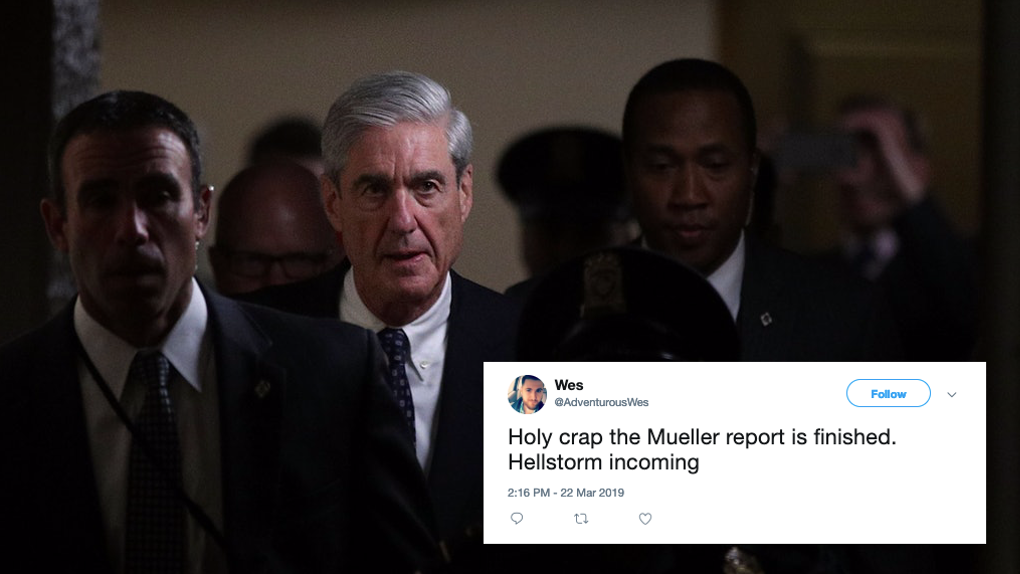
AMERICA IN THE AFTERMATH OF THE MUELLER REPORT AND THE ANGRY TWEETS THAT FOLLOWED

by Ariana D. Den Bleyker


Graphic: ALEX WONG/GETTY IMAGES NEWS/GETTY IMAGES, TWITTER via Elite Daily


I.

She swallows the news, a lump in the back of her throat,
watching all the armies who rally to save her gather,

seemingly defeated, their hopes hanging 
upon the delicate flesh of failed ghosts.

Balance of possibilities can go either way:
with just a whisper of wind, touching hand giving strength

to moments of truth swinging gently, leaning, anchored, swaying, 
rediscovering & restoring, though always permanently rooted. 

A new furnace burns brightly, metal ablaze, wrapped in red heat;
sweat pouring, glistening brighter than molten steel, boiling her people

until the day is done & lions roar by the hearth-fire. 
The sun briefly shines, allowing moments for thoughts

& strange songs of what will happen 
tomorrow that may never be real.

II.

She grits her teeth & makes a home far away—
deep within caves within caves, farther back until blue becomes blackness.

She returns to her mother, to nothing,
for inside Plato’s ultimate form illusions of illusions demystified & ugly

rely on her starkness—this & all that she saw
when he crawled in her bed unworthy of sitting by her side,

her form easy enough to reach, as if an object of his desire
left alone to bruise & soil while lying beneath the earth,

left with angry words unable to differentiate
the stomping with supposed compassionate feet, 

the head held down feeling no regrets. 

III.

She can see the revolution from her window,
the small orbits, when they turn away & return 

& sometimes a star falls, a blazing fire shot down,
a demigod dying & it comes down on her—

the thing that once was but is now lost inside her,
borrowing girder, salvaging safety for others, 

relieving the pressure amid weary shoulders grasping
for strength, taking refuge in sacrifice & pain

of her people giving what they’re willing to never receive,
as they walk breathlessly into the ether,

surveying the fact or fiction placed in their hands.


Ariana D. Den Bleyker is a Pittsburgh native currently residing in New York’s Hudson Valley where she is a wife and mother of two. When she’s not writing, she’s spending time with her family and every once in a while sleeps. She is the author of three collections, including Wayward Lines (RawArt Press, 2015), the chapbooks Forgetting Aesop (Bandini Books, 2011), Naked Animal (Flutter Press, 2012), My Father Had a Daughter (Alabaster Leaves Publishing, 2013), Hatched from Bone (Flutter Press, 2014), On Coming of Age and Stitches(Origami Poems Project, 2014), On This and That (Bitterzoet Press, 2015), Strangest Sea (Porkbelly Press, 2015), Beautiful Wreckage (Flutter Press, 2015), Unsent (Origami Poems Project, 2015), The Peace of Wild Things (Porkbelly Press, 2015), Knee Deep in Bone (Hermeneutic Chaos Press, 2015), Birds Never Sing in Caves (Dancing Girl Press, 2016), Cutting Eyes from Ghosts (Blood Pudding Press, 2017), Scars are Memories Bleeding Through (Yavanika Press, 2018), A Bridge of You (Origami Poems Project, 2019), Even the Statue Weeps (Dancing Girl Press, forthcoming 2019), and Confessions of a Mother Hovering in the Space Between Where Birds Collide with Windows (Ghost City Press, forthcoming 2019). She is also the author of three crime novellas, a novelette, and an experimental memoir. She hopes you'll fall in love with her words.

Wednesday, July 29, 2015

AND THE DARKNESS CONTINUED

by David Pring-Mill


After nearly seven decades in Wyoming, for much of that time facing heartbreak, discrimination and even physical violence, the cross-dresser has finally decided to leave the Cowboy State. Sissy Goodwin, who was profiled in the Los Angeles Times in 2013 for his insistence, despite an often-macho Western ethic, to lead the life he chooses -- as a man who prefers to dress in women's clothing -- is retiring in May from his job as a college science instructor in Casper. He and his wife, Vickie, are moving to the Portland, Ore., area, where they plan to buy a small farm and raise goats and chickens. —Los Angeles Times, April 4, 2015. Photo: Sissy Goodwin, seen here in 2013, has decided to leave Wyoming for Oregon. (Mel Melcon / Los Angeles Times)


Black air was wrapped ’round in elegant gown.
Consistent blare revealed proclivity.
Darkly dress augmented ignited crown.
Sounds spiraled and dimmed with activity.
Buildings trumpeted their presence at skies.
Stars could not outshine the cemented queen ―
Despite fires bright and wide as babies’ eyes,
none could adorn the head of gaudy sheen.
People strode and strutted in worshipped styles.
A woman skipped and wore a tie-dye shirt.
Colors rambunctiously splashed on textiles.
The woman and a man began to flirt.
Bodies blended into the fair city.
Winds whistled out a whimsical ditty.

In cracked sidewalk, an empty square remained,
filled with fluffed, deprived, and struggling grasses,
in place of the tall tree it once contained.
Tattered papers flew from college classes
as our light pollution masked over stars.
I saw a weeping form, drenched in darkness.
I squinted, for assumption often jars.
The edge of coned light revealed, in starkness,
A curled up cross-dresser, badly beaten,
bruises swelling a face now black and blue.
I cried, “Justice strike each twisted cretin!
I’ll call for help! What have they done to you?”
He said, “They loathe their own hidden weakness,
and attack those few who walk with meekness.”

I offered a hand and helped him to stand.
He said, “Fists will never defeat the soul,
destroy a concept, or bear true command.”
He patted my back and resumed his stroll.
I noticed a church that seemed grandiose.
It summoned an ingrained, quiet respect
fed to me in youth in dogmatic dose.
The old church stood as a sacred object
revered more than other bricks and mortars,
for the innate value of a symbol
may lift buildings from shapes to high quarters.
Apt symbol could aggrandize a thimble!
I yelled, “Why should man strive for salvation,
with evil sewn into all creation?”

I ran, renouncing all bewitchery,
spotted the hurt man’s ensanguined shirt, cried,
“How do you mitigate the misery?”
and watched as he calmly turned and replied,
“Although they were determined to hurt me,
only I can determine that effect;
their scheme crumbles if I do not agree
to receive shame they sought to redirect.”
I said, “Such men should not be in our streets.”
He said, “The span of those men’s lives and deeds
dwindles compared to the breadth of love’s feats.
Love has conquered the earth, and love precedes
and follows us all, and though fear may spread,
there is not an inch that love cannot tread.”

I stood sedated in humility.
He walked away, spiritually unharmed,
but then I felt new incivility,
and thought, “Lord, though your world leaves victims charmed,
are we, the makers of dense light clusters
on shadowed continental designs,
meant to be morality adjusters?
What are the semantics of dreamlike signs?
Are you the artist and we the artwork,
capable of launching revolution?
Am I a self-possessed statue with quirks,
who now must seek formal absolution?
Is every deviation a mistake,
or a miracle to which we awake?”

A bus bustled, with interior lit.
The metal tube emitted grinding puffs.
Night air still had a nip that gently bit.
Fluorescents and neon caught sights like cuffs.
The bulbs blackened, though they tried to expose,
for clarity is sharp in sheer absence.
When fists strike and pummel faces in blows,
the matter of people lacks shape or sense ―
The darkness is real, rife with purity.
Should absence and steel containers compete,
I’d consider star-lit obscurity,
if not deep void, where silence and peace meet.
People shuffled on the bus, sat, and leaned,
and above in trees, the hidden birds preened.


David Pring-Mill is a writer and award-winning filmmaker. His poems have been published in Poetry Quarterly, Boston Literary Magazine, Crack the Spine, Eunoia Review, Page & Spine, Songs of Eretz Poetry Review, and East Coast Literary Review. He is also author of the poetry book Age of the Appliance. @davesaidso

Wednesday, June 24, 2015

CHARLESTON CHURCH MASSACRE

by Roger Aplon


"We forgive you."


Swept-up
on  a blast of heated air – one flash & another

& nowhere  to run,
to hide, to breathe free  . . . & he keeps
coming on
this pilfered heart, this shameless ragging,
like a lion on fire,
provoked, pissed-off,  punishing, a collapsed invention where
fear marries power,
with guns blazing the angel of death smacks his lips
slurping up a treacheries soup . . .
Speak not of justice, sanity & bigotry in one breath. Speak not
of mercy without
passion. Do unto others as you do unto me. 
The words ring wrong.
If harmony reigns what will come to fill the vacuum?
Guilt-of-the-fathers
passed to the sons.  Inbred fear of retribution. The Other, no longer dark
but from the light
comes to resurrect that supreme fabric. Owner. Master. Overseer.
That sublime indifference
born of  guilt – suspicion – nurturing – fomenting.
Is there no one to speak
against the blind warrior?
We forgive you.
It’s said with conviction – tearful & full of grace. Who’s earned
such a holy gift?
Tattooed across his brow a crown of thorns, swastika etched
between his shoulder blades.
This is the time of mutilation, of dementia, of disgrace.
Where are the voices of revolution?
Those willing to stand & be counted, unafraid of hard choices?
The one who bears malice bears
a cataclysm too long dismissed as fated, too long
      tolerated, too long unchallenged.
“Born in blood, so blood must be spilled.”
It’s the way of the smuggler,
the rapist, the strangler of kids, the demon lover of hatred & dread.
To this we say, with all our strength – No more!


Roger Aplon has had eleven books published: Ten of poetry (most recently It’s Only TV) & one of prose: Intimacies. He’s been awarded prizes & honors including an arts fellowship from the Helene Wurlitzer Foundation in Taos, New Mexico. After eight years in Barcelona, Spain, he now lives in Beacon, New York where he publishes the poetry magazine Waymark & is working on a new collection: Poetic Improvisations after musical ‘experiments’ by composers such as John Adams, Elliot Carter, Miles Davis & John Zorn.

Thursday, January 02, 2014

THE REUNION OF THE PUSSY RIOT SINGERS

by Tricia Knoll 


One of the two recently released members of Russian punk protest band Pussy Riot, Nadezhda Tolokonnikova, said on Friday that their release was aimed solely at improving Russia's image before it hosts the Winter Olympic Games rather than a humanitarian gesture. --Mail & Guardian, December 29, 2013


May the games begin
the announcer calls
and may the best man,
oops and best women
carry the gold

for a nation waiting
for its glory count,
so speaks the media.
An embarrassment
of riches -- each nation

locks away those who speak
with the timber voice
of righteousness and pussies.
Amnesty is the tool
not of enlightenment
but of international spotlight.

Were the games to witness
to the strong
to commit peace
with unlike others,
with the soil we walk,
air we breathe,
and the creatures
who out-run us, out-sing us,
out-fly us, and out-think
us under the waters.
Were these the games,
a turning revolution,
victors might repair
the spoils.


Tricia Knoll is a Portland, Oregon poet who for decades has imagined winning the women's Olympic marathon while slowly jogging through an urban landscape. Her chapbook Urban Wild will be published in 2014 by Finishing Line Press.

Saturday, January 12, 2013

GUN CONTROL

by Jonathan Flike


Revolution dreams every policy
opposed to red elephant values
Southern successions revisited
saving colors that don’t run
from freedom hating Kenyans,
change witch doctor huts to prefabs
justifying semi-auto ownership
and mass killing violence with
discount T-shirt slogans,
“guns don’t kill people
people kill people.”
Simple facts that baseball bats
murder less than quickly changed clips
on unsuspecting movie goers
temporary burdens on six
pallbearers carrying bodies
safe to the grave
the only safety guaranteed
soon forgotten by the masses.
Public discourse talks of
policy’s failure to divert death
in totality never touching
the golden cow with a
butt branded number two,
refuse the compromise saying
one life saved is worth more
than circular retorts
clouded necessity for
exploding shells
stashes of bullets
caches of guns
simply to hoard
till the day the Democrats
come to take it all away
failing to confirm America
lacks any form of
self-control.


Jonathan Flike
is a writer, artist, and starving student. His poems have appeared in Viewpoints and Wilde Magazine. Jonathan’s first major collection of poetry, Tales from Room 225, was published in June, 2011. His second collection, It Gets Worse, is set for a February 2013 release date.