Guidelines


Submission Guidelines: Send 1-3 unpublished poems in the body of an email (NO ATTACHMENTS) to nvneditor[at]gmail.com. No simultaneous submissions. Use "Verse News Submission" as the subject line. Send a brief bio. No payment. Authors retain all rights after 1st-time appearance here. Scroll down the right sidebar for the fine print.
Showing posts with label sacrifice. Show all posts

Sunday, June 16, 2024

GAZA, JUNE 8, 2024

by Elizabeth Poreba


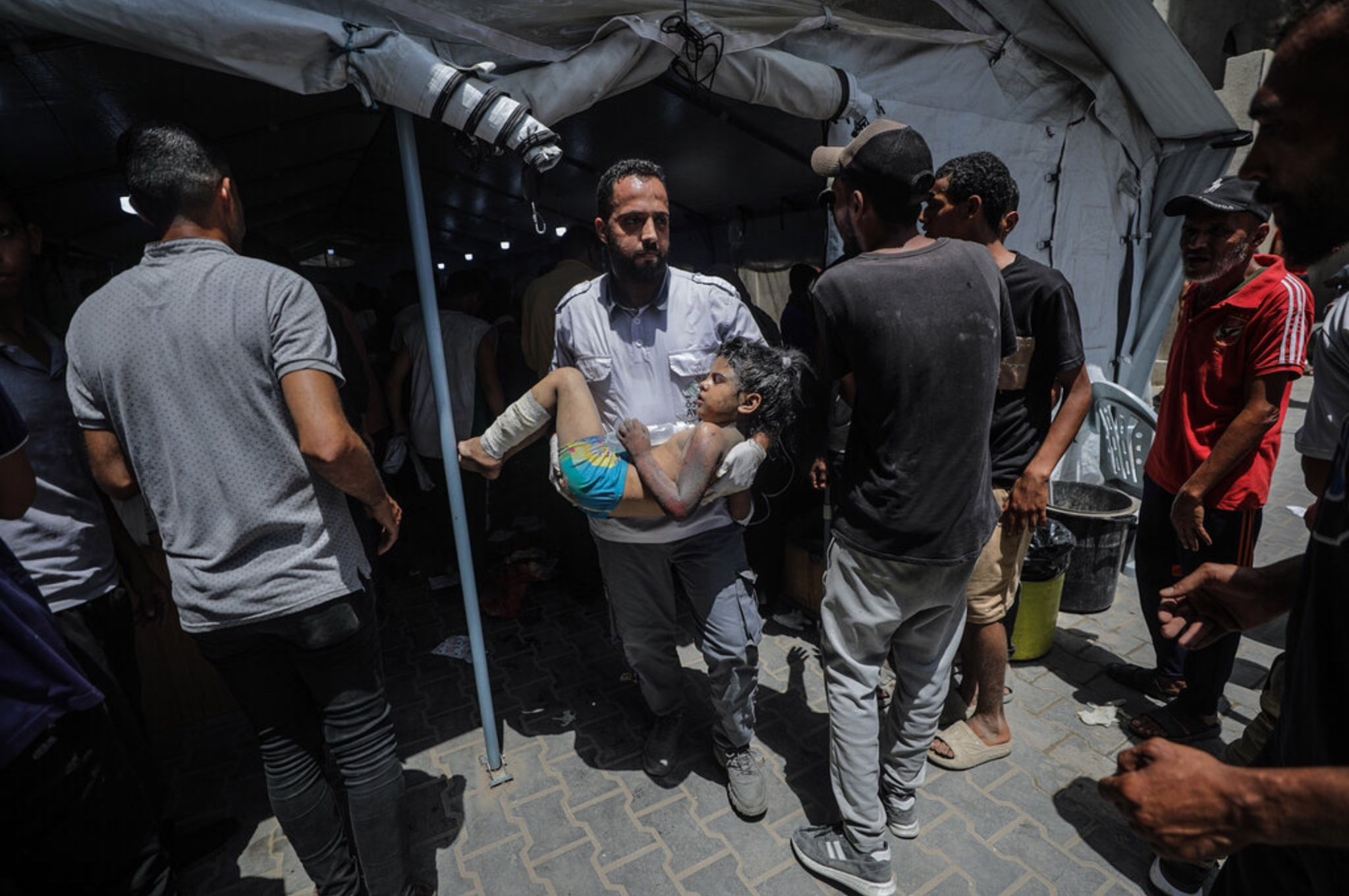
The office of the U.N. High Commissioner for Human Rights said on Tusday that it was “profoundly shocked” by the impact on civilians of Israel’s raid to free four hostages, adding that actions by both Hamas and Israel may be war crimes. —The New York Times, June 11, 2024. Photo: A Palestinian medic carrying an injured child Saturday at a hospital during an Israeli military operation in the town of Nuseirat in central Gaza.
Credit...Mohammed Saber/EPA, via Shutterstock


We know from ancient bones that a pigeon or dove could atone 
now these bodies strewn 
sufficient sacrifice when less than a lamb or goat would suffice 
bodies anonymous to us 
the same birds that crowd our streets
but these could devise no flight 
their blood set the sinner right  
damage—collateral,  blood—fungible 
a ram replaces a son, or if no ram, 
a score of these little ones.


Elizabeth Poreba is a retired New York City High School English teacher. She has published two collections of poems. Vexed and Self Help (Wipf and Stock), and two chapbooks, The Family Profile and New Lebanon (Finishing Line Press). Her work is also in This Full Green Hour, an anthology composed of work by six of the O’Clock Poets (Sonopo Press, 2008). Kelsay Press will soon publish her new collection Yamma.

Wednesday, June 28, 2023

MAN INGESTED INTO JET ENGINE

by Jennifer Hernandez


Photo by Jon Tyson on Unsplash


Death of worker "ingested" into plane engine at San Antonio airport deemed suicide. 
—CBS News, June 26, 2023


He leaps
into the mouth
of a monster.
 
Sea serpent, dragon,
Rainbow Snake, whale.
 
Khodumodumo,
Yulungur,
Mashenomak,
Leviathan.
 
In the stories—
swallowed whole—
they build fires,
light lamps,
slice livers
or hearts.
 
They save
whole villages,
even livestock
& porcupines.
 
Sometimes, they’re vomited out,
emerge pale & bald. In every
version of the tale, they escape.
 
This monster refused to let go.
 

Jennifer Hernandez lives in Minnesota where she teaches immigrant youth and writes poetry, flash, and creative non-fiction. Recent publications include Mom Egg Review, Steam Ticket, and Halfway Down the Stairs. She sees the effects of the current mental health crisis among young people in the middle school where she works and hopes that arts education can play a small role in helping mitigate the crisis.

Tuesday, November 08, 2022

ELECTION NIGHT 2022

by David Radavich


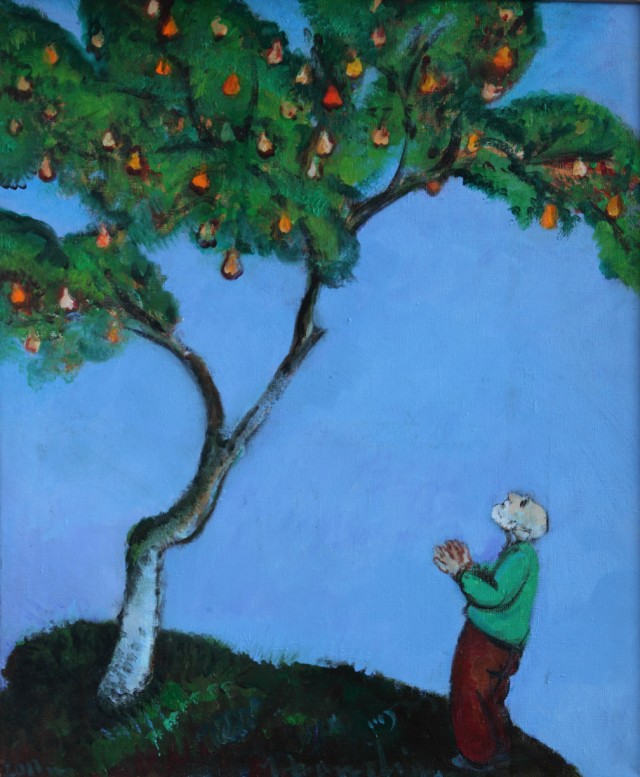
“Waiting for a Pear to Fall” by Jonas Daniliauskas


The sky is clear
and not a word
floats in the heavens
or on the earth.


It is the time of waiting.


What must be said
has already been said


and we 

like perfect fruit,


waiting to be peeled
and consumed.


What remains
in the eating


at the hands
of others?


A last hope
that our insides
will be tasty,


that our sacrifice
will bring life
and health


to a broken state.


David Radavich's poetry collections include two epics, America Bound and America Abroad, as well as Middle-East Mezze and The Countries We Live In. His latest book is Unter der Sonne / Under the Sun: German and English Poems (2022).  

Sunday, February 21, 2021

KIDNAPPING GODOT

by Richard Fox


"People are bloody ignorant apes." 
—Estragon in Waiting for Godot by Samuel Beckett

1. Polio

Mom makes pancakes for breakfast on a Wednesday.
Gives me a gorilla hug at the bus stop.
At school, we hang up coats, march to the All-Purpose Room.
The nurse smiles, watches us down cups of clear liquid. 
The principal anoints each forehead with a gold star. 

2. Cancer

Mothers quiz me about Gardasil* for daughters. 
I endure HPV*-caused tumors, 
so pegged their expert.
My plea, heed pediatricians.
Inoculate girls and boys by age eleven.
They choose to delay, let their kids ripen. 
Maybe by sixteen, the children can decide.

3. Ba’al

the field of stones 
chiseled memorials
first born sons
throats slit


* Gardasil is a vaccine that prevents the HPV virus from causing oral and cervical cancer. Anti-vaxxers promote false research that a side effect is autism. Because HPV is spread sexually (not necessarily via intercourse), they claim the vaccine is tacit approval for teenage sex.


When not writing about rock ’n roll or youthful transgressions, Richard Fox focuses on cancer from the patient’s point of view drawing on hope, humor, and unforeseen gifts. He is the author of five poetry collections and the winner of the 2017 Frank O’Hara Prize.

Thursday, September 10, 2020

FOOLS AND LOSERS

by Michael L. Ruffin


My Fools
My grandfather (Army fool, Europe, WWI)
My father (Navy fool, Pacific, WWII)
My father-in-law (Marine fool, Pacific, WWII)
My uncle (Army Air Corps fool, Europe, WWII)
My three brothers-in-law (Air Force, Army, and Marine fools, Vietnam)

My Losers
My mother's (before she was my mother) fiance (Army loser, killed in France, WWII)
My cousin (Army loser, wounded in Vietnam)
My fifth-grade teacher's husband (Army loser, killed in Vietnam)

I know, and I hope
you know, that
they aren't really
fools and losers.

I also know, and I hope
you also know, that
anyone who thinks they are
is a fool and a loser.

It takes a real fool to think
of service as foolishness.

It takes a real loser to think
of sacrifice as losing.


Michael L. Ruffin is a writer, editor, preacher, and teacher living and working in Georgia. He posts poems on Instagram (@michaell.ruffin) and prose opinions at On the Jericho Road. He is author of Fifty-Seven: A Memoir of Death and Life and  of the forthcoming Praying with Matthew. His poetry has appeared at TheNewVerse.News, 3 Moon Magazine, Rat's Ass Review, and U-Rights Magazine.

Saturday, April 04, 2020

WE SHOULD HAVE KNOWN

by Buff Whitman-Bradley


We should have known
That crisis evokes
The best in ordinary persons
That of course
People on balconies
Would sing opera
To each other
That of course
People standing in windows
Would applaud medical workers
On their way home after another
Horrendous shift
Of dangerous and unprotected caring
That of course
Silly songs and tender messages
And goofy jokes
And sublimely cute puppies and kittens
And baby elephants
Would proliferate on the internet
That of course
Neighbors would be even more conscious
Of checking in with each other
Of offering help and encouragement
Of wishing each other
The very best
That of course
Compassion and humor and generosity
Among everyday folks
Would abound
We should have known

We should have known
That crisis would evoke
The worst in the powerful
That of course catastrophe would mean profit
For those who claim the planet
As their own
That of course the plutocratic miscreants
At the top of the heap
Would find a way
To pillage the public treasury
Rather than provide all the life-saving aid
That is so desperately needed
That of course they would continue
Robbing from the poor
And giving to the rich
That of course
Those shameless, indecent
And despicable narcissists
Would resist any and all attempts
By the common folk
To prioritize the common good
Over personal gain
And if that means millions will die, well
That’s life

We should have known


Buff Whitman-Bradley's poems have appeared in many print and online journals. His most recent books are To Get Our Bearings in this Wheeling World and Cancer Cantata. With his wife Cynthia, he produced the award-winning documentary film Outside In and, with the MIRC film collective, made the film Por Que Venimos. His interviews with soldiers refusing to fight in Iraq and Afghanistan were made into the book About Face: Military Resisters Turn Against War. He lives in northern California. He podcasts at: thirdactpoems.podbean.com .

Thursday, March 26, 2020

THE GIVING TREE DRAWS THE LINE

by Michael L. Ruffin


The Tree had
grown old.

The Boy had
grown wealthy
and powerful.

“What’s wrong, Boy?”
the Tree asked.

“The COVID-19 crisis,”
the Boy answered.

"How can I help?”
the Tree asked.

 “You can die so
the stock market
can live,”
the Boy answered.

“You can kiss my roots,”
the Tree said to the Boy.


Michael L. Ruffin is a writer, editor, preacher, and teacher living and working in Georgia. He posts poems on Instagram (@michaell.ruffin) and prose opinions at On the Jericho Road. He is author of Fifty-Seven: A Memoir of Death and Life and of the forthcoming Praying with Matthew. His poetry has appeared at TheNewVerse.News and is  forthcoming in 3 Moon Magazine and Rat's Ass Review.

Thursday, July 18, 2019

SALVADORIAN SAW

by David Radavich


Image source: The Church of Jesus Christ of Latter Day Saints


How best to
sacrifice a child?

Hand him over
to gang-leaders’ guns?
Pay for blood
in coinage?

Or give him to
government forces
in a simple box
I nailed myself?

Open her body
before the cathedral
with a scythe?

Or go to the U.S.
and shiver in a cage
without food
or shower or a bed?

Solomon, tell me
how to divide
this child

so her soul
can sing tomorrow.


David Radavich's latest book is America Abroad: An Epic of Discovery (2019), companion volume to his earlier America Bound: An Epic for Our Time (2007).  Other recent poetry collections are Middle-East Mezze (2011) and The Countries We Live In (2014).  He has served as president of the Thomas Wolfe Society, Charlotte Writers' Club, and North Carolina Poetry Society and currently administers the Gilbert-Chappell Distinguished Poet Series.

Monday, May 27, 2019

DEATH IS NOT THE ULTIMATE SACRIFICE

by j.lewis


although it puts what seems to be
a ragged stamp of finality
on unstarted and unfinished dreams

we mourn and we remember those
who took one for the team
for a vaguely defined cause
that slips our grasp like crude

"they died for our freedom"
is the standard line, and holds
true for very few of the conflicts
america has so willfully embraced

no one dares recite a line like this:
"they died to make a corporation richer"
or "we honor them with every tank of gas"
because to proclaim the emperor's nakedness
can get you a lot of hassle these days

and certainly, no one wants to ponder
the sacrifice of those left alive
the daily waking up dying
from loneliness, poverty, insecurity
children to carry on shoulders
already rounded with the weight
of grief, of love's candle snuffed

no, the ultimate sacrifice is not death
but living, pushing through the darkness
finding strength beyond self, and still
in spite of it all, believing
that this imperfect country
is the greatest place on earth


j.lewis has an irritating habit of asking about the collateral damage of war: the families of slain soldiers, and how they manage to keep on keeping on. His first collection of poetry, paired with his own photography, is available from Amazon.

Friday, March 29, 2019

THE DEATHS OF CHILDREN

by Marshall Witten


In the north of Peru archaeologists found a mass grave. Over 500 years ago, almost 140 children and more than 200 animals were sacrificed here. Researchers are now reporting on the background of the bloody ritual. According to the researchers, details of the site also reveal the possible reason for the ritual: it is covered by a thick layer of mud, into which the mass grave was embedded. Footprints and hoof prints show that the mud was still wet at the time of the sacrifice. The researchers suspect that the actually very dry place was hit by heavy rainfall and flooding at that time. This leads them back to the climate phenomenon El Niño, which continues to cause flooding in the coastal region to this day. "The sacrifice of so many children and camels was a significant investment of resources for the Chimú state," they write. "The temptation to assume that the mass sacrifice of children and camels was an attempt to appease the gods and mitigate the effects of a larger El Niño event that occurred around 1400-1450." Teller Report, March 7, 2019


The photo bares a 15th century open
Peru grave in desert sand, egg shaped, two
children snuggled together, headdresses, red-
cinnabar paint on their skulls, facing east
toward the coast, 140 victims,                                                      
both sexes, at a ritual-massacre site.
Victims’ chests cut open, hearts ripped out.    
200 baby llamas also sacrificed,
buried facing west toward the Andes.

Evidence hints a disastrous El Niño caused
torrential rains, vast flooding, killing mud
flows, buried cropland, ruined fisheries, farmers’
deaths, civil terror that supported mass sacrifices.

I saw, superimposed over the picture, images
of Yemeni children killed by our drone strikes,

of young Guatemalan children separated from parents
cuddled in blankets at our border, caged.

The Yemeni we kill for oil.
The Guatemalans we tear from parents, psychologically damage,
and sometimes cause death, for votes, racial fear.

Like the Chimú, our child murder-cruelty rests
on fear of change. What might we do when climate
horrors really pinch, food-water shortages,
constant weather cataclysms, civil collapse,
Bikers for T patrolling the streets?

Unsheathed gods of fear may not be controllable.


Marshall Witten is a retired lawyer who has lived and practiced in Vermont for 58 years. His poems have appeared in The Mountain Troubadour, Stanza, Birchsong, and his chapbook Reflections on Change.

Sunday, May 06, 2018

ON THE ALTAR

by Jacqueline Jules 

                                                                             
Evidence for the largest single incident of mass child sacrifice in the Americas— and likely in world history—has been discovered on Peru's northern coast, archaeologists tell National Geographic. More than 140 children and 200 young llamas appear to have been ritually sacrificed in an event that took place some 550 years ago on a wind-swept bluff overlooking the Pacific Ocean, in the shadow of what was then the sprawling capital of the Chimú Empire. —Kristin Romey, National Geographic, April 26, 2018. Photograph by Gabriel Prieto.
                                                                 

The remains of children and llamas in Peru
reminds me of Abraham, how he didn’t argue
for Isaac the way he did for Sodom and Gomorrah,
how he acquiesced, traveling three days as commanded,
building an altar, binding his son.  Imagine
Isaac’s terrified eyes until an angel appears
with new instructions.

Which brings me back to the bodies in Peru,
breastbones bent to extract 140 hearts
offered to appease an angry god, demanding
what’s most precious as ultimate bribe.

Like a folktale reinvented around the globe,
sacrifice is not confined to geographic region.
From ancient times, somehow humans have believed
we have to kill to demonstrate devotion.

When the angel told Abraham to offer a ram instead,
it was more than a revelation, it was a weaning.
Spiritually, we were babies, still sucking
on our first source of sustenance.

Think of how we despaired later on,
when the Temple was destroyed and
we were told we couldn’t burn animals
anymore. What can we put on the altar now?
We cried. How do we please now?

The answer still seems to baffle us.


Jacqueline Jules is the author of the poetry chapbooks Field Trip to the Museum, Stronger Than Cleopatra, and Itzhak Perlman’s Broken String, winner of the 2016 Helen Kay Chapbook Prize from Evening Street Press. Her work has appeared in over 100 publications including TheNewVerse.News, The Rising Phoenix Review, What Rough Beast, Public Pool, and Gargoyle.

Thursday, February 22, 2018

COST

by Neil Creighton


Parkland students watch as Florida legislators vote down a resolution to discuss a ban on assault weapons.


So Sam rose early, saddled his donkey,
and took his children up the mountain.
And his children said
“Where is the offering, our father,
and who is this god we praise?”
“You are the offering, my children.”
Then hail of fire descended
and bright blood flowed until all were gone.
Sam sighed, thought he would pray,
wept a little as he descended the mountain.
A congregation waited below.
“It’s hard,” he said, “so hard.
But what can we do?
We don’t wish it but we must worship.”

And the great congregation shouted “Amen”.


Neil Creighton is an Australian poet whose work as a teacher of English and Drama brought him into close contact with thousands of young lives, most happy and triumphant but too many tragically filled with neglect. It also made him intensely aware of how opportunity is so unequally proportioned and his work reflects strong interest in social justice. Recent publications include Poetry Quarterly, Poeming Pigeon, Silver Birch Press, Rat's Ass Review, Praxis Mag Online, Ekphrastic Review, Social Justice Poetry, Peacock Journal, Poets Reading the News and Verse-Virtual.

Sunday, February 18, 2018

HONORING THE FALLEN

by Mary Kay Schoen


At Chichen Itza the guide said the ancient
Mayans threw innocents into the cenote
human sacrifice to forestall the end of the world

In World War II young Americans
died to defeat an evil regime
human sacrifice to make the world safe

At Littleton and Sandy Hook
and the school down the street
we send in our children

innocents in the line of fire
to defend the rights of congressmen
to finance reelection to defend the rights

of the folks who want assault rifles handy
in case the US Armed Forces are insufficient
or a deer might bound away

Shall Congress not hand out thanks
and Gold Stars to all the grieving parents
whose children gave their lives

to keep safe those seats on Capitol Hill?


Mary Kay Schoen is a Virginia writer whose feature stories have appeared in The Washington Post and association publications. Her poetry can be found in Persimmon Tree, America, and an anthology of Southwestern poetry from Dos Gatos Press. She spends too much time reading the newspaper.

Saturday, May 06, 2017

NOW THAT MACKY'S BACK IN TOWN

by George Salamon


"Paul Ryan wins near-party-line showdown on Health Care.”


Mack the Knife
Has found new life
As cuttin' Paul Ryan.
Obamacare must burn in hell
So insurance companies do well.
The people? Who cares if they survive
As long as the wealthy continue to thrive.
Democracy has been sold for its market price
As the necessary national sacrifice.


George Salamon is in reasonably good health for a curmudgeonly senior citizen.

Sunday, May 17, 2015

THE PEDICURE CUSTOMER'S DILEMMA

by Catherine Wald


Across the country, countless workers in the nail salon industry, mainly immigrant women, toil in misery and ill health for meager pay, usually with no overtime, abused by employers who show little or no consideration for their safety and well-being. It is a world of long days and toxic chemicals, where the usual protections of government have failed, at all levels. —NY Times, May 11, 2015; Photo: A pedicure at a salon on the Upper East Side of Manhattan. Credit Nicole Bengiveno/The New York Times. 


Time to choose: should I deprive you of your
livelihood or your unborn children?

Do your lungs need air as badly as my toes need to be
decked out in glorious colors that never existed in nature?

Is it frivolous to pay another human being to caress the
arches and balls of my feet in a way no lover ever will?

In your hands, oh modest Korean or Chinese or Thai woman,
shy, unsightly appendages, emboldened, grab the spotlight.

For two dollars apiece, you give me ten hand-crafted
oriental miniatures, perfect and miniscule as gemstones,

sparkling harbingers of summer, delightful butterflies
birthed in a cloud of formaldehyde, ethanol and XX.

Pedicurists, like most winged creatures, enjoy a short
lifespan: but we all know beauty demands sacrifice.

In this world where gainful employment is hard to come by,
where aesthetic pleasure is so desperately needed, is it

time to turn off the tap?


Catherine Wald's books include poetry (Distant, burned-out stars, Finishing Line Press, 2011), nonfiction (The Resilient Writer: Stories of Rejection and Triumph From 23 Top Authors, Persea Books, 2005) and a translation from French of Valery Larbaud’s Childish Things (Sun & Moon Press). Her poems have been published in American Journal of Nursing, Buddhist Poetry Review, Chronogram, Exit 13, Friends Journal, Jewish Literary Journal, The New Poet, Society of Classical Poets, The 5-2 Crime Poetry Weekly and Westchester Review.