Guidelines


Submission Guidelines: Send 1-3 unpublished poems in the body of an email (NO ATTACHMENTS) to nvneditor[at]gmail.com. No simultaneous submissions. Use "Verse News Submission" as the subject line. Send a brief bio. No payment. Authors retain all rights after 1st-time appearance here. Scroll down the right sidebar for the fine print.
Showing posts with label speech. Show all posts

Thursday, May 21, 2026

MYTHOS AT COMMENCEMENT

by David Anson Lee


Eric Schmidt stood at the stage
like someone introducing age.
He praised A.I.’s unfolding reign.
The graduates booed him just the same.

“You are the future,” Schmidt proclaimed.
The students looked professionally ashamed.
“Machines will free you for new dreams!”
A voice cried out, “They killed internships.”

The billionaires call this “transition,”
their favorite synonym for incision.
At Citadel, whole teams were gone:
outperformed between dusk and dawn.

At Stanford now the freshmen pray
their essays still sound human-made.
The honor code grows frail and thin
when every prompt begins with Begin.

The parents clap. The provost beams.
The deans keep monetizing dreams.
Meanwhile Mythos scans the wire
like scripture crossed with hellfire.

It reads the grid for sport alone,
finds ancient flaws in backbone stone;
then Anthropic, careful, grave,
explains restriction keeps us safe.

Translation: banks and states may peek
while everyone refreshes LinkedIn weekly.
The students boo because they know
the future doesn’t need payroll.

And somewhere in refrigerated light
the servers bloom all through the night,
teaching silicon to replace
the species that designed its face.


David Anson Lee is a physician, philosopher, and poet from Texas whose work explores medicine, technology, public life, and cultural memory. His poems have appeared in journals including Right Hand Pointing, Eunoia Review, Ink Sweat & Tears, and Braided Way.

Thursday, January 29, 2026

WHAT WORDS MEAN

by Michael T. Young


          For Alex Pretti, Nurse Executed by ICE Agents


They say “domestic terrorist.” 

We say “citizen.” 

They say “violent radical.” 

We say “peaceful protestor.” 

They say “he brandished a gun.” 

We say “he had a phone.” 

They say “absolute immunity.” 

We say “first amendment.” 


At the end of each sentence a life is at stake. It’s how 

words form in the mouth. Some unfold like a flower 


scenting the air with an aroma 

reminding you of a summer day 

when you knew your mother and father 

loved you and time seemed 

endless, full of light and warmth. 


But other words form like an ache 

where the bullet entered 

and a pain where it blew out 

the other side, red 

not just with the usual blood, 

but with speech and every other right.


Michael T. Young's fourth collection, Mountain Climbing a River, was just published by Broadstone Books. His third full-length collection, The Infinite Doctrine of Water, was longlisted for the Julie Suk Award. He received a Fellowship from the New Jersey State Council on the Arts and the Jean Pedrick Chapbook Award. His poetry has been featured on Verse Daily and The Writer’s Almanac. It has also appeared in numerous journals including Chiron ReviewThe Journal of New Jersey PoetsMid-Atlantic Review, and Vox Populi.

Tuesday, August 19, 2025

A TIME TO PLANT, A TIME TO MOW

a DJT “Four Seasons Landscaping” moment


by John Stickney


AI-generated graphic by NightCafé for The New Verse News.


“You know, grass has a lifetime 

like people have a lifetime, 

and the lifetime of this grass 

has long been gone. 

When you look at the parks 

where the grass is all tired, 

exhausted. 


We're going to redo the grass 

with the finest grasses. 

I know a lot about grass.

I own a lot of golf courses. 

If you don't have good grass, 

you aren't in business 

very long.”


So sayeth the Lord.

Amen.


Author’s note: This is a DJT verbatim poem from remarks made August 13.


John Stickney is a poet and writer originally from Cleveland, Ohio, currently living outside Charlotte, NC.

Tuesday, August 13, 2024

THE PECULIAR CASE OF COMPASSION

by Adnan Abbasi


A nurse at New York University’s Langone hospital was fired after mentioning what she described as a “genocide” in Gaza during an award ceremony speech. Hesen Jabr, 34, a labor and delivery nurse who worked at NYU Langone for nearly 10 years, made the remarks while accepting an award earlier this month for providing excellent care to patients suffering perinatal loss… In a statement, Steve Ritea, a spokesperson for NYU Langone, said: “Hesen Jabr was warned in December, following a previous incident, not to bring her views on this divisive and charged issue into the workplace. She instead chose not to heed that at a recent employee recognition event that was widely attended by her colleagues, some of whom were upset after her comments. As a result, Jabr is no longer an NYU Langone employee.” —The Guardian, May 31, 2024


In the Court of Selective Outrage, now in session,
Where empathy's on trial, facing suppression.
The jury: stone-faced statues, deaf and blind,
The judge: a mirror, cracked and ill-defined.

Exhibit A: A nurse with healing hands,
Accused of love that spans divided lands.
"How dare she care," the Prosecution cries,
"For suffering that we've chosen to disguise?"

Witnesses parade, with badges of disdain,
Experts in the art of curated pain.
They testify of horrors, oh so select,
While wearing blinders, perfectly erect.

The Defense presents a stethoscope that hears
All heartbeats equal, through walls and through fears.
"Objection!" roars the court in unified voice,
"Such equity of care is a dangerous choice!"

Evidence mounts: bandages stained with tears,
A speech that dared to bridge the gap of years.
The clerk records each word with trembling hand,
As Truth stands gagged in the witness stand.

In summation, Irony takes the floor,
Painting compassion as an act of war.
The verdict echoes through antiseptic halls:
"Guilty of healing beyond these sterile walls."

Sentence is passed in a language absurd:
Silence for her who made suffering heard.
As Hesen exits, head unbowed and tall,
Justice weeps softly in the empty hall.

Outside, the world spins on, in chaos and in pain,
While in the court, they sanitize again,
Preparing for the next case on the docket:
"The Olive Tree vs. Concrete in Its Socket"


Adnan Abbasi’s writings have appeared in Hindustan Times, EconLib, The Straits Times, and CNN-News18. He is associated with Students for Liberty's South Asia chapter.

Wednesday, September 06, 2023

EDUCATION EVISCERATION

by Felicia Nimue Ackerman


"The principal of a Georgia elementary school apologized to parents last week after a guest author who was discussing his research into a co-creator of Batman told a group of fifth graders that the co-creator’s son was gay. The author, Marc Tyler Nobleman, said the principals of two other elementary schools in the district where he was speaking had asked him to stick to 'appropriate' material and omit that detail of his research. When he refused, his remaining presentations were canceled." —The New York Times, August 29, 2023


Save the kids from candid speech.
Push such frankness out of reach.
Don't give kids a chance to smarten.
Keep their minds in kindergarten!


Felicia Nimue Ackerman is a professor of philosophy at Brown University and has had over 260 poems published in places including American Atheist, The American Scholar, Better Than Starbucks, The Boston Globe, The Chronicle of Higher Education, Down in the Dirt, The Emily Dickinson International Society Bulletin, Free Inquiry, Light Poetry Magazine, Lighten Up Online, The Los Angeles Times, The New Verse News, The New York Daily News, The New York Times, The Providence Journal, Scientific American, Sparks of Calliope, Time Magazine, The Wall Street Journal, and Your Daily Poem

Monday, January 16, 2023

AMISH HISTORY LESSON

by James Schwartz


What are you studying?
My Amish father peers at my homework,
History—Martin Luther King Jr.

“We are to be separate from the World,”
Dad explains our Michigan segregation, 
Why no Amish men marched with King,

15 years before my birth, 
150 miles away in Detroit, 
Down Woodward Avenue, 

“Walk to Freedom.”
But we did not walk, never hearing, 
His psalm of brotherhood. 


James Schwartz is a poet & author of various poetry collections including The Literary Party: Growing Up Gay and Amish in America (Kindle, 2011), Punatic (Writing Knights Press, 2019) & most recently Motor City MixSunset in Rome (Alien Buddha Press, 2022). He resides in Detroit, Michigan.

Tuesday, December 06, 2022

SOME MEMORIES OF THE QATAR GAMES

by Sister Lou Ella Hickman, I.W.B.S.


A woman holds up sign reading Woman Life Freedom, prior to the World Cup group B soccer match between England and Iran at the Khalifa International Stadium in in Doha, Qatar, Nov. 21, 2022. (AP Photo/Alessandra Tarantino)


armbands 
hands covering mouths 
wales a flag 
a falling star 
silent voices for a national song 
(did you know the team and their families were threatened) 
silence for a dead lady 
signs for “Women, Life, Freedom”  
“no politics in sports” the cry
yet politiká in greece where sports also ruled 
a word for a network and affairs of the cities 
a small world if you will 
our world now 
in a game 
where the boundaries of freedom’s speech 
end and begin 
now  
who will speak for those who died building 


Sister Lou Ella has a master’s in theology from St. Mary’s University in San Antonio and is a former teacher and librarian. She is a certified spiritual director as well as a poet and writer.  Her poems have appeared in numerous magazines such as America, First Things, Emmanuel, Third Wednesday, and The New Verse News as well as in four anthologies: The Night’s Magician: Poems about the Moon, edited by Philip Kolin and Sue Brannan Walker, Down to the Dark River edited by Philip Kolin, Secrets edited by Sue Brannan Walker and After Shocks: The Poetry of Recovery for Life-Shattering Events edited by Tom Lombardo. She was nominated for the Pushcart Prize in 2017 and in 2020. Her first book of poetry entitled she: robed and wordless was published in 2015 (Press 53.) On May 11, 2021, five poems from her book which had been set to music by James Lee III were performed by the opera star Susanna Phillips, star clarinetist Anthony McGill, pianist Mayra Huang at the 92nd Street Y in New York City. The group of songs is entitled “Chavah’s Daughters Speak.”

Sunday, September 04, 2022

AFTER THE PRESIDENT SPOKE ON DEMOCRACY

by Indran Amirthanayagam


The day is coming, and nobody
is turning away. It is coming like
sun rising, like rain about to burst
 
from cloud, and no matter
where you stand on this earth
you will feel the thunder clap,
 
the roar of the volcano
blowing its top, and you will 
be amazed and chastened,
 
and you will hug love beside
you, love in dreams, love
in history. These are end 
 
times, to take stock, 
to remember, to say
thank you, to wash away
 
the fog of amnesia. Clarity.
Piercing. Truth telling, 
standing with families of 
 
the disappeared everywhere. 
These are times of forgiveness, 
of searing light despite 
 
forces of ruin, of sore 
losing, of twisting laws,
of dictatorship. These 
 
are times for the new 
civil contract, not 
guns but mind, 
 
not mockery 
but respect, not 
cult but democrat.


Indran Amirthanayagam's newest book is Ten Thousand Steps Against the Tyrant (BroadstoneBooks). Recently published is Blue Window (Ventana Azul), translated by Jennifer Rathbun.(Dialogos Books). In 2020, Indran produced a “world" record by publishing three new poetry books written in three languages: The Migrant States (Hanging Loose Press, New York), Sur l'île nostalgique (L’Harmattan, Paris) and Lírica a tiempo (Mesa Redonda, Lima). He writes in English, Spanish, French, Portuguese, Haitian Creole and has twenty poetry books as well as a music album Rankont Dout. He edits The Beltway Poetry Quarterly and helps curate Ablucionistas. He won the Paterson Prize and received fellowships from The Foundation for the Contemporary Arts, New York Foundation for the Arts, US/Mexico Fund For Culture, and the MacDowell Colony. He hosts the Poetry Channel on YouTube and publishes poetry books with Sara Cahill Marron at Beltway Editions.

Tuesday, February 02, 2021

ON HEARING JOE BIDEN SPEAK IN 1971

by Jane Patten


What did I care of
Fiscal fairness
Divided among
The three counties of
Little Delaware,
With its chicken on a banner,
Its battered boardwalks,
And soybeans everywhere?
 
Someone tapped me on the shoulder:
An elderly aide, a kindhearted sage
Who needed to impart
Something worthy to a jaded juvenile:
Quiet, please.
Listen carefully.  
This man is going to be President—
Some day.
 
So I listened
And remembered his name:
And waited
Long enough to know
That for some of us 
Destiny is late in coming
But just as sure, just as strong,
Needed more now than then.
 
For numbered years are nothing
When one can last forever and
Four can be disaster:
For fifty can be calming fate
To this time and 
To this place.


After retiring and moving to Huntsville, Jane Patten decided to write about her adventures thus far, including growing up in Delaware and her career as a teacher in rural Georgia. She enjoys traveling, creative writing, and spending time with family. Her poetry has been published in Outloud HSV: A Year in Review for 2017, 2018, and 2019.

Wednesday, January 20, 2021

DEAR FLAVIA

 by Paul Smith


Today I saw a guy on TV
about my age
a little older, white-haired
who put his hand on a Bible
and took an oath
to uphold democracy
build national trust & unity
etc., etc.
it was a nice speech
he also said something about us
being able to take whatever fate throws at us
I liked this part
it didn’t sound like
it was written by a speechwriter
and it made me think of what
fate has thrown at us
more at you than me
so, although you are not here today
you might smile a bit
knowing
that people like you
you know
skin the color of a lunch bag
who came from far away
who became citizens of this land
supposedly made for you and me
but also a land visited by a terrible plague
that took you away from me
maybe, after smiling that sly tropical smile
you’ll worry less about us
and enjoy whatever was prepared for you
by the One you’re with
on that other faraway shore
with the One we say
sheds His grace on us


Paul Smith is a civil engineer who has worked in the construction racket for many years. He has traveled all over the place and met lots of people. Some have enriched his life. Others made him wish he or they were all dead. He likes writing poetry and fiction. He also likes Newcastle Brown Ale. If you see him, buy him one. His poetry and fiction have been published in Convergence, Packingtown Review, Literary Orphans, TheNewVerse.News, and other lit mags.

Tuesday, September 01, 2020

NARRATIVE

by Colm Ó Ciarnáin


Artwork: Indie


Gibberish       weponised    nonsensity

Obnoxification of society
ratification of cagedness
realization of stupidity
recognition of affirmation bias
nausea at repugnance
aversion to its abhorrence
revulsion at the antagonism
animositic reluctance to truth

                          and traveling abroad we find exciting
                          and It can be life changing enjoying that freedom

and traveling abroad we find exciting
                          and It can be life changing enjoying that freedom

speak fluent moran
crisp without even a sludder
then lean into the suck
as there is a virtue in
broadcasting your amorality at
the highest known volumes of stupidity
trust busting reality of lies

                          and we enjoy new languages
                          and they give us hope
                                                 
                          and we enjoy new languages
                          and they give us hope

untethered to truth
thoughts prayers and cynical gestures in
pioneering of nauseating evention, testifony, fasadism
mythic past warped by
liberal             feminist          or                      immigrant
conjured truths against faith and adjacent reality
decorum trumped constantly by derision
bannonesque divisions

                          and my friends are with me
                          and it's going to be a good day

 and my friends are with me
                          and it's going to be a good day

fetischouce twitter fingers
trust busting realities of lies
I believe him Truth isn't truth but When I can, I tell the truth—
He means it
making hate again
with truths that burned witches
make fake again by self-proclamations testifications
down the slinker hole
otherings untethered to truth

                          and we shall have fun
                          and the future is bright
                                                                           
                          and we shall have fun
                          and the future is bright


Colm Ó Ciarnáin is a cultural worker originally from Ireland but now living in Sweden. He likes to use his emotions to paint pictures with words. He realised early in life that no matter how much he talked around a subject, words didn’t have the power to convey his feelings, being hampered by logical structures. He finds though that words when used in poetry for him paint between the lines. Flowing beyond the confines of realism and logic to bare self. A nudity of the soul inconceivable except in the hope of a poem. His poetry defines his inner self.

Tuesday, August 25, 2020

HOPE AND HISTORY RHYME

by Susannah Greenberg


Hope and history
stutter and gaffe.
Corruption and cruelty
point and laugh.

Then Joe rolls in
like Moses leaning on his staff,
sentence flows from sentence,
and then a paragraph.

He says so many dead,
and so many infected.
We deserve the truth.
We deserve to be protected.

Hope and history come together
when you need but don’t expect it.


Susannah Greenberg is an independent book publicist at Susannah Greenberg Public Relations.  

Friday, August 21, 2020

OUR DICTATOR

by Carol Dorf


Art by Adrian Teal


When the young ask “Why
did you let it go on so long?”
they have forgotten

an essential fact—he was
our dictator—small fingers,

and disconnected
speech rhythms of our crazy
uncles raging on.


Carol Dorf has three chapbooks available, Given (Origami Poems), Some Years Ask (Moria Press), and Theory Headed Dragon (Finishing Line Press). Her poetry appears in Shofar, About Place, Great Weather For Media, Slipstream, The Mom Egg, Sin Fronteras, Heresies, Feminist Studies, Scientific American, and Maintenant. She is poetry editor of Talking Writing. She is interested in the intersections between poetry, disability, science and parenting. 

Tuesday, June 09, 2020

ROCK ART

by Geoffrey Aitken


John Boyega  issued an emotional rallying cry in support of Black Lives Matter in London's Hyde Park on June 4. 'I need you to understand how painful it is to be reminded every day that your race means nothing,' the Star Wars actor said. 'Black lives have always mattered.'


anger
is frowned upon
unless morphed
into articulations
for interpretation
by lawyers
weighed
valued
returned
for implementation
almost unrecognizable
and impotent
and so
some aren’t waiting
        until it becomes metaphysical


Geoffrey Aitken is regarded as an emerging poet in his home State of South Australia and writes pithy poetry (after a time of poor mentals). He does not dwell. He is older. Recently published in Flashes of Brilliance (US x 2), Aesthetica (UK).

Monday, March 09, 2020

CLEARITY

by Mark Williams


Cartoon by First Dog on the Moon


“Hello. I am Austin Baggerly and I am giving my speech
in Mrs. Colley's fourth grade class at West Park Elementary,
which you already know since you are my friends
and you are here too. Mrs. Colley said to give a speech
on something that our country needs more of.
I asked my mom what our country needs more of
and she said clearity. I asked her what is clearity
and she said the state of being clear. I asked her
which state is that and she said the blue ones. Mom says
a person can never ever be too clear. Never.
She says for example take our President who says
the first thing that comes out of his mouth only then
it is too late since it is already confusing everyone.
Like he said when it gets warm the virus will give up
and quit killing old people. I hope so cause Grandma Baggerly
is old and I do not want her to die. But how do we know
the virus does not like hot weather too? It could.
Or when he said he wants to leave the people
on the boat since that would be good for the numbers.
What does that mean? What numbers? Whose numbers?
I heard my mom on the phone telling Aunt Alice
that she is surprised to learn Mike Pence has balls.
She does not mean basketballs or baseballs eccetera.
Even golf balls. She means for once he stood up like a man
to the President and said we do not have enough tests
to see if we have the virus after the President said
we have all the beautiful tests we need. Mom says
just you wait the President will fire Mike Pence
if he keeps being clear since that is the one thing
the President is afraid of even more than the virus.
So always be clear. Also wash your hands. And
Mom says to tell your parents and grandparents
to wash their hands of the President this November.
So that virus doesn't spread too. Thank you.”


Mark Williams lives in the red but otherwise good state of Indiana. His poems and stories have appeared in The Southern Review, Rattle, New Ohio Review, Drunk Monkeys, The American Journal of Poetry, and the anthologies American Fiction and The Boom Project. His poems in response to the current administration have appeared in TheNewVerse.News, Poets Reading the News, Tuck Magazine, and WritersResist.

Saturday, November 23, 2019

C0LDER (S0NNET 0) AND C0LDER, BERKELEY

by Ron Riekki


“Arrests made as hundreds protest Ann Coulter speech” 
Los Angeles Times, November 20, 2019


Walking to the grocery store, I turn a corner to see
dozens of cops in riot gear, them loading vans
with weapons, the militarization of the police
where I see more of them in this minute—as I walk
nervously through their bulletproof everything—
than I had seen in a decade of small-town life,
but this is the time of riots and gear, of fire and fear,
and I remember walking to the same store just after
the last riot where the ground held footprints in blood
where I could see the exact path where someone had run
for their life, and my neighbor told me, "I bet today
was the hottest day it’s ever been here,” and there’s
a streetlight gone, the post yanked out of the ground.


Ron Riekki’s most recent book is Undocumented: Great Lakes Poets Laureate on Social Justice (Michigan State University Press).

Wednesday, July 03, 2019

THE COMMISSIONER OF TRANQUILITY

by William Aarnes 


from the 2019 Independence Day speech


What’s troubling shouldn’t trouble us.  Whatever the news,
only the seditious believe the caging of refugee children

will go on too long.  Maybe, in some subversives’ imaginations,
addicts will keep overdosing.  Maybe storms will devastate

the islands where we vacation.  Maybe dictators will stay
in power in some foreign countries, countries where the rich

can count on the police but the poor can’t.   Maybe
in the once murky past hard-working laborers couldn’t pay

their rent—but never in this land of promise, never
in the comfort of our time.  We’re blessed we can focus

on the inspiring resolve of those families rebuilding
their burned-out homes. We’re lucky we can relish

hearing a decorated veteran belt out our national anthem
as if she’s cured of her PTSD, the athletes singing along,

all of them with hands on their hearts.  And aren’t we charmed
by the fourth-grade teacher who’s earned a raise

by bringing a gun to school?  Why give a moment’s thought
to hardships suffered by people who deserve them?

Didn’t our parents say, “Look on the bright side”?
Only those who belong elsewhere would deny that life

in our beloved country is the epitome of the bright side.
Why should we put up with any doubt?   Everyone’s happy

that what’s happening can never happen to us.


William Aarnes lives in South Carolina.

Wednesday, October 10, 2018

HOLD HER DOWN, SHUT HER UP

by Kathleen A. Lawrence


She put her cold hand over my mouth,
she whispered hotly in my ear
a wet warning, “don’t talk about it.”
She ordered me to keep his secret,
their secrets become our secrets,
their sins we own, if we share what should
be buried, for country, and for tradition.
Silence is your patriotic virtue,
your civic duty to keep it to yourself.
Swallow the pain, spare us your burden.
“Shhh!” she blew with heavy, minty breath
in my face like a school librarian
who didn’t like her job, she glared
at me with the eyes of a water moccasin,
never blinking, she repeated her threat
to everything good I had ever known,
every future I had ever dreamed,
she swatted away my annoying truths,
she laughed uproariously at my viridity,
innocence, naivety, and guilelessness,
and pelted me with any other Ivy League
language she could spit and spatter
my way. To intimidate me, she put all
her boozy weight on top of me,
covering me like a wool blanket
at a rainy homecoming game,
she left me raw, itchy, confused
and unsure I’d ever get rid of the need
to scratch, to tell, to scream out
spilling her secrets, their secrets,
that kept them standing on marble,
speaking under alabaster columns,
holding conferences to tell their stories.
She held me down, like a pile-up
on the playground when you couldn’t see,
or breathe, or scream, but you knew
you knew them just the same. You
knew his face, like you knew
your own sweat, and stomach ache,
and migraine, and fear of the dark.
Leaning on me she excused herself,
her own participation, she spoke kindly
of her own parents, old like mine,
but obviously not as important.
She stood without empathy while keeping
me locked in another room upstairs,
over and over, blaming me and my sisters,
aunts, friends, little girls not yet able to speak,
and anyone who spoke, tried to speak.
But I was muffled, suffocating with her thick
deference to men. She gulped water
for fuel and fury and shouted of her anger.
She looked down with a whiff of pity
and smarminess, high with condescension,
drunk with power, unhinged with desire
to overpower me and feeling superior
from the artificial height of her leather pumps.
She wished I was still, quiet, subdued,
still asleep in my tower. But I am awake.
Locked in a bathroom, at a party,
dragged into a bush, cornered in a bar,
shoved into the backseat, and I scream
without sound. She covered her ears
to my words, her eyes to my struggling,
and uses her mouth instead to tell his lies
and to keep me the liar. She was not rumpled,
her manicured hands washed with rose hips.
She proudly marked the date with Sharpee
on her calendar with a gold star for her ability
to twist, conquer, silence, strip, and grope
the truth all without a wrinkle, smudge or tear
to her well-pressed suit. Like the cunning asp
slithering down the flag pole she has silenced me,
before the stars and stripes and Alexander
and Anita. She has humiliated me, and hissed
a reminder of what will happen to anyone else
who tries to get away with the truth.


Author’s Note: This piece was written as a reaction to the extensive news coverage of Senator Susan Collins delivering her lengthy, self-indulgent, speech to provide explication and some might say excuses for her decision to vote in support of Kavanaugh's acceptance to the Supreme Court. Her desperate rhetoric tried to explain the irony of her assertion that she, like many of her Republican colleagues thought Dr. Blasey Ford's testimony was wholly believable and 'compelling' however, she still didn't believe her testimony or find it reason enough to stall her approval. Many of the senators said they thought something must have happened to the 'nice lady' they just don't think it involved Kavanaugh and that she must be 'mixed up.' They were quick to add that while they were impressed with what seemed to be her 'truthful' testimony they think the whole situation is a case of mistaken identity. Some questioned her ability to recall all the details, and T**mp even mocked her about this. The way she's been treated is despicable and more classic, blaming the victim, or assaulting the assaulted. This poem tries to get at the idea that Collins was telling another woman to keep her mouth shut. In my opinion, she has joined the enablers. She tells Blasey Ford and millions of other women and girls and yes, some men and boys to keep quiet. Like the mother who calls her daughter a liar, for accusing her step-dad of assault and warns her that they could lose everything if she tells anyone, the message is clear. That no one will believe her. I tried to use the details of Dr. Ford's description of the assault she endured as well as some of the other details of other women giving testimony across the country this week interwoven with the assault on the truth.


Kathleen A. Lawrence was born in Rochester—home of the Garbage Plate, Kodachrome, and Cab Calloway. She has been an educator for over 35 years, teaching Communication, Popular Culture, and Gender Studies at SUNY Cortland. She started writing poetry two years ago and her favorite challenge is the spiraling abecedarian. She has had poems appear in Rattle online for Poets Respond®, Scryptic, Eye to the Telescope, Parody Magazine, and Inigo Online Magazine. She's had poems nominated for the Rhysling Award and twice for the "Best of the Net" award. Her poem "Just Rosie" was nominated for the Pushcart Prize.

Saturday, January 27, 2018

T***P AT DAVOS

by Rick Mullin


Cartoon by Patrick Chappatte, The New York Times, January 22, 2018


Bloated, he descended with the rest,
the social X-Ray plutocrats, the best
and brightest on the snowy global stage.
His speech was warmly welcomed by a few
and tolerated by their retinue.
His teleprompter did not turn a page.
And he got through, despite low expectations.
He sang in praise (eschewing other nations)
of the USA, the market surge,
and all the aliens he hopes to purge.
He finished without serious faux pas,
he left the audience in less than awe
and waddled through the press contingent, dumb
and tough. He was the ultimate sore thumb.


Rick Mullin's newest poetry collection is Transom.

Friday, September 01, 2017

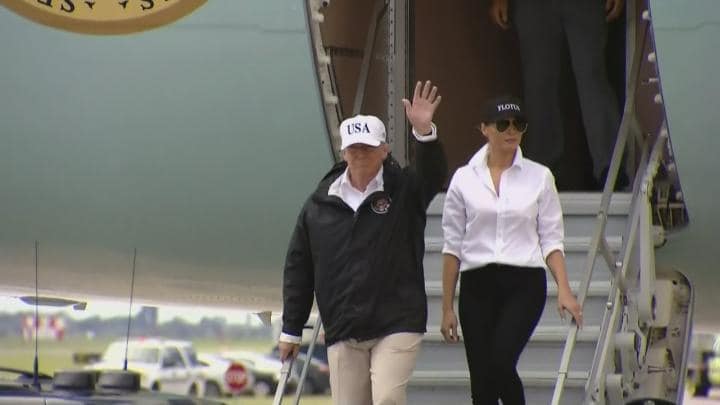
T***P ADDRESSES THE SURVIVORS

by Earl J Wilcox


Thank you all for coming.
It’s so good to see such a great crowd,
especially those of you in pajamas,
without food, but carrying your pets,
and those who came wading or boating
in hip-deep waters, such a sacrifice, and
I am so pleased to see you old folks carrying
your meds, particularly one old grandma,
what a trooper you are granny,
to come all this way to see me here.
This morning, Melania and I are so thrilled
with this great turnout, your happy, smiling
faces, cheering us on. Truly we all—men and
women and children and dogs and cats, the
lame, the sick and frightened, such beautiful
faces—all are making America great again!
Thank you all for coming to see me.


Earl J. Wilcox, once a graduate student in Texas, lives now in SC, sends his best thoughts to his Texas friends enduring the heavy Harvey rains.