Guidelines


Submission Guidelines: Send 1-3 unpublished poems in the body of an email (NO ATTACHMENTS) to nvneditor[at]gmail.com. No simultaneous submissions. Use "Verse News Submission" as the subject line. Send a brief bio. No payment. Authors retain all rights after 1st-time appearance here. Scroll down the right sidebar for the fine print.
Showing posts with label anniversary. Show all posts

Wednesday, August 06, 2025

LESSONS OVER 80 YEARS

by Royal Rhodes


Physicians for Social Reponsibility


     "...then uncontrollably I began to weep..."
           —Derek Walcott, Another Life


The original child bomb
at an early hour
in the Far East
burst in the August air.

It made the atmosphere
truly luminous
like god-particles
in transfiguration of light.

Pedestrians on a bridge
were silhouettes
racing to paradise
as Buddha's smile froze.

And now after decades
the terror birthed
there, a monster
birth, is wombed again.

Treaties are twisted into
origami devil dragons
and peace bells again
are blessed but silenced

new technology multiplies
death for millions while
protesters are sent to jail,
making death much safer.

We have disremembered
the faces moistened
with molten jellies
from upturned, burst eyes.


Royal Rhodes is a poet whose poems have appeared in numerous literary journals, including several times in The New Verse News.

Saturday, December 16, 2023

ON WATCHING A REENACTMENT OF THE BOSTON TEA PARTY

by Matthew E. Henry


The Boston Tea Party Reenactment: On December 16, 2023, Boston will commemorate the 250th Anniversary of the Boston Tea Party.


I was not prepared for how horrifying it feels to be Black 

and suddenly so pro-British. the desire to don a red coat, 

fingers itching to clutch a cartridge of ball and black powder. 

to lift a loyalist musket to shoulder and beset Boston Common 

or Lexington Green. the feeling even brother Crispus could catch 

a hot one were he to cross between Congress and State Streets today. 


if crows assemble in a quiet murder, and ravens collect

in a tranquil unkindness, what is a mass of frenzied 

white men? a mob, a riot, does so little justice. 


have you seen it? the screaming “sons of liberty”— these boys

proud in their covered faces, heads feathered and mohawked 

more than wearing tri-cornered hats. the ecstatic storming 

from a speech past ill-armed guards, hands aflame with torches.


have you seen it? fists, feet, bars, and axes shattering brown 

box heads, spilling loose leaf blood into the Harbor’s once 

placid waves. white rage decrying oppression through 

$1.7 million in adjusted destruction, hoping to make america

great. again, I am shocked how the echoes are almost enough 

to make me holler, “Long Live King George!”


Matthew E. Henry (MEH) is the author of six collections, including the Colored page and The Third Renunciation. He is editor-in-chief of The Weight Journal and an associate poetry editor at Pidgeonholes and Rise Up Review. The 2023 winner of the Solstice Literary Magazine Stephen Dunn Prize, MEH is an educator who received his MFA yet continued to spend money he didn’t have completing an MA in theology and a PhD in education. You can find him at www.MEHPoeting.com writing about education, race, religion, and burning oppressive systems to the ground.

Wednesday, November 22, 2023

NOVEMBER 22, 2023

by Marc Swan


iHeart podcast


Before we finish steaming bowls of homemade
chicken soup at our favorite cafe on Washington Ave,
talk shifts from the dilemma with his wife’s family
and the chaos and uncertainty of the next election
to where we were sixty years ago today.
He was in a fourth grade class in Memphis
when the principal released them,
no explanation he can recall.
On the ride home the driver had a transistor radio on.
She slowed to a stop, turned to the students,
eyes red-rimmed, cheeks flushed,
told them what had happened 
in Dallas earlier that day.
When he got home the house was quiet.
He can’t recall if his parents ever talked of JFK.
I was on a Greyhound east of Chicago 
on a cold rainy ride through open countryside
when a lady a few rows back turned her radio 
up high. We all heard the news.
Two bluesmen began singing “Jesus is Coming Soon,”
one strummed a battered old Gibson out of tune.
A bottle of Southern Comfort made its way up the aisle.
I took a long pull, slipped it to the lady beside me.
She never looked up, downed a gulp
and passed it along. The driver pulled to the side 
of the road. We stood together, a light rain falling—
I never imagined what the future could hold.


Marc Swan lives in coastal Maine. Poems recently published or forthcoming in Gargoyle, Nerve Cowboy Anthology, Misfit, Sheila-na-gig, among others. His fifth collection, all it would take, was published in 2020 by tall-lighthouse (UK).

Saturday, August 26, 2023

THE LEANING TOWER OF PISA

by William Marr


In the 1990s, the Italian authorities had to close the bell tower to the public and launched a competition for ideas to reinforce its structure and prevent it from collapsing, as the situation was critical. The first intervention, which consisted of adding lead counterweights to the structure, did not solve the problem, so it was finally decided to excavate the earth to reduce the slope of the tower and ensure its preservation. "The rescue of the bell tower allows us to celebrate the 850th anniversary and to appreciate the efforts of our ancestors in the arrangement of the monuments in the Duomo square," the president of the Opera Primaziale, the monument's managing body, Andrea Maestrelli, told the local press. —Euronews, August 8, 2023

 
descending from the tour bus
we knew right away
that the earth was gaining
in its wrestling match
with the sky
 
to help maintain the balance
we all raised our hands
in front of the lenses
strenuously trying to prop up
the tower
 
but the local guide shouted at us
our exertion threatened his Money Tree—
it must neither be allowed to fall
nor be straightened up


William Marr, a Chinese American poet, has published over 30 collections of poetry and several translations.  His recent bilingual (Chinese/English) books of poetry, A Dreamless Night and Every Day a Blue Sky, are available on Amazon. 

Tuesday, March 08, 2022

HOPE

by Julian Matthews

to honor the families of passengers and crew of MH370 on the 8th anniversary of the airplane's disappearance on March 8, 2014


Click here for MH370: An Interactive Presentation by The Straits Times (Singapore), March 8, 2022


Hope is the cold metal hanger in my heart 
where I hang the coat of all my warm memories of you
which I put on to feel your hug, 
your firm arms around me

Hope is the candle I light and re-light in my mind
remembering all the ways you glowed
All the ways we melted into each other
I keep the flame lit so I can still feel
the burning longing for you to come home
to see grace in these shadows
Hope is the light I leave on all night, every night 
awaiting your return

Hope is a kite on the high wind
I hold on to this unfurling string, 
unwilling to let go
even as you get smaller and smaller in the distance
in the blue, blue sky
I shade my eyes as you merge in the lap of the light
Hope is stubbornly willing this line between us
to never, ever snap

Hope is the ship you last boarded waving your goodbyes
from the handrails
Hope is me waving right back at you from the port
my arm hurting as it gets heavier and heavier
and you, further and further
with the passage of time
Hope is your silhouette on the horizon
bobbing on this sea of heartache
Hope is the salty tears I cry on nights like these
that could fill the ocean between us

Hope is this piece of the broken plane
I found on the beach
that you may have brushed against lightly
as you walked down the aisle
This drifted debris I hold in my trembling hands
Hope is placing my ear against it, cheek against shard
to listen to your last message within--

I dreamt again of you last night
like the thousand dreams before
You grinned cheekily, your eyes smiling
as you stepped through the front door
I asked you, nay, demanded:
“Where have you been?!”
And you reached out, pressed your palm
against my chest, my honeycombed heart,
and replied calmly, sweetly:
“Here, always here, my love...”

Hope is knowing that is true
Hope is awakening to that truth
Hope is the only home I know


Julian Matthews is a former journalist expressing himself in the pandemic through poetry, short stories and essays. He is published in The American Journal of Poetry, Lothlorien Poetry Journal, Beltway Poetry Quarterly, The New Verse News, among others. He is based in Malaysia.

Monday, March 07, 2022

BLOODY SUNDAYS

by Julie A. Dickson


50 years ago:
Derry, January 30, 1972; Selma, March 7, 1972
 
Why—these days are described as
bloody, massacres to mark history, crimson
streaks run down pages of time, to remind
that violence, oppression from the past can
stay, outlast, repeat in supreme efforts to
suppress those deemed weak or less?
 
How long must we sing this song, how long?
 
Today marches against memories we
cannot fathom but in reality exist, bloody
Sundays describe fragility of humanity,
pounded down, shot and hung, blood banners,
flags of wars not won, remind the masses
conflict flows, exsanguination rivulets, lives lost.
 
There's many lost, but tell me who has won?
 
 
Julie A. Dickson is a poet whose work addresses bullying, environment, current events and personal memories. She holds a BPS in Behavioral Science: Gerontology and works with the elderly. Dickson is a past poetry board member and Push Cart nominee. Her work appears in Blue Heron, Misfit, Ekphrastic Review and other journals or in full length on Amazon.

Tuesday, September 15, 2020

PASSAGE

by Daniel Brown


in memory of victims of the
 16th Street Baptist Church bombing,
Birmingham, AL, September 15, 1963


They crossed the river of Jordan early.

They went across the water
walking down Sunday school stairs.

Adie Mae Collins
Cynthia Wesley
Carole Robertson
Carol Denise McNair

Never made the passage of age
to young womanhood or Motherhood

They are remembered this day
and will be each year.

Hate is able to merely explode
it has no other course.

Passage that is abruptly destroyed
leaves us empty

So we demand rites of passage
the grace of aging for peace and justice

To cross the water with dignity when time comes due.


Daniel Brown is a retired Special Education teacher. He began writing poetry for his own pleasure but is now interested in sharing his work. He reads regularly at CAPS (Calling All Poets) in New Paltz NY and has been published in Chronogram Magazine and TheNewVerse.News. He resides in Red Hook, NY.

Thursday, August 06, 2020

HIROSHIMA 1945

by Daniel Brown


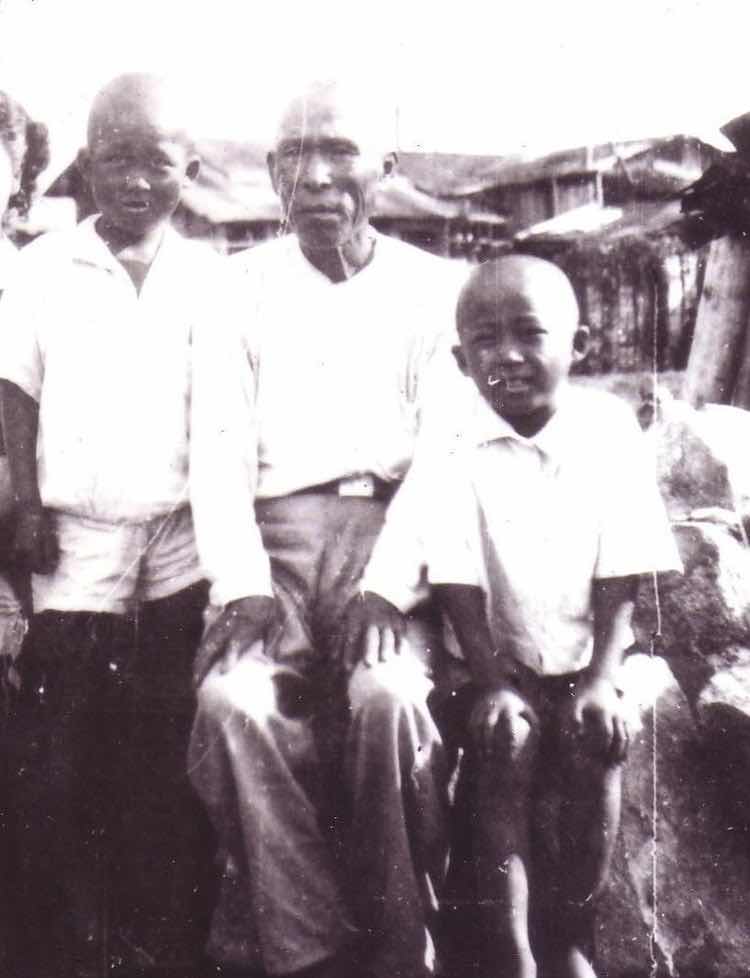
On that clear, sunny morning, 7-year-old Howard Kakita stood on the roof of his grandparents’ bathhouse excitedly watching the vapor trails of an approaching B-29. The date was August 6, 1945. The city was Hiroshima. Howard was not supposed to be on the roof, his grandmother shouting as the air raid siren sounded. Then again, neither he nor his brother were supposed to be in Japan at all. Born in California, they were Americans, like their mother and father before them, like unknown numbers of U.S. citizens who were caught in that city on that day and forever after associated with the atomic bomb and the horrors it unleashed… Only as a young man did Howard begin to realize how miraculous his survival was. His grandparents lived less than a mile from Hiroshima’s ground zero. For several moments, he lay unconscious under the rubble then dug himself out. His grandfather rescued his grandmother from the mountain of debris that had been their house… Both Howard and Kenny suffered dysentery and lost their hair from the radiation exposure. Their maternal grandmother, they learned, had literally vanished in the blast. Their maternal grandfather would die within days. —The Washington Post, August 4, 2020. Photo: Howard Kakita, right, his older brother, Kenny, and paternal grandfather, Yaozo, all lost their hair because of radiation exposure from the atomic bomb blast in Hiroshima. (Family photo)


glowing morning busy sidewalks

children playing or in carriages 
a buzz in the sky

giant mosquitoes 
a moment later
cinder and ash.


Daniel Brown is a retired Special Education teacher. He began writing poetry for his own pleasure but is now interested in sharing his work. Daniel has been an activist for environmental, anti-nuke, and social issues since the 80’s. He reads regularly at CAPS (Calling All Poets) in New Paltz N.Y. and has been published in Chronogram Magazine. He resudes  in Red Hook, N.Y.

Saturday, July 20, 2019

DEAD AIR

by Alejandro Escudé 


There is no man on the moon tonight.
And it is there, golden and full. I spot it above the empty golf course.
And one can watch as many footage hours of the first mission to the moon
as one desires, but they are never going to return.
Instead, they’re still debating our race. Instead, they’re still defining America.
It’s interesting to learn that Armstrong had to pilot over a cluster of boulders
to find a fitting landing spot. It’s interesting to know
that the astronaut suit-makers did not appreciate Buzz’s leaping, kicking up
moon dust.
And it’s fun to think of Collins circling the pale satellite like a giant man-embryo
inside a metallic uterus. But there is little room to be dumbfounded anymore.
Everyday, the internet steals the soul. They try to make us believe there’s an
alternative to coal.
Last week, Manhattan went dark. Just like in 1977. They tell young students they
don’t need to able to sit in a class anymore and to stay home and learn on an
online school.
They sell a long gun that can take out a small, midwestern town.
Our President is a clown-salesman, a weaponized being sent into the hallowed
chambers of a static, broken government. He is a human improvised explosive
device with a ticking mouth.
People still die in floods in the South.
Yet, they project the Saturn V rocket on the Washington Monument,
our country the equivalent of a middle aged man recalling his high school football
victories with rancid nostalgia, while his children have moved clear across the
country to get away from his unpredictable temper and judgement.
The Russians are still rivals.
Sputnik spins around the world yet.
Does time even really happen to us all?
Did Armstrong really come up with that poetry about one small step?
Such a quiet, distant man,
a man on the moon, three hundred thousand miles away, knowing just what to say
and how to say it—with that pause, that dead air between the word man
and the word one.


Alejandro Escudé published his first full-length collection of poems My Earthbound Eye in September 2013. He holds a master’s degree in creative writing from UC Davis and teaches high school English. Originally from Argentina, Alejandro lives in Los Angeles with his wife and two children.

Sunday, June 16, 2019

WE SIMPLY HAD ENOUGH
(STONEWALL 50)

by Devon Balwit


Devon Balwit's most recent collection is titled A Brief Way to Identify a Body (Ursus Americanus Press). Her individual poems can be found in here as well as in Jet Fuel, The Worcester Review, The Cincinnati Review, Tampa Review, Apt (long-form issue), Tule Review, Grist, and Rattle among others.

Monday, June 10, 2019

HISTORY

by Howard Winn


A D-Day commemoration on the beach of Arromanches in France on June 6, 2019, marking the 75th anniversary of the Allied landings in Normandy in World War II. (Joel Saget/Getty-AFP via Chicago Tribune)


of D Day by genetic fate
there is no escape
is where I find myself
with only three percent left
it seems The Greatest Generation
labeled by that newsman who
needed a catchy concept to draw
his audience for the news of the day
when other networks stood ready 
to step in to alter the ratings so
he found the catchy concept for
the mostly children drafted some 
out of high school to be the new
war heroes even though the survivors
kept quiet about their sacrifices 
often with loss of limbs
they were as voiceless as the bodies
buried in those field of crosses in
France where the living might 
have found them selves if they
were as unlucky as those who
survived to become portrayed in
the films of the next life leaving
today only the three percent who
movies seem to give permission to
recount the history they had kept
secret about until the later wars
involving their children gave some
permission to reveal fears and cruelty
for those survivors once silent veterans 
of that conflict between the dead and 
the emotionally quiet and silent for
history to become reality not just story


Howard Winn publishes widely in literary journals such as the Hiram Poetry Review and Valley Voices Journal. His novel has been published by Propertius Press.

Wednesday, November 21, 2018

BOOMER'S LAMENT ON THE 55TH ANNIVERSARY OF JFK'S ASSASSINATION

by George Salamon
November 22, 2018


"Did a president of the United States, while in command of total nuclear war, detach himself enough from its power to give his life for peace?" — James W. Douglass,  JFK and the Unspeakable: Why He Died and Why It Matters.


We imagined everything differently
Before our generation's leader was killed.

We read Albert Camus, our bible,
And vowed to be neither executioner nor victim.

We wanted to be rebels, in our fashion,
But ended up consumers in their niches.

We witnessed the Empire's revenge
When bullets took down our peers at Kent State.

We stumbled into our adult lives in the Seventies
While the spirit of Nixon settled over America.

We protested when his agents devastated Vietnam,
Now we howl as Agent Orange deconstructs the presidency.

We tried to make a difference
As the Armies of the Night

We buried our hopes with our heroes
As the colors faded after 1968.


Editor's note: Although he did not film the home movie streaming above, the 13-year-old who now edits this journal will never forget being in the crowd at that place on that day to cheer the future President.


George Salamon has the opposite view of the 1960s from those expressed by the Wall Street Journal's editorial writers.  He lives and writes in St. Louis, MO.

Sunday, August 12, 2018

CHARLOTTESVILLE ECLIPSE

by Sally Zakariya


Messages are left on a chalkboard in Charlottesville on Aug. 10, 2018. (Jim Urquhart/Reuters via The Washington Post)


The light went out that week.

A violent march, a loathsome flag
a stunning show of moral blindness
and then the sun itself went out
hiding its light, ashamed to see
such darkness in the world.

Closing its fiery eye, the sun shut out
the hate, the taunts, the torches
the brutality and bigotry
the disregard of justice.

Earth turned, the moon moved on
along its cosmic path, and sunlight
shone once more. And now another
year, another march. But the light
of reason still has not returned.


Sally Zakariya’s Pushcart Prize-nominated poetry has appeared in 70 print and online journals. She is the author of When You Escape (Five Oaks Press, 2016), Insectomania (2013) and Arithmetic (2011), and the editor of Joys of the Table (2015). Her chapbook Personal Astronomy is forthcoming from Finishing Line Press.

Friday, August 10, 2018

AN ATHENA FOR MODERN TIMES

by Elane Gutterman


Marking the 25th anniversary of Ruth Bader Ginsburg’s appointment as a Supreme Court justice.


Wielding her intellect 
and legal spear, she protects
the wronged and oppressed.

Decades ago, this Ruth,
shrewd as a snake
defended the right
of frat boys in Oklahoma
to buy their beers, at the same age
as their female peers,
knowing the nine men on the Court
would surely see the slight.
Then she could carry on
with women’s less frothy fight. 

Seated as one of the Nine, 
on a Bench that moved Right,
she is often caught 
in the minority,
yet delivers her dissents
with sword like flash,
crystal-gazing 
through owl-like glasses, 
that current losses will morph
into future triumph. 
She still invokes Sarah Grimké, 
warrior from an earlier era --

I ask no favor for my sex.
All I ask of our brethren
is that they take their feet
off our necks.

Now, the oldest
Left on the Court,
Bader Ginsburg’s battle gear
for the Supreme --
those lace collars.


Through poetry as advocacy, Elane Gutterman is rallying support for the NJ Aid in Dying for the Terminally Ill Act (bills A1504 and S1072 pending votes in the NJ Assembly and Senate this fall). Her villanelle “Misplaced Rage” a response to Dylan Thomas’ iconic villanelle, was recently published in U.S 1 Summer Fiction Issue, July 2018. Her poems have also been published in Kelsey Review, Patterson Literary Review, and TheNewVerse.News.

Wednesday, April 04, 2018

ON THE BUS

by Karen Greenbaum-Maya


On the long bus-ride home, spring day in SoCal, we talked about Simon and Garfunkel until news broke into the top 40 station the bus driver permitted. Dr. King was shot. He was already dead. And we all stopped because what else can you do and we all kept talking because what else can you do. No one at home said a thing, usual routine, tutoring my sister in math, the dishes, my homework. They had hated that I belonged to the Brotherhood Club. Now that too was dead. I held the cats close.

I wore my black dress. Homeroom announcements told us where the service would be if anyone wanted to skip school and go, a church on 17th and Wilshire. I thought I’d go. I thought I should. I was the only kid there from the high school, I was the only white person there, the speakers were bitter and all the words that go with bitter, and how not? I kept my head down. Even at fifteen I got that it wasn’t about me.

The next day I fasted, as on Yom Kippur because that was how you marked great sorrow and great complicity. Fasting won’t bring him back, my folks scoffed, but it was something I could do, though there was nothing I could do. And when Bobby was killed later that year I went inside a little more, a little lower but nothing more, because now this was what could happen, all the time.


Karen Greenbaum-Maya, a frequent contributor to TheNewVerse.News, feels very tired these 50 years on.

Friday, December 15, 2017

CHRISTMAS IN CONNECTICUT

by Lee Patton


AP Photo/Mark Lennihan via Quartz


After the Killings 14 December 2012


I could hear 40s screwball dialogue as I woke late,
groggy, that mass-murder morning.  “What’s on TV?”
I asked. “Barbara Stanwyck flick,” you called out
from the kitchen, turning over the French toast.

I gulped coffee while Stanwyck’s character fakes
homemaker celebrity, claiming a country house
 for sham motherhood, not even knowing the name
of the baby who appears out of nowhere. Stanwyck

has to pretend the baby’s hers and put on a diaper
but fumbles.  She’s never changed one in her life.
(Like me, Stanwyck can’t help out one little kid.)
So anyway, then Christmas comes to Connecticut

with all the snow on church steeples and the village
green, glad kids, school out, toy guns, blinking Xmas
trees, the whole New England drill.  Though I knew
it was filmed on a Hollywood lot, the icicles phony,

I wanted it to be real, for that California kid I was,
who yearned for the True American Christmas—
not green grass but sparkling snowfields, not rain
but frosty, flaky white skies, not go-carts but sleds

on the nearest slope. Now, aged orphan, I yearn
for everyone who’s dead. I’d give anything to wake
late and find my dad starting the turkey, my mom
fluttering nearby, turning French toast on the stove,

my big brother plucking slices before they made it
to the table. We can’t recreate that taste, the real
Mexican vanilla my mom used to dazzle the mix.
They’re gone, Mom, Dad, Brother. Christmases pass,

lifeless. I hoped Christmas kept true in Connecticut,
perfect for all yearning kids, when the news came on.


Lee Patton, a Denverite, writes fiction, poetry, drama and commentary. He's won prizes in 2016 and 2017 from Poetry Matters and Winning Writers. Quarterlies that have published his work include Best New Writing 2012, The Threepenny Review, The Massachusetts Review, The California Quarterly,  Poetry Quarterly, Ellipsis, Hawaii-Pacific Review, Adirondack Review and Memoir Journal. His third novel My Aim Is True is out from Dreamspinner Press. “Faith of Power,” a novella, appears in Main Street Rag's 2017 suspense anthology.

Saturday, April 23, 2016

THE BARD POSTS ON FACEBOOK

 by Earl J Wilcox


Spending way too much time
Counting iambs or rhyming
“thees” and “thous.” Zooks!
Running out of menopausal dames
and horny college students.
Best I put the pen down,
Take a stroll by the old stream.
Maybe I’ll be inspired to dish
Up a clever zinger for the nonce.
Hell. I’ve done it again!
Mumbling aloud like I write.
Gotta stop doing that crap.
Huzzah!


Earl J Wilcox lives in South Carolina, cooks, writes, watches baseball, contributes regularly to The New Verse News.

Saturday, April 09, 2016

TO PHIL OCHS

by Bill Dixon


on the 40th anniversary of the death of Phil Ochs


It's open mic night at The Sacred Mushroom.
   Phil Ochs tramps
onto the red stage,
and glares at me, some punk kid.

He has a Gibson acoustic guitar under his arm
   and confidence under
his battered leather coat.
He turns toward the crowd in folding metal chairs.

And a jittery 10th grade kid awaiting his turn next.
   That's me in the back row
Wishing that I'd sat closer
to the spotlighted red stage by then.

Walking's the hardest part, up to the stage.
   Then climbing on to it,
carrying my beat-up old Kay 6-string
clenched in my left hand, stepping unsteady steps.

Phil finishes his last protest song,
   with a flourish I still can't do,
and he nods unsmilingly
at the audience of old Beatniks.

They applaud and then pause, as I creep,
   onto the red stage
as slowly as a snail. It seems
the crowd's faces are as old as my father's.

I sing my three songs, sweating under the lights,
   in the January-cold coffee house.
I had done what I could do.
I nodded at the faces, and stepped off stage.

I was not Phil Ochs, but there was applause.
   I thanked the listeners.
I am now a Folk Singer,
and I am now a man. Thanks again, I said.


Author’s note: These events took place at the Sacred Mushroom Coffee House, in Columbus, Ohio in 1960.

Bill Dixon worked his way through the Ohio State University, got an M.A., taught school, did iron work, worked at the Columbus Zoo, tended bar, and worked his way into a CEO position at a Columbus bank. He has written two books, Disorderly Conduct (1960's at OSU) and Guitar Collecting. He writes a regular column "From The Edge" for ragazine.cc. Dixon lives in Florida and Maine.

Friday, September 11, 2015

SEPTEMBER 11

by Peleg Held


On September 11, 1973—Chile's socialist president, Salvador Allende, was overthrown in a coup. He committed suicide under mysterious circumstances as troops surrounded his palace, ushering in more than 15 years of military dictatorship under Augusto Pinochet. Since that time, the CIA has acknowledged knowledge of—but not involvement in—the plot. The agency "was aware of coup-plotting by the military, had ongoing intelligence collection relationships with some plotters, and—because CIA did not discourage the takeover and had sought to instigate a coup in 1970—probably appeared to condone it," the CIA writes in a history of its operations in the South American country. (Declassified documents reveal how the Nixon administration instructed the agency to undermine Allende's government and "make the economy scream.") —Uri Friedman, The Atlantic, September 11, 2014


The infamous rarely die
in caves. Instead they nobly precede
grey-scaled acknowledgements
by a few years, passing quietly
in rich linen and laurel.

In an office filled with smoke,
escorted by explosion and a crackling
fire spreading like arsenic
in an old poet's blood,

his final words were sent ahead
onto the airwaves:


Superarán otros hombres este momento
gris y amargo en el que la traición 

pretende imponerse.

In Chile, they speak of the foreign
pilots, of the murder of thousands,
of September 11, 1973, in Spanish.


Peleg Held lives in Portland, Maine with his partner and his dog Emitt. There is also the semi-feral cat, Smudge. And a kid or two. He writes poetry, does woodworking and lately, dreams of the summer. pelegheld(at)gmail.com.

Saturday, August 29, 2015

KATRINA ANNIVERSARY SONG

by Diane Elayne Dees


Uptown; 2012; ©David G. Spielman; from The Katrina Decade: Images of an Altered City (THNOC 2015) Photo source: The Historic New Orleans Collection via Curbed NOLA


corrupt Corps, Federal flood
blue roofs, insurance scams
trashed car, no house
no phone, no job
abandoned pets, missing corpses
toxic water, staph infections
black mold, asthma worse
dying patients, floating caskets
gangs of looters, schools gone
Danziger Bridge, shot in the back
lead exposure, can’t think
murdered dogs, suicide
recurring nightmares, lifetime Xanax
blame the victims, heck of a job


Diane Elayne Dees is a writer and psychotherapist in Louisiana. Her poems have been published in many journals and anthologies, including the 2006 anthology, Hurricane Blues: Poems about Katrina and Rita. Diane also publishes Women Who Serve, a blog about women's professional tennis.