Guidelines


Submission Guidelines: Send 1-3 unpublished poems in the body of an email (NO ATTACHMENTS) to nvneditor[at]gmail.com. No simultaneous submissions. Use "Verse News Submission" as the subject line. Send a brief bio. No payment. Authors retain all rights after 1st-time appearance here. Scroll down the right sidebar for the fine print.
Showing posts with label bones. Show all posts

Monday, September 07, 2026

THE EMPTY CELL

by Lynn White


AI-generated graphic by NightCafé for The New Verse News.


Bosnian Serb war criminal Mladić commemorated in Belgrade, but no state honours: Thousands are expected at Mladić's burial in Belgrade on Monday, which will proceed without serving officials, artillery salutes or ceremonial military presence. Brussels has said earlier any glorification would be "incompatible with the values on which the EU path is built". Mladić died last week while serving a life sentence for genocide, war crimes and crimes against humanity during the war in Bosnia. His remains were flown to Serbia from The Hague on a government plane on Thursday. —EuroNews, September 5, 2026


The Butcher is dead.

His meat decayed bones

broken

burned

buried

now waiting

for him to follow.


His cell is empty

waiting gravely

for those

whose meat 

is fresh

blood

and bones

broken

burned

buried

sometimes in rubble

always in the rubble of words.


So we wait

wanting

them

to be unearthed

the earth

made empty

as the cell

waiting 

for the ones

who are chosen.


Lynn White lives in north Wales. Her work is influenced by issues of social justice and events, places and people she has known or imagined. She is especially interested in exploring the boundaries of dream, fantasy and reality and writes hoping to find an audience for her musings. She was shortlisted in the Theatre Cloud 'War Poetry for Today' competition and has been nominated for a Pushcart Prize, Best of the Net and a Rhysling Award. Her poetry has appeared in many publications including: Apogee, Firewords, Peach Velvet, Light Journal, and So It Goes.

Tuesday, August 25, 2026

THE ROCKS HAVE MEMORIES

by Celeste DeSario


Chief Wallace, from the Unkechaug Indian Nation,
We came to your talk, enthusiastic,
Ready to roll up sleeves,
leave our cashmere sweaters home,
Ready to hike through the brambles
To learn about the Sacred Stones.
 
We arrived early to grab front- row seats,
Sipping coffee and sampling cookies,
Ready to learn
About a history we are finally ready to hear.
 
We hope you notice we are here,
Ready to help you.
Sorry for the past, we whisper,
But it was not our fault.
 
We pull out our notecards heavy with questions,
Pens ready to jot down names and places—
Where we can send our checks.
 
The Chief appears in front of us,
No magic there.
His voice soft.
People stand and demand he use the mic;
He pauses.
Looks over the crowd and begins.
“Your homes are built over my grandmother’s bones.
 
We shift in our seats, uncomfortable.
 
He says the stones are not relics.
Not artifacts, waiting to be harvested
Or displayed in a museum.
They are a bloodline.
A heritage.
They are his grandfathers, his grandmothers—
They are living, breathing entities,
Alive, present, watching, waiting.
Braiding our pasts and present.
 
The rocks have memories,
They know.
They have absorbed all the prayers,
Accepted a single stone added to the mound—
An acknowledgement of all those who walked this path before.
 
This is more like it.
This is why we are here.
Pens fly jotting down details.
People smile, showing Chief Wallace
We are happy to be here.
We are not our pasts.
 
He tells us the stones’ portals, align perfectly with the rising sun
Of the spring and autumn equinox,
On those two days— only those days—
The stones ask ancestral visitors for reflection:
The ones who whisper names to the morning wind,
The ones who pause for a moment of thanks,
Palms turned to catch the emerging warmth.
The recognition of a new season unfolding.
 
His people use the stones as calendars—
Telling them when to plant the corn,
When the Bluefish are running,
When the summer Fluke and Winter Flounder
Can be found in the muddy bottoms of bays,
When the Porgy will flood the shallow estuaries every spring.
 
We smile, encouraging him.
See? We are listening.
We are ready to help.
Can you see us sitting here?
 
He looks over his audience, then he looks right at us
“But I am not going to tell you where to find them.”
 
We are outsiders.
Undeserving.
 
 “You bulldoze our prayer sites,
building six bedrooms houses with three car garages.
The kids from those six-bedroom homes
tag the stones with offensive slurs, vulgarities
use Sharpie markers to scrawl “T + M” ‘26”,
Spray paint neon- green skulls and crossbones,
 
“My grandfather’s bones
Are embedded in these rocks—
His spirit
Still alive, still breathing, still present for me.”
 
Boys bent on destruction.
Sacred spaces made unholy by ignorant hands.
Boys who would become the men
who control the land that was not theirs—
the waters, the air.
 
“These stone structures are our churches.
Imagine— just imagine—if we pulled down your altars.
Ripped the cross from the ceiling.”
 
He has lost the thread.
He is losing his audience.
He has lost so much.
 
Now we are the ones who are angry.
Uncomfortable.
Put down that mirror.
That is not my face reflecting back to me.
 
The stones are not meant for those who carry hammers,
The stones are not meant for those who carry hatred,
The stones.
His stones.
 Are sacred.
His heritage.
His.
 
It’s not the talk we anticipated.
It’s not the talk we wanted.
We sit stunned into silence.
 
What now?
How do we move forward?
Are we too late?
 
Chief Wallace stands alone
the audience puts checkbooks back into pockets,
shuffling back to their pools, tennis courts, mahjong tables,
whispering that he has closed the door—
refusing to play by our rules.
Again.
 
Because, we cannot change.
And they cannot trust.
And neither can pretend
The past never happened.
 
 
Celeste DeSario writes poetry to process life’s events, and to try to make sense of them. Sometimes that actually happens.  Celeste’s poetry appears in The New Verse News, The SportsScribe Literary Magazine, The Changing Times, The Ekphrastic Review and The Dissident Voice. Celeste does not own any cashmere sweaters.

Saturday, June 20, 2026

ELEVEN HOMICIDES, GILGO BEACH, SUFFOLK COUNTY, NY

by LindaAnn LoSchiavo

 
Author's Note: Suffolk County, New York law enforcement sabotaged and delayed investigating the deaths of eleven corpses found along Gilgo Beach for years until their corrupt Police Chief James Burker was arrested in connection with a different case and imprisoned along with Thomas Spota, District Attorney, and Christopher McPartland, Assistant District Attorney. All three were convicted of witness tampering, obstruction of justice, and conspiracy charges. Only then did the Gilgo Beach murder investigation proceed. On Wednesday, June 17th, 2026 the killer was sentenced.


New Yorker and award-winner LindaAnn LoSchiavo is a member of British Fantasy Society,  HWA, SFPA, and The Dramatists Guild. Find out more about her on Substack @GreenwichVillagePoet .

Monday, February 23, 2026

X-RAYS

by Matthew Murrey


‘Deliberate targeting of vital body parts’: X-rays taken after Iran protests expose extent of catastrophic injuries. Expert analysis of images from one hospital suggests severe trauma to the face, chest and genitals was caused by metal birdshot and high-calibre bullets. —The Guardian, February 17, 2026 

 
reveal the structure beneath,
miracle of how strong and fragile
I am, we are. I keep one

of my right hand with its fifth bone
broken—a now-healed ridge I still feel
after half a lifetime. And these

(sent in secret from a country
whose leaders, like so many leaders,
hate the people they rule) reveal

ghosts haunting the injured
bones. Here is one with bright dots
of birdshot fired into the face,

another with pellets peppering
the chest, and one where the target was
the tenderness between the legs.

I do not understand what I see,
am not trained to diagnose what disease   
carries a shotgun into a crowd

of unarmed souls, levels it point-blank,
and pulls the trigger.  


Matthew Murrey is the author of Little Joy (Cornerstone Press, 2026) and Bulletproof (Jacar Press, 2019). He has recently had poems in Flyway, En•Trance, ballast, and elsewhere. He was a public school librarian for more than 20 years and lives in Urbana, IL with his partner. He can be found on Bluesky and Instagram under the handle @mytwords.  

Monday, February 16, 2026

THE WEEKEND NEWS

by Bonnie Naradzay


Crouching amid a pile of rubble that used to be his Gaza home, Mahmoud Hammad scoops dirt into a large sieve and shakes it, looking carefully before dumping it out. In recent days, tiny bones have appeared. Mr Hammad believes they belong to the unborn girl his pregnant wife was carrying when an Israeli air strike hit the family's building more than two years ago, killing his wife and their five children. —ABC (Australia) News, February 12, 2026

Israel used weapons in Gaza that made thousands of Palestinians evaporate. Al Jazeera investigation reveals how US-supplied thermal and thermobaric munitions burning at 3,500C have left no trace of nearly 3,000 Palestinians. Al Jazeera, February 10, 2026 

 On February 13, Russian troops attacked a hospital in Sumy where children are being treated. Two strikes were carried out on the medical facility with attack drones at intervals of about half an hour. —Top News in Ukraine, February 13, 2026 


Putin is targeting Ukrainian children now; we must not look away.
With a flour sifter, a father in Gaza searches for his incinerated family
while Putin’s precision drones obliterate schools, hospitals, daycares.
Using shovels, people helped the father locate the rubble of his home.
 
With a flour sifter, a father in Gaza searches for his incinerated family.
Praise be to God, he says, pointing to the pile of bone fragments.
Using shovels, people helped him locate the rubble of his home.
In Gaza, the living are surrounded by the dead.
 
Praise be to God, Hammad says, pointing to a pile of bone fragments.
Israel returned decomposed bodies showing severe mutilation, abuse.
In Gaza, the living are surrounded by the dead.
Israel has restricted the use of bulldozers to excavate the corpses.
 
Israel returned decomposed bodies showing severe mutilation, abuse.
Hammad keeps a photo of his family, smiling, when they were alive.
Israel has restricted the use of bulldozers to excavate the corpses.
Body parts returned in boxes contain only skulls and some bones.
 
Hammad has a photo of his family, smiling, when they were still alive,
while Putin’s precision drones obliterate schools, hospitals, daycares.
Body parts returned in 66 boxes contained only skulls and a few bones,
but Putin is targeting Ukrainian children now; we must not look away.


Bonnie Naradzay has been leading weekly poetry sessions for homeless people at Street Sense and at Miriam’s Kitchen and also at a retirement community, all in Washington, DC.  While at Harvard University in the late 1960s, she was in Robert Lowell’s class on “The King James Bible as English Literature.” In 2010 she was awarded the University of New Orleans Poetry Prize–-a month’s stay in Northern Italy–-in the South Tyrol castle of Ezra Pound’s daughter Mary. A 2017 graduate of the St John’s College (Annapolis) Graduate Institute, her book of poems Invited to the Feast was published by Slant Books in October 2025; three of the poems were nominated for Pushcart Prizes. 

Tuesday, February 25, 2025

BONES OF THE REPUBLIC

by Earl David Freeland


I weep.

The king didn’t take the throne.
The elephant knelt—
tuskless,
trumpeting fear,
its weight crushing the roots
of a nation it once carried.

Palms open,
backs bent,
offering the crown
wrapped in fear,
cheap flags for bows.
Will there be midterms?
Will it matter?
When power hums the same note,
ballots dusted under a golden sneaker,
lines redrawn to cut out the noise—
cut out us.

Maps don’t divide now.
They silence.
States, neat and obedient,
stacked under a crown.

What world waits for my son?
A place where truth
gets dragged—
hair tangled in fists,
paraded like a lesson.

Freedom?
Traded for chain-slick comfort.
Easy.
Cheap.

The anthem plays.
Hands rise—
not for hearts.

I see it—
the Mouth of Putin,
slick, wide, laughing.
Spitting out slogans,
black seeds rooting into
boots,
barbed wire,
burned books.

Long live the king,
they say.
And mean it.

I weep.

But I’m watching.
And if democracy dies here—
I’ll bury it with teeth.
Bared.
Fists raw.
Tear the ground open
and dig through the bones
the elephant left behind


Earl David Freeland is a mathematician, former cartographer, and teacher whose poetry balances precision with raw vulnerability. His work explores societal critique, existential themes, and human complexity with unflinching honesty. His poems have appeared in Poets Reading the News and reflect a deliberate rejection of polish in favor of visceral authenticity.

Tuesday, December 10, 2024

ON THE DEATH OF A CEO

by Lori D’Angelo


We don't trade one life for another or
a thousand. With every loss, the universe
cries out and also keeps on. Nothing, not 
yet, stops it. So, yes, whether your mother
just found out she has cancer or your father
has just entered hospice, the clock still tick
tocks, minutes go by. Every year, around this
time, we watch Dickens' A Christmas Carol
and think, Ah yes, even a miser had a soul. 
But yet when a man whose company did 
some shitty shady things dies, don't join in
the chorus of he deserved it haters. It's not 
much different to do that than it is to weigh
worth by a claim denied algorithm. If you say
all of them, mean all of them, even the maybe 
he deserved it bastards. In earth, their bones, 
our bones, all rot the same. The minute you 
forget, you become what you thought you’d
never be: callous, jaded, alive but also dead. 
Instead,                                      mourn it all. 


Lori D'Angelo is a grant recipient from the Elizabeth George Foundation, a fellow at the Hambidge Center for Creative Arts, and an alumna of the Community of Writers. Her work has appeared in various literary journals including BULL, Gargoyle, Drunken Boat, Moon City Review, and Rejection Letters. Her first book, a collection called The Monsters Are Here, was recently published by ELJ Editions. 

Saturday, February 03, 2024

NOT/KNOT

by Alison Luterman


Palestinian children killed in Israeli attacks in Gaza:  Here is a list of the names we know, from more than 11,500 children killed during Israel’s war on Gaza. Even this is less than half of those killed. | Al Jazeera Newsfeed


If I'm being honest about it
and I'm probably not, 
I've had my head in the sand
all this time, not
like an ostrich, but like a person
who doesn't know which voice to listen to
amid the explosions and the shouting,
and I don't know what I'd do 
if I were in charge of anything
over there, which, 
thank God, I am not,
I don't know anything
anymore, but still—if the price
of the place
is to kill and kill
and keep killing
children,
and if you had to
see it up close, for yourself,
the small, shattered bodies, 
the homes, markets, schools, the
hospital
with its roof torn off,
the piles of naked, bound men
loaded onto a truck
going nowhere, and be told, not
for the first time,
that this was all being done
for your supposed benefit
or ultimate safety—
then what? Not
in my name, we say, 
but that does not
change anything 
on the ground, the knot
of history, too snarled and 
tightly matted with the blood 
of innocents, cannot
be picked apart
by even the most nimble fingers, 
and the riddle: 
how many babies' bones
are worth the illusion
of a homeland?  


Alison Luterman is the author of four books of poetry, most recently In the Time of Great Fires from Catamaran Press. She teaches and writes in Oakland, California. 

Thursday, April 20, 2023

STICKS AND STONES

by Sister Lou Ella Hickman


break my bones 
words can never hurt me 
but words are hurting 
even killing 
now  
to shut down 
to shut up 
tit for tat 
with bigger stones 
and bigger sticks 
we’ll show you who’s boss
while children die 
the hungry starve 
families live in cars 
books burn 
(this needful list is long) 
as bones break 
bodies break 
spirits die 
the world watches 
as hands take aim


Sister Lou Ella has a master’s in theology from St. Mary’s University in San Antonio and is a former teacher and librarian. She is a certified spiritual director as well as a poet and writer.  Her poems have appeared in numerous magazines such as America, First Things, Emmanuel, Third Wednesday, and The New Verse News as well as in four anthologies: The Night’s Magician: Poems about the Moon, edited by Philip Kolin and Sue Brannan Walker, Down to the Dark River edited by Philip Kolin, Secrets edited by Sue Brannan Walker and After Shocks: The Poetry of Recovery for Life-Shattering Events edited by Tom Lombardo. She was nominated for the Pushcart Prize in 2017 and in 2020. Her first book of poetry entitled she: robed and wordless was published in 2015 (Press 53.) On May 11, 2021, five poems from her book which had been set to music by James Lee III were performed by the opera star Susanna Phillips, star clarinetist Anthony McGill, pianist Mayra Huang at the 92nd Street Y in New York City. The group of songs is entitled “Chavah’s Daughters Speak.”

Wednesday, March 22, 2023

THIS POEM IS DEDICATED TO NORMAN DUBIE

by Ralph Culver


Author’s note: Be at peace and travel well, Norman Dubie, singularly gifted American poet and teacher, who died 20 February, 2023 at 77.


Ralph Culver is a past New Verse News contributor. His most recent poetry collection is A Passable Man (MadHat Press, 2021), available in bookstores and through all the usual internet sources. He divides his time between Vermont and central Pennsylvania.

Wednesday, July 20, 2022

FIRE

A Poem for Ada Limón, using her words


by Pauletta Hansel
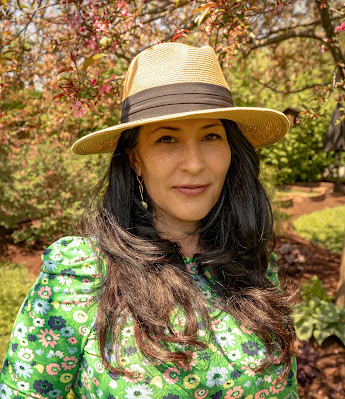


Ada Limón Is Named the Next Poet Laureate: Poetry, she said, can help the nation “become whole again” in a fraught, divided moment. Photo by Carla Ciuffo for The New York Times, July 12, 2022


Sometimes I imagine all my lovely poets 

out there in the world of their bodies

having a poetry party

with dry red wine uncorked and pimento cheese 

spread out on a warm lawn, or gathered 

around the inside of a picture window,

still black water holding the stars, 

talking poems made 

            in the white heat of the moment… or 

            written from inside the well ...

Reminding themselves that

            when things are bad, 

            we still have our words

            and each other.

And then I get on Facebook

and I see it really is true. 

            When the day calls for fire 

            and your friends have all the matches 

            to burn it down, Ada posts,

and I know these friends,

some of them anyway,

and the R.J Corman rail line

running by her house,

            surrounded by wild things, 

            green trees, grasses.


But never mind my invitation

lost on the internet,

I’ll read myself in

between the lines—

            “If you want to win anything—your race, your self, your life—

            you have to go a little berserk”—this woman even gets good fortune cookies, 

and on the radio now Ada Limón is talking 

about female rage and how

                        sometimes we need

                        to step into that room and make ourselves

                        fully known and fully seen.


Even “The Onion” loves this woman, the railroad spike

bisecting Trump’s hypothalamus and he calls a meeting 

to name her poet laureate.

            When we name things we are more tender to them…

            But I am also aware of the hubris of naming things.


She’s not my friend,

even though she seems to live inside my body,

            more tired than I should be, 

            …hurting more, 

            my brain keeps saying 

            “this country hates women, 

                        this country hates women”

                                    over and over…

            And of course women are hesitant

            about our subject matter. 

            Of course we are. 

            We’ve been taught that from the very beginning

to ask ourselves,

            Should I take the “I” out? Should I erase my being?

But there she is, Ada Limón, singing the song 

of our shared bones, and, yes,

sometimes the song 

is enough.


Author's Notes:

Italicized lines are from the following sources

Ada Limón's Facebook timeline, October 2018

https://soundcloud.com/kutnews/this-is-just-to-say-ada-limon-and-carrie-fountain https://www.cleavermagazine.com/a-conversation-with-ada-limon-author-of-the-carrying-interview-by-grant-clauser/

https://politics.theonion.com/calm-measured-trump-hard-at-work-after-freak-accident-1829686798

“The Poetry of Perseverance: An Interview with Ada Limón,” Poets & Writers September/October 2018.


The final lines reference “A New National Anthem,” The Carrying, by Ada Limon


Pauletta Hansel’s newest poetry collection is Heartbreak Tree, an exploration of the intersection of gender and place in Appalachia. Her writing is featured in Oxford AmericanRattle, The New Verse News and Poetry Daily, among others. Pauletta was Cincinnati’s first Poet Laureate and is 2022 Writer-in-Residence for The Cincinnati and Hamilton County Public Library.