Guidelines


Submission Guidelines: Send 1-3 unpublished poems in the body of an email (NO ATTACHMENTS) to nvneditor[at]gmail.com. No simultaneous submissions. Use "Verse News Submission" as the subject line. Send a brief bio. No payment. Authors retain all rights after 1st-time appearance here. Scroll down the right sidebar for the fine print.
Showing posts with label ship. Show all posts

Wednesday, August 20, 2025

THE SOUND OF THE WELL

by Shirin Jabalameli


Beneath a cracked and ancient dome,
the wind slips through fissures,
circling the hull of a stranded ship.

Coffee grows cold upon the table,
and the Sufi, in quiet prayer,
speaks to the blackness of a crow.

From the dragon’s mouth
a rope of light leaps forth
onto masks that melt, one by one,
their cracking faces ringing
like a forgotten church bell
through the air of poverty’s hell.

The city,
a fractured mirror,
sees its own face in a thousand shattered pieces
and screams.

The broken tick-tock of a clock
scratches the latch of time’s doors,
and from a silent well
the voice of a child rises,
still remembering the name of their mother.

The crow spreads its wings,
and the wind carries the scent of stale bread.
The Sufi stirs the coffee in a whirlpool
and with a sip drinks the world anew.


Shirin Jabalameli is a multifaceted Iranian artist, poet, painter, photographer, and writer. She has authored books including Crows Rarely Laugh, Apranik, and 101 Moments. Her latest work, an illustrated poetry collection titled 25 Fell from the Frame was recently published. Her poems have appeared in international journals such as Braided Way Magazine (USA), The Lake (UK), and The New Verse News (USA).


Shirin’s poem in its original Persian follows:

صدای چاه

زیر گنبدی ترک‌خورده
باد از شکاف‌ها عبور می‌کند
و بر شانه‌ی کشتی به گل‌نشسته می‌چرخد.

قهوه روی میز سرد شده است
و صوفی در سکوت
با سیاهی یک کلاغ مناجات می‌کند.

از دهان اژدها
ریسمان نور می‌جهد
بر ماسک‌هایی که یکی‌یکی
ذوب می‌شوند،
و صدای ترک‌خوردن چهره‌ها
چون ناقوس کلیسای فراموش‌شده
در هوای جهنم می‌پیچد.

شهر،
چون آینه‌ای ترک‌خورده،
چهره‌اش را در هزار پاره‌ی مخدوش می‌بیند
و جیغ می‌کشد.

تیک‌تاکِ از کارافتاده‌ی ساعت
کلون درهای زمان را می‌خراشد
و در چاهی خاموش،
صدای کودکی می‌پیچد
که هنوز نام مادرش را از یاد نبرده است.

کلاغ بال‌هایش را باز می‌کند
و باد بوی نمِ نانِ کهنه را می‌برد.
صوفی قهوه را در گرداب می‌چرخاند
و با جرعه‌ای جهان را دوباره می‌نوشد.

Saturday, March 30, 2024

FOOTAGE

by Kai Jensen


The bridge falls so quickly.
The ship seems stationary
like a fat little house
alight behind the dark lattice
tiled with coloured rectangles
or a plump insistent animal
nudging a leg for food.
On air, laconic voices
discuss the situation.
It seems there’s a crew up there.
The pilots wring their hands—
their bad dream’s turned real.
Nothing seems to change
but the bridge falls
all at once, its cobweb drooping
then brushed away.
The men dozing in their cabs
awake to death. A city stalls.


Kai Jensen’s father was born in Baltimore, the site of the recent bridge disaster, while Kai was born in Philadelphia. As a child he emigrated to New Zealand with his family, and is now an Australian. Kai works from home as an editor at Wallaga Lake on the Far South Coast of New South Wales. His poems have appeared in most leading Australasian literary journals and, in the United States, have been published in or accepted by The Inquisitive Eater, Men Matters Online, The NewVerseNews, Rattle and The Fictional Cafe.

Sunday, September 17, 2023

VENICE SUN

by Alejandro Escudé


Venice has finally revealed the details for its entrance fee, making it the first city in the world to charge daytripper visitors. Starting in spring 2024, visitors to the floating city will have to pay 5 euros ($5.40) to enter on peak days if they’re not staying the night. But this isn’t a permanent move yet – the Venice authorities have committed to a 30-day “experiment.” —CNN, September 13, 2023


When you first get there—

Your ocean liner looms over 

The island city and you spot

The ancient roofs and the plazas,

The gryphons, and the gold-fringed

Streets, both real and imagined,

And the people on the cruise

Get off onto the bridges, you 

Smell the canals—leafy, oily, 

And the mask you purchase is 

Expensive, the plague doctor,

And you drink a cold beer

And you eat in a restaurant

Down a corridor, and you think

Of the writing you should be

Doing, and every corner brings 

That lifelong, exquisite guilt, 

And you sidle through crowds

And get too hot and walk

Out too far, where there are

Fewer people, only sunlight

Splashing against a cracked wall.

And you are in Venice, but

At night, it’s Euro-urban scary, 

And you’re alone and lost

And you almost miss the boat

Though the boat is docked close.

You take the tender back 

To the pastel-colored cake-boat

That is every cruise and you 

Go to the ship’s casino and sit at

The red neon bar, and you forget

That you were ever in Venice

And it’s almost twenty years

Later and you learn that now

Venice wants to charge a fee

Like an amusement park, and

It makes you sad to look at 

Your mask, hanging on your

Wall, remembering the latest 

Plague. But it makes you 

Even sadder to learn there

Will be days in that city

Where it’s not advised 

That you visit because of

Crowds. And you think:

I’d go anyway. I’d go

Right now just to smell

Those canals again. Just 

To see that palace, fringed

In gold. To feel that heavy,

Doge’s sun like one coin

Of the two that sit upon 

My aging poet’s eyes. 


Alejandro Escudé published his first full-length collection of poems My Earthbound Eye in September 2013. He holds a master’s degree in creative writing from UC Davis and teaches high school English. Originally from Argentina, Alejandro lives in Los Angeles with his wife and two children.

Monday, July 13, 2020

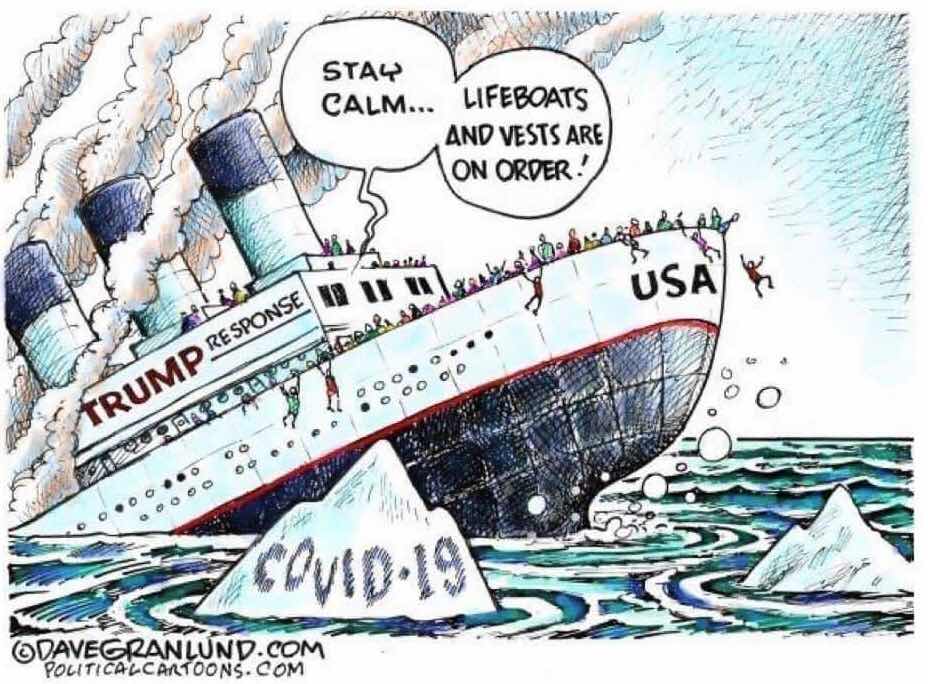
FOUR YEARS BEFORE THE MAST

by Devon Balwit


A brokenness in need of fixing, we carom, 
blowing out sail after sail. At the helm 
gapes a hole the shape of a captain 
in love with his flail. We keep eyes 
to our holystones, thinner with each 
fretful pass, and scrub fore and aft. 
In sight of shore, we hoist a false flag, 
gilded with import. All know our master’s 
true master, his fathomless coffers 
deep in the hold. Our sad tongues 
misremember the taste of fresh water, 
the tartness of greens as we bleed 
from both ends. Weeping awakens the sleepers 
in the fo'c'sle. We ourselves 
may be its source. Without a hand 
to our throat, there’s no knowing.


Devon Balwit's most recent collection is titled A Brief Way to Identify a Body (Ursus Americanus Press). Her individual poems can be found in here as well as in Jet Fuel, The Worcester Review, The Cincinnati Review, Tampa Review, Apt (long-form issue), Tule Review, Grist, and Rattle among others.