Guidelines


Submission Guidelines: Send 1-3 unpublished poems in the body of an email (NO ATTACHMENTS) to nvneditor[at]gmail.com. No simultaneous submissions. Use "Verse News Submission" as the subject line. Send a brief bio. No payment. Authors retain all rights after 1st-time appearance here. Scroll down the right sidebar for the fine print.
Showing posts with label Pacific Ocean. Show all posts

Wednesday, July 06, 2016

NEAR AND DISTANT SHORES

by Bette Lynch Husted


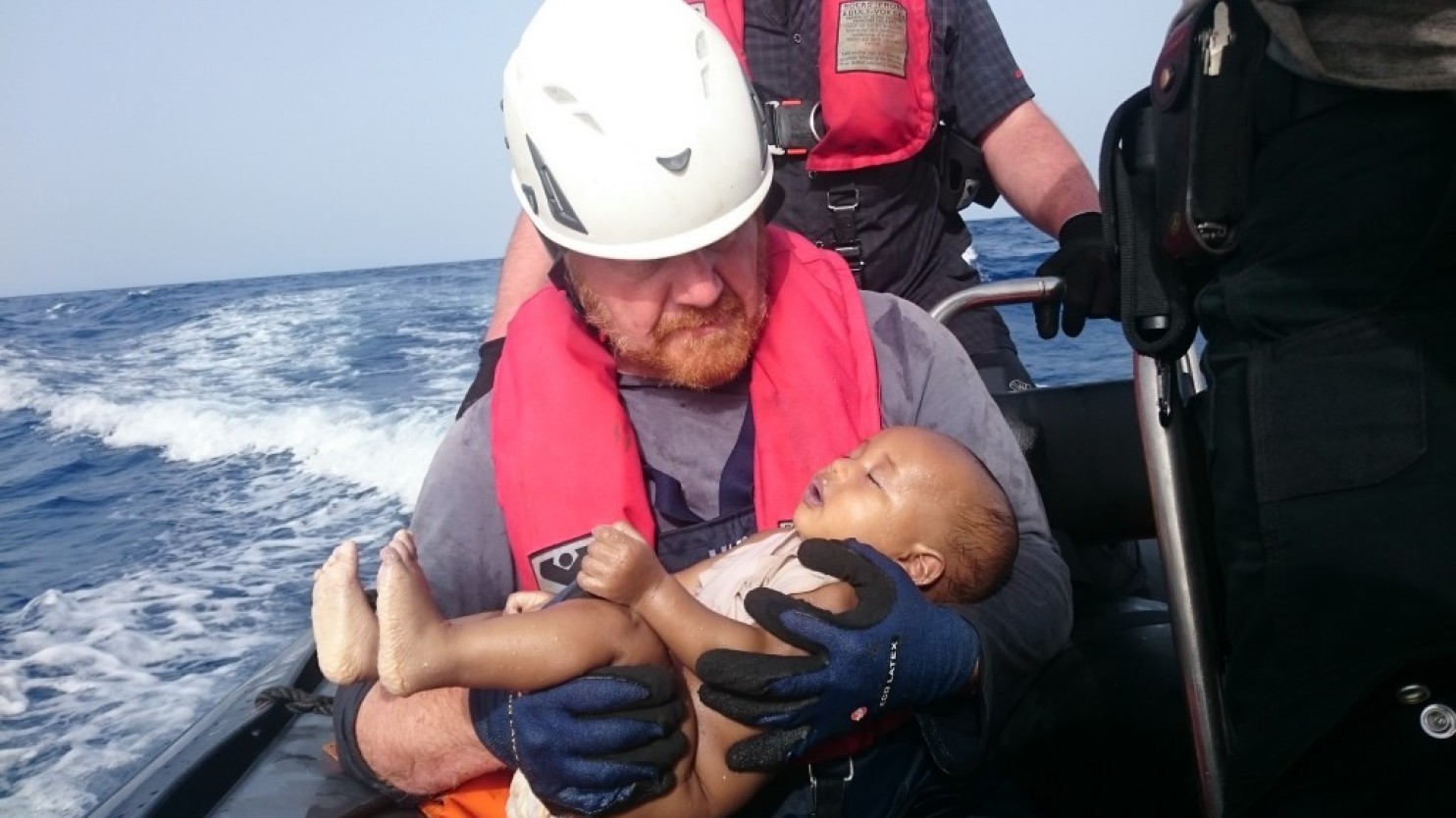
A German rescuer holds the corpse of a drowned baby off the Libyan coast May 27. Source: Christian Buettner/Eikon Nord GmbH Germany via Reuters and The Washington Post, May 31, 2016.


“Again! again! again!”
On our way to the Pacific
we snuggle in the back seat
with The Poky Little Puppy
“Rice pudding,” our little traveler echoes,
“He likes it!”

At the beach, we splash through
currents, waves breaking warm
around her ankles

Bodies small as hers
wash up on other shores,
refuse of war
their families refused
safe passage

refuge

My son’s body
disappears
in green-white breakers

He resurfaces
and waves

A yellow shovel
shapes her first sandcastle
A man says he wants only
to bury his children
and sit by their graves
until he dies

Fresh from her evening bath,
her dark head emerging from a white-towel chrysalis
safe in her father’s arms
both of them laughing—

Beneath the Milky Way
the sea returns
again again again    


Bette Lynch Husted lives in Eastern Oregon, where she chairs a monthly writers’ series. Her books include two collections of memoir essays, Lessons from the Borderlands and Above the Clearwater: Living on Stolen Land, and the poetry collection At This Distance.

Thursday, May 05, 2016

EXCLUSION ZONE

by Joan Mazza


Evolutionary biologist Timothy Mousseau and his colleagues have published 90 studies that prove beyond all doubt the deleterious genetic and developmental effects on wildlife of exposure to radiation from both the Chernobyl and Fukushima nuclear disasters, writes Linda Pentz Gunter. But all that peer-reviewed science has done little to dampen the 'official' perception of Chernobyl's silent forests as a thriving nature reserve. —The Ecologist, April 25, 2016


Thirty years after Chernobyl’s accident
spilled radiation equal to twenty Hiroshimas,
wolves, roe deer, boar, bison, and moose thrive
between abandoned apartment buildings and once-
tended fields and gardens. Animals too contaminated
to eat. Appearing to be normal, they meander
within what is left of Pripyat. Tourists travel
to photograph the haunting beauty of decaying
buildings, trees flowering in spring, ignore long-term
threats of gamma particles that enter their bodies—
silent with their sinister destruction. This zone
is an unintentional wildlife sanctuary,

while Fukushima fallout spreads eastward
across the Pacific Ocean toward the west coast
of the Americas. Southern California seaweed
holds five times the normal radiation. What this
means for other foods, for long-term human
health, we don’t yet know. The ocean maps show
the field widening, contaminating fish, plankton,
and mammals, dumping tsunami debris on islands
along the way. Another natural experiment.
Perhaps another surprise nature reserve. We wait
to see what it brings, which of the fittest survives.
No one will be excluded from this test.


Joan Mazza has worked as a medical microbiologist, psychotherapist, seminar leader, and has been a Pushcart Prize and Best of the Net nominee. Author of six self-help psychology books, including Dreaming Your Real Self (Penguin/Putnam), her poetry has appeared in Rattle, Kestrel, The MacGuffin, Mezzo Cammin, Buddhist Poetry Review, and The Nation. She ran away from the hurricanes of South Florida to be surprised by the earthquakes and tornadoes of rural central Virginia, where she writes poetry and does fabric and paper art.