Guidelines


Submission Guidelines: Send 1-3 unpublished poems in the body of an email (NO ATTACHMENTS) to nvneditor[at]gmail.com. No simultaneous submissions. Use "Verse News Submission" as the subject line. Send a brief bio. No payment. Authors retain all rights after 1st-time appearance here. Scroll down the right sidebar for the fine print.
Showing posts with label Turkey. Show all posts

Tuesday, August 11, 2026

I JUST WANT YOU TO KNOW

by Sally Mills


That if I ever need to be flown out
of Turkey, under threat of attack
by Iran in response to a war
that I started, I may hide
in an airport catering container
if that is what I need to do, but
what I will not do, I promise, is
leave you on the old Air Force One
as a decoy. That is the depth
of affection I have for you
and you can take that to the bank.
xoxo


Sally Mills is a poet and attorney from Downeast Maine.  She studied the Russian Silver Age poets and holds an MPhil on the works of Anna Akhmatova.  Her work has appeared in The New Verse News and is forthcoming in Rat’s Ass Review.  When not writing poetry or practicing law, Sally performs with The Damn, Girls! — Hancock County’s premier country-western girl band.

Friday, December 05, 2025

HUNTING SEASON

by Alessandra Foster


AI-generated graphic by NightCafé for The New Verse News.


It starts around Thanksgiving, 

a feast of treats

focused on the corpse

of a large dead bird 

who's been gutted, re-filled, roasted.

No thanks there.

Meanwhile, fleet-footed deer

frantic and fearful,

run for dear life

across roads, across farms,

through woods,

without their normal caution,

sometimes tricked and tempted, 

stilled long enough to be killed

by a human with a gun.

Or a car with blinding lights.

So much beauty to be grateful for,

so much thriving diverse life to be part of, 

yet we offer up gratitude for the deaths

of fellow creatures who might, like us,

be thankful just to be alive.


Soon we segue to Peace on Earth,

greeting card words that aren't for real.

Not while our hearts and minds,

right here, right now, right at home, 

every day, every holiday,

accept violence and killing as normal, 

as celebration,

as having no season.


Author’s note: There are environments too harsh, and/or humans too poor, to sustain a non-violent diet. They may need to hunt or fish or farm a couple of domestic animals in order to survive. This poem is not for them.


Alessandra Foster - lifelong and long-lived reader and writer of poetry. Forty-three year vegan. Published: The New Verse News, Literary Veganism, Verse-Virtual, Moss Piglet, Rat's Ass Review.

Friday, May 03, 2024

NEANDERTHALS IN THE TILE

by Sally Zakariya


This floor tile imported from Turkey and installed during a home renovation contains what is believed to be a cross section of an ancient human jawbone. (Courtesy of Reddit user Kidipadeli75 via The Washington Post)


Check the counters and floors
check all the travertine tiles

Look for signs of the old ones
reaching up through time
   slivers of bone
      shards of teeth

Imagine the beginning: a natural
hot spring somewhere in Turkey

Layer after layer of plants and animals
trapped in the mud and fossilized

Mammoths, rhinos, giraffes,
deer, reptiles—even humans—
embedded in the travertine

Look down and count the years—
a million or more

Each step we take on earth, we walk
on the past


Sally Zakariya’s poetry has appeared in some 100 publications and been nominated for the Pushcart Prize. Her publications include All Alive Together, Something Like a Life, Muslim Wife, The Unknowable Mystery of Other People, Personal Astronomy, and When You Escape. She edited and designed a poetry anthology Joys of the Table and blogs at www.butdoesitrhyme.com.

Wednesday, March 15, 2023

BLOOM

by Annie Cowell


Songul Yucesoy's home in Samandag, southern Turkey was destroyed when a 6.4 magnitude earthquake struck a month ago. —BBC, March 6, 2023


She raises soap sudded hands
from the washing bowl,
places them on her hips
and stretches out her aching back.
Behind her the house tilts,
crippled, less solid than its shadow, 
window frames sagging 
between cracks like craters.
On the table, rescued, somehow
unscathed, is a picture.
It is a shell-framed souvenir of life before,
when the table wasn’t orphaned
to the street. 
Now, the fruit bowl she hates
for its dull colours and chipped rim
sits beside the picture, uncomfortable,
with its solitary orange.
A white mould is beginning to blossom
on its skin.
She lifts the dying orange, 
cups it in her hands like a stunned bird
and walks the short distance 
to where her neighbours’ family inhabit
two makeshift tents, cobbled together
near the rubble of their home.
Her daughter’s friend, he of the wild eyes
and cheeky tongue, lowers his head
as she approaches, tamed and silenced
by the shame of survival.
The lump in her throat prevents speech,
so she dusts the orange 
bloom 
with her finger, takes the young boy’s hand
places the orange there. 
Squeezes. 
It’s the least, and the most, she can do.


Author’s note: Some of the events in this poem are imagined, but they were suggested by the facts in the BBC’s March 6 article “Turkey Earthquake: Survivors living in fear on the streets.” The suffering continues, even as the earthquake’s aftermath slips from the headlines.


Annie Cowell lives by the sea in Cyprus with her husband and rescue dogs. She has been published by Popshot Quarterly, Gastropoda Lit, The Milk House, and many others. She is a BOTN nominee. Her debut pamphlet Birth Mote(s) was published by Alien Buddha Press in 2022. Splashing Pink from Hedgehog Press is forthcoming later this year. @AnnieCowell3

Saturday, February 11, 2023

HELPLESS

by Anne Harding Woodworth


Support the rescue efforts of the White Helmets.


     a prayer of sorts, Tuesday, February 7, 2023, 4:30 a.m.


In the quiet of this early morning, he’s left our bed
and walked into the hall, then to the kitchen
 
probably to get a “swig of klim,” as he calls it.
I move my foot over to his side just to feel the warmth

he’s left behind. At that moment, I know how survivors
in Turkey and Syria are shivering, reaching for warmth

where there is none, no lingering vestige of a spouse,
parent, child, no body next to them that said, “I’ll be right back.”

Buildings have fallen, din deafened, and then silent,
as snow passes into illicit spaces, upside down rooms,

and chairs drop into cold chasms of confusion,
terror, and pain with no one there to explain

what has happened. This is nightmare, a woman thinks,
held down in darkness between two concrete blocks

with one leg bent the wrong way. I tell her I am coming
with a blanket and lamp, but that too is dream

and will never happen. When he comes back to bed,
sweet-smelling of milk, I move closer to him

for his warmth, seeking comfort and more air
for those still breathing, buried deep in the rubble.


Anne Harding Woodworth is the author of eight books of poetry and four chapbooks. Her recent collection is GENDER: Two Novellas in Verse, which was a Literary Titan Silver Award Winner. Her chapbook The Last Gun won the COG Poetry Award and was subsequently animated (at https://vimeo.com/193842252). Anne is a member of the Board of Governors at the Emily Dickinson Museum in Amherst, MA, which is opening soon after two years of restoration.

Saturday, November 27, 2021

THANKSGIVING ON MY MIND

by George Salamon


Digital Painting of an old woman’s hands by Victoria Castro.


I confronted my fondest memory of Thanksgiving,
not long ago, as the oven door was opened to baste
the turkey with yet another coating of bubbly pan
juice, that was to make the meat more tender, when
I heard the scratching of Cleo's paw at the kitchen 
door shut to her, Cleo the golden retriever who knew
what she smelled and what she wanted, while the
humans were told not to didscuss the important things
they cared about—politics and race, the economy 
and money, having it all or having nothing at all, the
state of the union and the abuse of the environment—
while the word important made my skin crawl I
thought of Cleo's paw and glanced over to the old
grandma, eyes shut and the sensitivity in her lapped
leathery hands, that feeling in the tips of her fingers
for all living things and understood the paw and her
fingers mattered and counted, and the rest belonged
with all that stuff we sought and still seek at the mall.


George Salamon is fond of the German word Fingerspitzengefuehl—the feeling at the tips of your fingers. It seems to him that we will lose it completely with all that clicking on the computer and smart phone. Have a lovely Thanksgiving weekend —anyway.

Thursday, November 25, 2021

GHAZAL: THANKSGIVING

by Rebekah Wolman


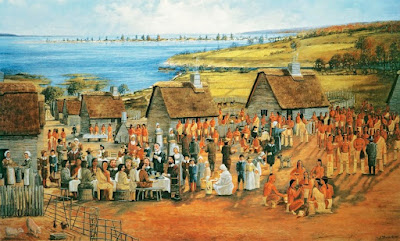
A painting done in 1995 by Karen Rinaldo, of Falmouth, Mass., depicts what many Wampanoag tribal leaders and historians say is one of the few accurate portrayals of “The First Thanksgiving 1621,” between the Wampanoags and the Pilgrims. —Dana Hedgpath, “This tribe helped the Pilgrims survive for their first Thanksgiving. They still regret it 400 years later.” The Washington Post, November 4, 2021


We’ve read the picture books about the harvest feast we call the first Thanksgiving—
no mention that for the Wampanoag it was a cursed Thanksgiving.
 
How many ways to brine and roast a turkey? Ask the food editors
what’s the virtue of this excess in which we’ve been immersed, Thanksgiving.
 
Some kids dressed up as Pilgrims; others wore construction paper feathers.
What did they learn about the Wampanoag when they rehearsed Thanksgiving?
 
In COVID quarantine, we roasted Cornish hens for one or two. Instead
of hand-drawn place cards we had names in Zoom squares at our dispersed Thanksgiving.
 
Two years after settling on Wampanoag land, the Pilgrims saw no rain
for two long months. Two months of fast and prayer and then a cloudburst Thanksgiving.
 
Family tensions linger, wrongs go unredressed, pain unspoken. Food and drink
are plentiful but other hungers go unsated at lips-pursed Thanksgiving.
 
What I’m asking, settlers’ descendants and other white folk, is what if we returned
ill-gotten gains, atoned, and then observed—a people reimbursed—Thanksgiving?


Author's Note: This poem was written in the shelter of a house built and bought and sold multiple times on stolen land...the unceded ancestral homeland of the Ramaytush Ohlone people, the original inhabitants of the San Francisco Peninsula.


Rebekah Wolman is a retired educator living in San Francisco. A previous contributor to The New Verse News with poems also appearing recently in Limp Wrist, she is a 2021 winner of Cultural Daily’s Jack Grapes Poetry Prize.

Sunday, November 29, 2020

POST-THANKSGIVING 2020

by Barbara Schweitzer


“Only Human,” painting by Judith Dawson.


We are such little twisty things
protoplasm and cell productions
who eat turkey in November
and hotdogs in July
who love intensely our neighbor-in-bed
then plot coups with the Deplorables.
We are unthinkable most times
and dumb the rest
yet we climb and hope
and endure so that we might
not cascade into the smarmy oceans
we have made. We pick our way
so that we might reach an alp
and spread our small intelligences
like faraway stars into a universe.
We are just enough bare-boned and starving
to go on and on and on though we remain
still closer to slime than to god.


Barbara Schweitzer is still writing poems and plays and Cyjoe Barker mysteries in upstate RI.

Thursday, November 26, 2020

THANKSGIVING 2020

by Catherine Gonick


If we are lucky this year, it reminds us of our people.
Of the things we can’t forget. Of things that others
never let us forget, like the year I read Julia Child
and made my sister peel fifty chestnuts with a paring knife
to go with the brussel sprouts. The year a boy
cousin and I each ate an entire drumstick
by ourselves, so much food we couldn’t get up
from the table after dessert. The year the gigantic
turkey, fresh from the oven, was left to rest  
on a side-table, and when everyone showed up
to eat, was almost gone, a carcass, with only
a little meat left on its bones. We thought
it had been devoured by another animal,
possibly a cat, a huge one that must have got in
through the open window,  a beast no one had seen
enter or leave but was known to exist
in the neighborhood.  Was that one of the years
where people got stoned? Like the time I lit up
with the straightest women I knew, my mother
and her favorite niece, who wore cashmere
and brought her own grass? I have forgotten,
but not my mother’s stuffing, the best
and most basic. Pieces torn from bread,
a lot of butter, just enough sage, celery
and onion. Giblets if you can get them.
Cooked inside the bird, without thermometer.
Serve and say prayers for the dead.
Raise a drumstick like a talking stick
and ask for blessings on your table
and our nation. Pass the potatoes
and give thanks for a democracy that, like
our turkey the year of the cat, was nearly
shredded, yet, by some miracle, still left
with enough meat to feed us.
 

Catherine Gonick’s poetry has appeared in literary magazines including Notre Dame Review, Beltway Poetry Quarterly,  Lightwood, Forge, Sukoon, and PoetsArtists, and in anthologies including in plein air and Grabbed. She was awarded the Ina Coolbrith Memorial Prize for Poetry and was a finalist in the National Ten-Minute Play Contest with the Actors Theatre of Louisville. She is part of a company that fights the effects of climate change.

Thursday, October 22, 2020

IN LOVE AND POETRY

by Indran Amirthanayagam


“Hope,” a painting (1886) by George Frederic Watts and assistants.


Call it now. Out loud.
Without shame. By
its name. Call it

this morning on waking
in the still dark. Call it
reading last night

your words on the screen.
Call it banishing sleep.
There is no energy

more sweet that sustains.
Call it for the one
who corrects these verses.

Call it on streets of
suburb and city,
in the fields. Call it

in front of the Capitol
on top of Mount Baldy
on Waikiki Beach,

by Lake Superior.
We are going far my dear
and we are walking back

home for Thanksgiving
Let us invite Kamala
and Joe to the table.

Let us boil sweet potatoes,
serve elderberry jam,
make a bean and onion stuffing,

let our friends know
the meal will not involve
killing a turkey

or any other fowl.
Let us give thanks God
for this vitamin flowering

in the early dark, guiding
our fingers as we write,
saying call it now.

in the day, at night,
to friends and enemies
alike. In love and poetry

we are going to make
table and bed, and
we are going to write

our songs in these days
of the plague until
we see light come up

above the trees on fire,
the befogged clouds,
until the back of beyond.


Indran Amirthanayagam writes in English, Spanish, French, Portuguese and Haitian Creole. He has 19 poetry books, including The Migrant States (Hanging Loose Press, 2020) and Sur l'île nostalgique (L'Harmattan, 2020). In music, he recorded Rankont Dout. He edits The Beltway Poetry Quarterly, is a columnist for Haiti en Marche, won the Paterson Prize, and is a 2020 Foundation for the Contemporary Arts fellow.

Tuesday, January 21, 2020

JIVE TURKEY NUMERO UNO

by Scott C. Kaestner


Ukrainian truth squads unveil those are indeed the President’s testicles in Mitch McConnell’s mouth marbling his gobble talk as Jive Turkey Numero Uno in the US Senate.

A fair trial?

Since when does that have anything to with American justice?

“Gobble-gobble-gobble, squawk-squawk, gobble-gobble hoax!”

I’m hungry and like my turkey on rye, minus the President’s testicles.


Scott C. Kaestner is a Los Angeles poet, writer, dad, husband, and someone who seeks spiritual guidance from his dog. Google ‘scott kaestner poetry’ to peruse his musings and doings.

Thursday, January 16, 2020

MARE NOSTRUM

by Janice D. Soderling


Eight children were among the 11 migrants who drowned when their boat sank off Turkey's western coast, state media report. Eight other people were rescued from the waters off Cesme, a tourist resort on the Aegean coast opposite the Greek island of Chios. —BBC, January 12, 2020.


It is the ghost ship Hope-No-More
that sails a bitter sea.
Stiff on her misty deck there stands
a doleful company.

Her sails are spun of baby breath.
Her masts are made of bones.
Her draft is deep, but deeper still,
the halls of Davy Jones.

Her keel is carved of hard goodbyes.
Her rigging wrought of grief.
Her rotting hull is empty as
the honor of a thief.

She sailed from war and hunger.
War and hunger are no more.
She sails like fog forever.
The good ship Hope-No-More.


Janice D. Soderling is a previous contributor to TheNewVerse.News. Her work was recently at Better Than Starbucks and Light. She has published one chapbook in Swedish and two in English, another soon forthcoming titled War: Make That City Desolate.

Monday, October 14, 2019

THE PHOTOS DON'T DO JUSTICE

by Tricia Knoll


QAMISHLI, Syria – "Eight-year-old Sara Yousif has become a symbol of the Turkish war on northeast Syria, which has caused the death of around 40 civilians, according to a war monitor." —The Independent (UK), October 13, 2019. "Sara lost her leg when Turkish shells rained down on her neighborhood of Qudurbag, eastern Qamishli on Thursday, killing her brother 11-year-old Mohammed and wounding her mother and brother Ahmad." —Rudaw (Kurdish media network), October 13, 2019.  Below, Sara's father Yousif Gharib speaks to reporters at the funeral for his son. Credit Rudaw for photos.


to the glory light on sober gold
of Vermont’s falling leaves

or for the places we’ve seen
Ansel Adam’s Yosemite

now smothered in wildfire smoke.
Those people we remember –

the Afghani girl’s blue eyes
the minister on the hotel balcony

the monk in flames or the man
with a flower facing a rolling tank

the father’s arm holding daughter
Valeria on the banks of the Rio Grande

and now Sara, age eight,  a Kurd, who lost
her leg to a fast-moving Turkish bomb

and her father sobbing over the body
of his dead son, not yet pointing his finger

to the betrayal of a man in Washington
whose soldiers she may have once trusted.

The photos do not do justice, let them
remind us justice could be done.


Tricia Knoll’s most recent poetry collection How I Learned To Be White (Antrim House) received the Gold Prize in the Poetry Book Category for Motivational Poetry in the Human Relations Indie Book Prize for 2018.

Saturday, October 12, 2019

HIS FOREIGN POLICY

by Jan D. Hodge


He's rather hard pressed to explain,
however stupendous his brain,
      giving Kurds to the Turks
      and to Putin (with smirks)
Crimea and Eastern Ukraine.


Jan D. Hodge's poems have appeared in many print and online journals, several being awarded prizes in open national competitions. Two of his books, Taking Shape (a collection of carmina figurata) and The Bard & Scheherazade Keep Company (double-dactyl renderings of Shakespeare, tales from the Arabian Nights, and Reynard the Fox) have been published by Able Muse Press.

Sunday, May 28, 2017

OUTSIDE THE TURKISH AMBASSADOR'S HOUSE

by Bruce Dale Wise


Source: The New York Times


Outside the Turk ambassador's house, Erdogan looked on,
while a man came to Ceren Borazan with open arms.
He was drawn to her chanting voice. He grabbed her from behind,
and gripped her neck so tightly, she was scared out of her mind.
The people suffering in Turkey, far way from them,
when he was yelling—kill you, bitch—they could not have heard him.

The men in suits, the bodyguards of Tayyip Erdogan,
had come to roust protesters out—Kurds and Armenians.
Attackers kicked one woman as she lay curled on a walk;
Abbas Aziz, a teacher, got a lesson in free talk.
He was knocked to the ground by men, and kicked in chest and head.
This is America, this is not Ankara, he said.


Bruce Dale Wise is a poet, essayist, and the creator of new poetic forms. His publication credits include magazines and ezines under his own name and various pseudonyms.

Friday, May 05, 2017

THE BODY POLITIC

by Edmund Conti


We both liked Istanbul.
She, having been there, and I
probably because I am,
as our President would say,
an international. I like
the idea of its being on two
continents. Intercontinental
our President might say.
I like the idea  that Istanbul
was Constantinople, that
Constantinople was Byzantium.
Wishy-washy our President
could say. Our President
talks turkey. But, then,
he’s a President and I?
I’m a Poet. And she?
She laughs at us both.


Edmund Conti's poetry is all over the place.

Monday, August 08, 2016

BIG WINDS

by Neil Shepard


by grobles63


Johnson, Vermont

Big winds in the back pasture this morning.
Must have blown in from that dark bluster
in Ohio where the orange-haired dystopian
shouted himself red: a nation broken,
and only himself with enough narcissistic
moxie to fix it. What would be the fix? Short,
as always, on specifics. But the fix, so
far, fixates on anyone who crosses him.
In short, big winds blow from the little mind
of a schoolyard bully, a bull who charges
every flagging patch of red. And half
the nation’s ready to blow in his blowhard
direction. They’re small children who want
a power-daddy to fix what’s broke.
And the big winds in the back pasture
presage afternoon thunderstorms and
a dome of hot air crushing down on us
that feels like the beginning of intolerable
conditions. A whole summer and autumn
of unbearable heat, which will roast the air
to record highs. If there’s a weather god
today, he’s a strongman. All those grass-heads
below are dried-out, hollow, blown in one
direction: his. The one turkey wading
through them is the steadiest creature in the field,
flattening the unthinking reeds, feeding as it needs,
and popping out onto lawn, finally, like a reality
TV star to shake off its crown of fluff and seed,
and now I see he’s no turkey, he’s a red-faced turkey
vulture, perfect for the clean-up work to come.


Neil Shepard’s sixth and seventh books of poetry came out in 2015: Hominid Up (Salmon Poetry, Ireland) and Vermont Exit Ramps II (Green Writers Press, VT). His poems appear in many places, among them Poetry Daily, Verse Daily, and Poem-a-Day (Academy of American Poets), as well as in Harvard Review, New England Review, Paris Review, and Southern Review. Shepard taught for many years at Johnson State College in Vermont and edited for a quarter-century the Green Mountains Review. 

Monday, April 18, 2016

THE HOMOPHILOUS GENE

by James Penha


“You’ll see people complaining that the media doesn’t give as much prominence to terrorism atrocities outside of Western Europe as it does to those that take place in cities like Paris or Brussels. The data shows it is much, much harder to get people to read those stories.” 
—Martin Belam, Medium, March 28, 2016


I shall always ❤ New York. And on Marathon Day I stand again
with Boston, and #BlackLivesMatter in every Charleston nightly.
Bien sûr je suis Paris parce que j’aime Paris chaque instant,
chaque moment de l'année. Bruxelles?  Bruxelles est assez
de français pour moi d'être Bruxelles maar ook
Vlaams naar Brussel elk moment van het jaar.
Last summer I devoured simit and baklava at Taksim windows
and petted sprawled dogs in the shade of the Obelisks: İstanbul'u
(but to Ankara I have never been).
Part of me must be Lahore. Remember? it was Easter after all
although I cannot find a timely # for that attack 3 weeks ago
(#PeshawarAttack impertinent; #PakistanBleeding obsolete) and
if میں نے پاکستان تھے whenever a bomb explodes in Pakistan
how to find the time to face Java and Bali?
islands where I love a Muslim whose faith in  الله 
is sighted darkly at every Western checkpoint, mall, hotel,
monitored whitely by attendants on Southwest Airlines,
and so I will—must—be Aleppo, Hit and Lashkar Gah 
walking dead from graves cracked open by exceptional shocks
of retribution and survival 
of the selfish.


James Penha edits TheNewVerse.News .

Friday, January 29, 2016

ALL THE CHILDREN

by Cally Conan-Davies


At least 25 refugees, including 10 children, drowned in the Aegean on Thursday when their boat sank off the coast of the Greek island of Samos. The refugees were trying to reach the island from the coast of Turkey, just a few miles away, when the vessel went down. It was not known what caused the accident, but there have been dozens of similar tragedies in recent months, caused by people traffickers cramming too many refugees onto small boats. The Greek coast guard said that of the drowned children, five were boys and five girls. Ten survivors were rescued. —The Telegraph, Jan. 28, 2016. AP Photo Coast guard vessel arrives with the dead bodies of migrants at the port of Vathi on the eastern Greek island of Samos.


Out of the water,
his small ear
to the air—

we saw the photos,
froze,
outrage spilled over.

But in real time, the mean time,

eyes dry and tides change
yet the children of nowhere
keep dying on the waves

not over there
for there is no there but here
and no them but us
dying

in their wet clothes.


Cally Conan-Davies is a writer who lives by the sea.

Saturday, November 21, 2015

CHARON

Editor's Note: We are pleased to repost this poem, originally published in TheNewVerse.News on Sunday, September 27, 2015. It is one of our 2015 Pushcart Prize nominees.


CHARON
by A.E. Stallings


A Syrian refugee carries his child at a beach on the Greek island of Lesbos after crossing part of the Aegean Sea from the Turkish coast, September 19, 2015. A girl believed to be five years died on Saturday and 13 other migrants were feared lost overboard after their boat sank in choppy seas off the Greek island of Lesbos, the Greek coastguard said. A second, exhausted group of around 40 people reached the island in a small boat following a traumatic journey from Turkey, having paddled through the night with their hands across 10 kilometers (six miles) of ocean after their engine failed. Hundreds of thousands of mainly Syrian refugees have braved the short but precarious crossing from Turkey to Greece's eastern islands this year, mainly in flimsy and overcrowded inflatable boats. —REUTERS/Yannis Behrakis via Yahoo! News, September 15, 2015


When some, as promised, made it to dry land,
He profited, high and dry, but others, owing
To fickle winds, or a puncture, or freak waves,
Arrived at a farther shore, another beach
Lapped by a numb forgetting, still in the clothes
Someone had washed and pressed to face the day,
And lay in attitudes much like repose.
And Charon made a killing either way,
Per child alone, 600 euros each.


A.E. Stallings is an American poet who has lived in Greece since 1999. Her most recent collection is Olives, from TriQuarterly/Northwestern University Press.