Guidelines


Submission Guidelines: Send 1-3 unpublished poems in the body of an email (NO ATTACHMENTS) to nvneditor[at]gmail.com. No simultaneous submissions. Use "Verse News Submission" as the subject line. Send a brief bio. No payment. Authors retain all rights after 1st-time appearance here. Scroll down the right sidebar for the fine print.
Showing posts with label Taliban. Show all posts

Wednesday, August 28, 2024

NOTHING

by Lynn White


ABC (Australia), August 27, 2024


In those streets

of men and boys,

in that country 

for men and boys,

she feels like a person with no face,

her face space covered,

her identity occupied

by a swirling mist of confusion

like nothingness being born.


Sometimes 

she wishes for a blank space

that she could fill herself

with a Magritte apple

or even a woman

even herself

un-blanked

and visible.


Now, in those streets

of men and boys,

in that country 

for men and boys,

she feels like a person with no voice,

Magritte’s apple is choking her,

muting her

so even in her home she whispers

her songs and curses.


Only in her head does she shout

that something will come of nothing,

that something must come of nothing.


Lynn White lives in north Wales. Her work is influenced by issues of social justice and events, places and people she has known or imagined. She is especially interested in exploring the boundaries of dream, fantasy and reality and writes hoping to find an audience for her musings. She was shortlisted in the Theatre Cloud 'War Poetry for Today' competition and has been nominated for a Pushcart Prize, Best of the Net and a Rhysling Award. Her poetry has appeared in many publications including: Apogee, Firewords, Peach Velvet, Light Journal, and So It Goes.

Friday, July 14, 2023

GHAZAL FOR THE WOMEN OF AFGHANISTAN

by Jackie Fox


The bearded old men stop at nothing to stifle the women.
Keeping them hidden will solve the temptation of women.

Oh, they talked through their turbans like nothing would change
for lives that had blossomed like lilies—the women. 

The women knew better. The cascade of workplace and school
slammed tight against the menace of girls and danger of women.

Vanished from work, school and public movement without a male—
this would seem sufficient erasure of women.

But nothing is ever enough for the old zealots, who want only
to keep their coarse sandals planted on the necks of women.

So now—of course and at last—the beauty salons, 
last refuge for most and livelihood for some of the women.

Not enough to endure the hijab or burka and forego makeup in public.
Even the most private pleasures must be denied to women.

And to those of us in the West with our patented knee-jerk shock—
We tried to warn you, whisper the women.


Jackie Fox lives and writes in Nebraska. Her work has appeared in Rattle, The Bellevue Literary Review, Tar River Poetry, Ted Kooser’s American Life in Poetry, The Untidy Season: An Anthology of Nebraska Women Poets, and numerous other journals and anthologies

Thursday, March 30, 2023

DOOMER MADNESS

by Steven Croft


Why climate ‘doomers’ are replacing climate ‘deniers’: How U.N. reports and confusing headlines created a generation of people who believe climate change can’t be stopped. —The Washington Post, March 24, 2023


"If I am mad, it is mercy!" —H.P. Lovecraft, The Temple


Boundary between our world and the speculatively doomed
one finally dissolved, we all just sing with AC/DC now
as the world burns, as we inherit the hurricane winds

A man in Kentucky carries a mattress on his head, wades
from his flooded house to dry ground, collapses on it
in despair, lights a cigarette and laughs at all his/our ruin

A few years ago, just the faraway Seychelles were disappearing
Now, shunning sedate natural laws, future ghosts enter our minds—
"Oh, our prophetic souls!"—telling us all is irreversibly rotten

It's not like we were never warned—but, now, the world
of Soylent Green—2022—a year ago, if all that's left is to fail,
we've got catchin' up to do!

Now, loud muffler-rumble pride of our gloriously gas-powered,
world-castrating civilization as it races us all to the fiery oblivion
of Satan's eternally beckoning ancient mouth—sons of perdition!

Now, Paris Accords ripped into victory lap confetti for those
who can make it first to this perverse ever after—What of
those who still cling to hope in the sweat-throes of our mania:

Soon, as Seychelles-erasure goes nuclear, our heads spinning
faster than the earth some already orbit—the lucky few—even
the hopeful will cling to their rockets like Afghans fleeing Taliban


Steven Croft lives on a barrier island off the coast of Georgia. He is the author of New World Poems (Alien Buddha Press, 2020).  His poems have appeared in Willawaw Journal, San Pedro River Review, The New Verse News, North of Oxford, Anti-Heroin Chic, Soul-Lit, and other places, and have been nominated for the Pushcart Prize and Best of the Net.

Wednesday, January 18, 2023

UNIVERSITY WOMAN

by Tamam Kahn 


Female students are stopped by Taliban security at a university in Kabul, on 21 December 2022 (AFP via Middle East Eye)


We the Taliban 
will make you 
go quiet. 
We want 
an empty blackboard.
We the Taliban
are erasing the rights 
of each one 
with breasts 
and a vagina 
and a clitoris.
 
Each girl-student and
female professor 
splashes silenced outrage 
into a ruptured world,
zig-zags suspense 
back and forth 
across her mind,
hides a spaded heart 
raw with hiccups.
Each one cracks open
a brain-leak 
of stories and poems,
stashed backpacks 
of notebooks filled with 
foundational work,
knowledge, science—
 
all soon to be 
academic ditch-litter.


Tamam Kahn is the author two books on women of early Islam. Untold, A History of the Wives of Prophet Muhammad, (Monkfish Books, 2010), and Fatima’s Touch, (Ruhaniat Press, 2016). Both won International Book Awards. Tamam believes that sharing the lives of women, famous or in difficulty, helps bring awareness and change into today’s difficult times. She lives near San Francisco, California.

Wednesday, September 28, 2022

READING ANNE FRANK’S DIARY IN FARSI

by Elane Gutterman


About a dozen teen girls in a secret book club in Afghanistan are reading—and finding comfort in—Anne Frank's diary. Arzou, one of participants, said it was the first time they had read the firsthand account of a teenage girl living through extreme hardship. "I think Anne Frank is like, as a friend for me," she said. Photo: Diaa Hadid. —NPR, September 11, 2022.


I don’t want to live in vain like most people
 
In a basement at the edge of Kabul, at a secret
      book club,
a dozen teenage girls defy the Taliban,
feed their curiosity, exercise their minds,
connect to a Jewish girl from a distant time and
      place.
 
I want to be useful or bring enjoyment to all people
 
In translated books, the girls find themes to tunnel
      through darkness. 
Volunteer leaders steer the conversations, probe
      with questions. 
Girls like Arzou discover a kinship with Kitty—
      Anne’s diary, relate 
to bickering with mom, crush on Peter, resolve not
      to lose hope.
 
Even those I’ve never met
 
What brave teens, they’ve survived suicide
      bombings, 
losses, terrors, hardships of their Hazara minority.
In the past year, they’ve cried and tried to 
      circumvent 
the Taliban’s intent to cover, confine, undermine
      women.
 
I want to go on living even after my death
 
Masouma finds comfort in Anne’s diary, despite
      her grasp
of Anne’s horrific end. These teenage girls of
      Afghanistan 
now all dream of writing a book. Zahra says,
      “Nobody 
knows how long I will live, or when I will die.” 


Editor's Note: The italicized lines are quotations from Anne Frank's The Diary of a Young Girl.


Elane Gutterman is a trustee and the literary chair at the West Windsor Arts Center. Her poems invoking social justice have appeared in prior issues of The New Verse News. Her first book of poetry, Tides of Expectation (Kelsay Books), was published earlier this year. She dedicates this poem to the brave girls in the secret book club in Kabul and to one remarkable Afghani girl who arrived in Santa Fe, NM this week to begin tenth grade studies there.

Monday, March 21, 2022

NO ONE IS COMING TO SAVE YOU

by Umang Dhingra


do not be too loud on the streets; do not play music; 
this is how you hide if there is a bombing, this is how you hide if there is noise, this is how you hide if there is a knock on the door, this is how you hide if the shadows outside your room change shape; 
this is how you cover yourself up 
but i thought we did not have to do that anymore– 
this is how you cover yourself up; 
this is how you read books you stole from school, this is how you read books from your father’s shelves, this is how you read books when you are not supposed to; 
this is how you cry for help; 
do not wear bright colours; 
do not look anyone in the eyes; 
do not go outside until I tell you to; 
this is how you beg for asylum you thought was guaranteed; 
this is how you live with no electricity; this is how you live with no food; 
this is how you live with no dignity; 
this is how you live with constant fear 24/7 on 365;
this is how you pray and beg and hope that someone is coming to save you,
knowing
no one is coming to save you.


Umang Dhingra is a 17-year old writer from India. Her work can be found in numerous publications, scraps of paper around the house, and her family's WhatsApp group. She usually writes about being a brown girl from India, about her family, and what her mother calls, 'little explosions of sadness.’

Thursday, January 20, 2022

WOMEN OF GHŌR

by Steven Croft


In twilight we stare into our deaths
like we are the coming darkness

Our harrowed babies cry
but we dare not sing to them

The flour is gone in days
even tea is scarce

Our colorful dresses long hidden
or already burned for warmth

A bird calls a melody from a snowy tree
like joy trapped by the coming darkness

Warlords with stern faces walk the streets
with whips, rifles,

Whip-march a head-bent man with hands
bound behind by thick layers of rope

They tell us we have now what the hands
of the people have earned

And there is nowhere else to go, just
a cold valley, hill passes snowed for winter

If allowed to sing, we would moan a dirge
now even the night-bird is quiet

Nowhere is even a seed of relief
markets, kiosks, shops, silent and empty

They say our sins haunt us now—
girls wanting work and education

In the cold schools boys recite the Quran
Ameen

But how many times, O Knower of the Unseen,
until all our sins are erased

In our dreams of spring we see green trees
goat's milk and markets full of vegetables

In our dreams of spring we dance and sing
in our colorful dresses


Steven Croft lives on a barrier island off the coast of Georgia. He is the author of New World Poems (Alien Buddha Press, 2020).  His poems have appeared in Willawaw Journal, San Pedro River Review, The New Verse News, North of Oxford, Anti-Heroin Chic, Soul-Lit, and other places, and have been nominated for the Pushcart Prize and Best of the Net.

Wednesday, September 15, 2021

INITIAL PROMISES

by Stephen House


there were initial promises
from the Taliban
to form an inclusive government
 
there will be no women
in government
 
women playing sport
is not appropriate
 
women will be killed
if they commit adultery
 
LGBTQ people’s mere existence
means an automatic death sentence
 
LGBTQ Afghans are on the run
fearing they will be stoned to death
under Taliban law
 
Ahmadullah says
the Taliban beheaded his boyfriend
on the day they entered Kabul
Ahmadullah is in hiding
 
UN and US warn the Taliban
we are watching you
 
what will watching do?
 
there were initial promises
from the Taliban
to form an inclusive government


Stephen House has won many awards and nominations as a poet, playwright and actor. He’s received several international literature residencies from The Australia Council for the Arts and an Asia-link India residency. His chapbook real and unreal was published by ICOE Press. He’s published often and performs his acclaimed monologues widely.

Thursday, September 09, 2021

THAT MUCH IS NOT ENOUGH

by Ying Wu


The Taliban fired shots into the air to disperse crowds who had gathered for a rally in the capital, the latest protest since the Taliban swept to power last month. Photo: EPA via Aljazeera, September 8, 2021


Smoke burns our throats in Sacramento.
California is on fire.
Afghanistan has fallen to the Taliban.
I stare into the ashen sun,
and think about the ones who fled—
songs and stories ripped asunder,
flames howling at their doorsteps—
and the ones who couldn’t get out in time—
how beneath this very sun,
some tried to flee, but did not escape—
and the dreams of a generation
annihilated before our eyes—
and the dreamers in hiding,
and the women sent home.
 
I want to revel in the splendor of the Siskiyous,
but everywhere is haze, shrouding
the sugar pines and ponderosas—
Mt. Shasta erased completely—
and the sun the color of pink lemonade.
 
Near Ashland, we hike a quarter mile
across dusty, red lakebed
overgrown with cocklebur.
I want to camp beneath the shady oaks,
but the campground’s closed,
and the spigots, shut off.
I want to play guitar
in my folding paisley camp chair,
but a suicide bomb in Kabul has ripped
through the crowds at the airport gates.
I want to swim and shiver and splash
even here in this shrunken reservoir,
but the mud is too thick,
and the water, stagnant—
and the airlifts are ending,
and the bathrooms are locked,
and the treasury is bankrupt,
and the paddleboats, beached—
and thousands have fled,
but millions can’t leave.
A hot, dry wind rustles
the golden grass of August.
What awaits the women and girls
Of Afghanistan?
 
Women have their own rights,
the Andar district governor tries to reassure,
but his words burn in my ears
like the smoke in my lungs from
the massive infernos
engulfing our mountains.
It has rained at the summit of Greenland’s ice sheet
for the first time in recorded history.
Wells have run dry in central Texas.
 
The UN “highlights the urgency of climate change,”
a Louisiana senator tries to reassure. 
“But we must avoid policies that rely on…increased regulation.”
How much Islam has given rights to women,
the Taliban tries to reassure,
we will give them that much.
 
That much.
They’ll give women that much.
While our leaders avoid policies
that rely on increased regulation.
They will give us that much.
While the fires are raging.
 

Ying Wu is a cognitive scientist at UC San Diego and executive editor of the Kids! San Diego Poetry Annual.  More examples of her work can be found online at Poetry & Art SanDiego, Serving House Journal, Writers Resist, and Poetry Pacific.  Her work is also featured in a permanent installation at the  San Diego Airport.  She leads research on insight, problem solving, and aesthetic experience and lives with her husband and daughter on a sailboat in the San Diego Bay.  

Saturday, August 21, 2021

BACK BEHIND THE BURKA

by Virgilio Goncalves


A Taliban fighter walking past a beauty salon in Kabul on Wednesday.Credit: Wakil Kohsar/Agence France-Presse — Getty Images via The New York Times, August 19, 2021


for 20 years, hope:
a hint of freedom
a trace of peace
a slither of choice
 
finally, for women,
possibility of education
opportunity to have a voice
chance to walk streets without fear
 
within 20 days, despair:
that hint of freedom incinerated
like burning books
that trace of peace throttled
             like silent screams
that slither of choice sliced 
             like cut throats
 
amid
 
security intelligence
not worth a dime
 
and an avalanche of tears
never enough to drown foreboding
 

Virgilio Goncalves has been a journalist, teacher and tennis coach. He has a nomadic bent, having lived in various countries, including South Africa, Portugal and Australia. His poems and short stories have been published in Australian anthologies. Virgilio, as with other nomads, will forever be restless because his goal in life is to rid the world of misery.  

Saturday, August 07, 2021

DEUS EX MACHINA, AFGHANISTAN

by Bonnie Naradzay


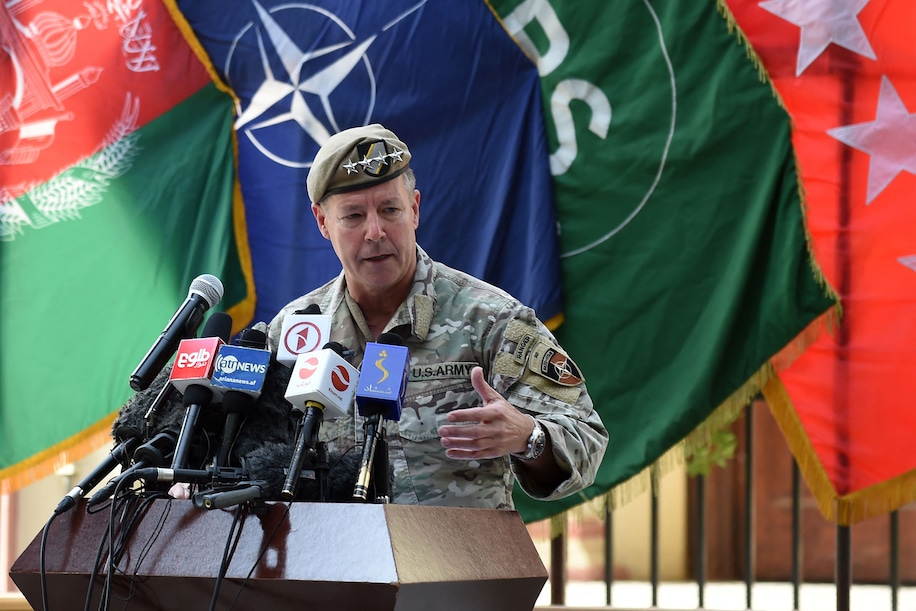
Gen. Austin “Scott” Miller speaks during an official handover ceremony in Kabul. Hours later, Miller departed in a Black Hawk helicopter. —The Washington Post, July 12, 2021. Credit: Wakil Kohsar/AFP/Getty Images via The Washington Post.


The Vietnamese mechanic in the VW repair place 
fixed my car radio today and as I drove off,
I heard the BBC’s news about Afghanistan:
now directed from Tampa, Florida, are killing
the doomed citizens caught in the crossfire 
between the Taliban and the Afghan troops, 
abandoned in what’s called a “civil war,” 
but it’s not. Translators are beheaded now; 
The war cost over two trillion dollars, not 
counting the dead, the maimed, ruined lives. 
(“History will not forget it,” Haji Sakhi said, 
as he fled with his daughters to save them from 
twenty years ago? Mr. Dilawar was dead, 
they said, before they cut him down. "Our job," 
"is just not to forget." His Black Hawk helicopter
lifted him up in a cloud of dust: our deus ex machina.


Bonnie Naradzay leads poetry salons at a day shelter for homeless people and also at a retirement community, both in Washington DC. Poems are in AGNI, New Letters (Pushcart nomination), RHINO, Kenyon Review Online, Tampa Review, Tar River Poetry, Florida Review Online, EPOCH, The American Journal of Poetry, Xavier Review, Pinch (Pushcart nomination), The New Verse News, and countless others.

Wednesday, July 07, 2021

LEFT BEHIND IN AFGHANISTAN

by Tricia Knoll


“Taliban Try to Polish Their Image as They Push for Victory: The insurgents are trying to rebrand themselves as effective governors as they capture new territory. But there is more evidence that they are unreformed.” —The New York Times, July 6, 2021. Photo: Members of the Taliban in Laghman Province in eastern Afghanistan last March. Credit: Jim Huylebroek for The New York Times.


American stuff. Artificial Christmas trees. Humvees. 
Boots that mark the Afghan soil with the treads
of Americans. Little shops sell discards
like aluminum mugs. No longer sell the body armor. 
They do sell Jif peanut butter, alarm clocks, 
backpacks festooned with swooshes, 
instant coffee, exercise stretch ropes, 
hand sanitizer and tea bags. 
 
Bagram first the pulverized Soviet airfield, 
turned burgeoning American stronghold
with Pizza Huts and Subways, field hospital
and a prison gifted to the Afghan defense ministry.  
 
Then the women left behind. What will they be asked
to wear, to think, to learn? What will divide urban
women from rural? Will medical care advance?
What happens to the voices of the poets, activists,
radio DJs, victims of domestic violence? What music
will they hear? What input to the terms of peace? 
Will electricity return as swiftly as sharia justice? 
When women hold up half the sky,
never leave behind the hope of soaring.


Tricia Knoll is a feminist poet who never takes for granted the freedoms she has enjoyed while advocating for the role of women in our world. Her poetry appears widely in journals and anthologies. 

Wednesday, June 23, 2021

HEY TALIB

by Aryan Ashory


Hey Talib a stain of shame in our history 
You didn’t show mercy to our newborn babies
You didn’t show mercy to our students
You didn’t show mercy to our pregnant women
You didn’t show mercy to our old white-bearded fathers
You didn’t show mercy to our wise sisters and brothers
I wish for this slaughterhouse generation to be destroyed
I wish for our notebooks to be no more tainted with blood
I wish that we lose no more our kin and our beloveds
I wish for no more crying, collapsing, tears and pain
I wish that our education be no more cloaked in blood
I wish that we no more be the page of sorrow in the history of the world 
I wish that our goals no longer be cut short before their fulfillment
I wish our hills be no more filled with the corpses of students
I wish those living to be coloured no more with red


Aryan Ashory is a 16-year old poet and filmmaker from Afghanistan. She spent two years in Greece, before moving with her family to a refugee camp in Germany. Her poems are in Dari, English, Greek, and German. One of her short films, about her experience of Coronavirus and quarantine in a refugee facility, was among 15 finalists for the Girl Rising Competition and is available here. 

Wednesday, February 17, 2021

REALITY CHECK

by Marc Swan


for Jane Ferguson


Birds shriek, buildings fall,
body counts mount
in Beirut, Kabul, Baghdad,
parts of Africa, South Asia.
Where have all the flowers gone
I think in the quiet of my office
on a quiet road in a quiet village
along the coast of Maine. I try
to imagine reporting live 
from these hostile locales, 
most importantly staying alive. 
I think of a Special Correspondent
for PBS, an Irish-British journalist 
with long blond hair tucked 
under a head scarf, jeans 
and a military-style jacket
treading lost roads in leather boots
with another woman, camera in hand.
We never see her, but know
she’s shooting the footage
we’ll see on the nightly news.
In recent reports, the Taliban 
armed to the teeth 
seem more than willing to speak 
on camera as the journalist 
asks hard questions in Arabic, 
translated for us in the comfort 
of heated living spaces unaware 
of what is truly seen, heard, 
felt in places of unending conflict—
what does constant fear smell like?


Marc Swan’s latest collection all it would take was published in May 2020 by tall-lighthouse. Poems recently published or forthcoming in Gargoyle, The Stony Thursday Book, Queen’s Quarterly, MockingHeart Review.  He lives in coastal Maine with his wife Dd, an artist and yoga teacher.

Wednesday, September 11, 2019

TEXT 911 FOR RESERVATIONS

by David Feela


Summer camp, scrapped
for the Taliban at Camp David,
the outing such a secret
not even the Taliban knew

if there’d be time for swimming
before their bombs blew.
The commander and chief
counselor promised

hot dogs and marshmallows,
airplane rides, and maybe
if they were good a story
around the campfire

about thousands of ghosts
who still haunt the woods.


David Feela writes a monthly column for The Four Corners Free Press and for The Durango Telegraph. A poetry chapbook Thought Experiments won the Southwest Poet Series. The Home Atlas appeared in 2009. A collection of his essays How Delicate These Arches was a finalist for the Colorado Book Award. Unsolicited Press released his newest chapbook Little Acres in April 2019.

Wednesday, May 29, 2019

COFFEE HOUSE

by Mary K O'Melveny


“This is the only place where I can relax and feel free, even if it’s only for a few hours,” Hadis Lessani Delijam said recently as she sat at a coffee shop, her hair uncovered, and chatted with two young men in Kabul, Afghanistan. Credit: Jim Huylebroek for The New York Times, May 25, 2019


who knew escape
could be simple
like this   my cup
steaming  hints of
cardamom spice
drops of honey
our round table
thin metal chairs
tremble as we
laugh  full throated

here in Kabul
laughter often
eludes   cloistered
behind headscarves
after all who smiles
freely when she
is camouflaged
I ask my friends
this question  as
we settle in

conversations
easier now
than in our youth
we talk of peace
how we prefer
noisy songs of
blackbirds   warblers
drongos  bluethroats
to drone whines
or sidewalk bombs

how we worry
Taliban elders
sitting at tables
in Doha with
Americans
will force us from
these safe spaces
whirling back to
patriarchy

here   coffee in
one hand    my nails
red as poppies
I look through love
notes posted on
the café wallboard
I belong to
no one   this fact
will fuel my
path to freedom


Mary K O'Melveny is a recently retired labor rights attorney who lives in Washington DC and Woodstock NY.  Her work has appeared in various print and on-line journals. Her first poetry chapbook A Woman of a Certain Age is available from Finishing Line Press.

Monday, April 04, 2016

EASTER SUNDAY, 2016, LAHORE, PAKISTAN

by Janet Leahy


It was a beautiful Sunday afternoon and six-year-old Zainab Jamshed could not wait to spend the day at the park with her family. The young girl - the only one in her family - had already arrived in Lahore's Gulshan-i-Iqbal park when a massive suicide bomb went off a few metres from a children's play area, killing her and at least 69 other people. Hundreds were also wounded, and most of the victims were women and children.The attack, which was claimed by a breakaway Taliban faction, Jamaat-ul-Ahrar, was aimed at killing members of Pakistan's Christian minority gathered at the park to celebrate Easter Sunday. However, most of those killed were Muslims - like Zainab. —Aljazeera, March 28, 2016. Photo: Forensic officers look for evidence at the site of a blast that happened outside a public park on Sunday, in Lahore, Pakistan, March 28, 2016. Credit: REUTERS/MOHSIN RAZA
   

After Church on Easter Sunday
families go to the park
children play at the blue fountain,
on the hilly gilly, on the train.

Families at the park
in Lahore Pakistan, children
ride the hilly gilly
parents keep watch.

In Lahore Pakistan
Christian and Muslim children play
parents keep watch, but do not see
the young man padded with explosives.

Christian and Muslim children
wait for a train to ride
explosives detonate
the park runs with blood.

There will be no more trains to ride
the blue fountain
runs red with blood
after church on Easter Sunday.


Janet Leahy lives in New Berlin Wi, she is a member of the Wisconsin Fellowship of Poets. Her work has been published in The Wisconsin Poets’ Calendars, in journals, anthologies, at TheNewVerse.News and other poetry web sites.  She has published two collections of poetry.

Wednesday, February 10, 2016

ELEGY FOR WASIL AHMAD

by Lucille Gang Shulklapper


An image taken from social media shows the child soldier Wasil Ahmad being declared a hero last year for leading a militia’s defense against a Taliban siege. The Taliban announced on Monday that they had killed Wasil. —NY Times, Feb. 2, 2016


 Born into war,
    delivered by history, blood spilled
        with your birth, spattered on unseen hands.

The messengers raced away,
     gunmen on motorbikes, their message delivered
         two bullets to your head, no motorbike for

you, but a gun as big as  you were,
    a uniform made for a man, a helmet on your head,
        a child soldier, a human shield.  The Afghan government

has no details.  There will be
    an investigation of a child walking to his
        fourth-grade class. What did he see on his way?

Not the mountains in the distance,
    Not the flat land beneath his feet, not the
         hands of fruitless war,  only the marketplace of his world.


Lucille Gang Shulklapper’s work appears in numerous journals and anthologies, including TheNewVerse.News, Strand magazine, and Poetic Voices Without Borders, as well as in five poetry chapbooks and a picture book, Stuck in Bed Fred. Having taught reading K-college, made recordings for the blind, and raised a family, she is  presently a volunteer with Caregiver Youth of America.