![]() |
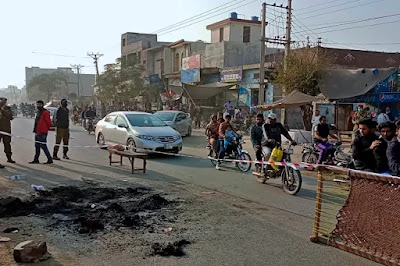
| A heavily flooded home in Rajo Nizamani village, near Jhirk, Sept. 10. Credit: Hassaan Gondal for TIME. |
Today's News . . . Today's Poem
The New Verse News
presents politically progressive poetry on current events and topical issues.
Guidelines
Submission Guidelines: Send 1-3 unpublished poems in the body of an email (NO ATTACHMENTS) to nvneditor[at]gmail.com. No simultaneous submissions. Use "Verse News Submission" as the subject line. Send a brief bio. No payment. Authors retain all rights after 1st-time appearance here. Scroll down the right sidebar for the fine print.
Monday, September 26, 2022
CLOUDS FALL
Monday, December 06, 2021
QUESTIONS FOR MY FELLOW MUSLIMS
| Up to 120 people have been arrested in Pakistan after a Sri Lankan factory manager was beaten to death and set ablaze by a mob [in Sialkot, Pakistan] who accused him of blasphemy, officials said on Saturday. The vigilante attack has caused outrage, with Prime Minister Imran Khan calling it a "day of shame for Pakistan". Few issues are as galvanising in Pakistan as blasphemy, and even the slightest suggestion of an insult to Islam can supercharge protests and incite lynchings. The incident took place on Friday in Sialkot, a district in central Punjab province, about 200 kilometres (125 miles) southeast of the capital Islamabad. Police on Saturday said that the manager was killed after it was rumoured that "the manager has committed blasphemy". —AFP, December 4, 2021. Photo: Police officers stand guard at the site where a Sri Lankan citizen was lynched by a Muslim mob outside a factory in Sialkot, Pakistan [Shahid Akram/AP Photo via Aljazeera] |
Friday, August 20, 2021
ANOTHER DAY, ANOTHER WOMAN
by Hafsa Mumtaz
Police in Pakistan have opened cases against hundreds of unidentified men after a young woman was sexually assaulted and groped by a crowd of more than 400 men in a park in Lahore as she made a TikTok video. The shocking assault was captured on several videos, which went viral and showed a mob descend on the woman as she was in Lahore’s Greater Iqbal park making a TikTok video with friends. In broad daylight, the men picked up the young woman and tossed her between them, tearing her clothes and assaulting and groping her. The woman registered a case against 300 to 400 unidentified persons with Lahore police, according to the case report seen by the Guardian. “The crowd pulled me from all sides to such an extent that my clothes were torn. I was hurled in the air. They assaulted me brutally,” the woman said in a statement to the police. She said the crowd also stole her money, earrings and a phone. —The Guardian, August 19, 2021
But the headlines remain the same –
But this time, it wasn’t just a man, just a gang,
But a mob of 400 men...
But this time, it wasn’t just private milieu,
But in the open outside Minar-e-Pakistan...
But this time, it wasn’t just a secret hour,
But the time of Azaan (the prayer call) ...
Another day, another woman,
Just like many previous targets,
She was dressed decently – so stop this ‘the victim was a victim because
they were wearing such clothes’ nonsense right here.
But why would the maulvis say anything?
For all they need is a woman to blame for her brazenness
For all they need is to hold the axe of ‘Deen’ (religion) and behead the victims
For all they need is a woman to criticise and condemn
For all they need is Islam to exploit.
Oh, what a free land! 400 predators, 1victim, and no one to bat an eyelid!
Oh, what an Independence Day for the predators whose minds are still enslaved by their lust!
Oh, so this is the country founded in the name of Islam...
I read a random WhatsApp status, saying,
We merely celebrate the Islam (alluding to Ashura),
We don’t adopt Islam.
Similarly, we merely celebrate Independence Day
We still haven’t absorbed the essence of it.
Hafsa Mumtaz is a 22-year-old Pakistan-based emerging poet, a recent graduate of English Language and Literature, and a Muslim. Her poetry was first published in Visual Verse Anthology, and then in Rising Phoenix Review.
Friday, August 13, 2021
A LETTER TO PATRIARCHY
![]() |
| #JusticeforNoor was trending last week on Twitter in Pakistan, after Noor Mukadam, 27, was stabbed and beheaded in an upscale district of Islamabad. The week prior, #JusticeforQuratulain had been the top hashtag after the mother of four was tortured to death by her husband in Hyderabad. And earlier this month, it was #JusticeforSaima, who was shot dead after her husband opened fire on her and her children in Peshawar. Photo: Women's rights activists place candles and flowers beside posters with the pictures of Noor Mukadam, who was recently brutally beheaded by her childhood friend. The killing of Mukadam in an upscale neighborhood of Pakistan's capital has shone a spotlight on the relentless violence against women in the country. AP Photo via The National (UAE), July 31, 2021) |
Tuesday, March 12, 2019
IN THE AFTERMATH
by Huma Sheikh
![]() |
| A bitter winter in Srinagar had just started to ease when the latest crisis in Kashmir was sparked on 14 February. That afternoon a local member of a Pakistan-based militant group rammed a car laden with explosives into a bus carrying Indian paramilitaries. The explosion was heard for miles around. At least 40 people were killed, the highest death toll from a single attack in the history of the insurgency. Above: A Kashmiri Muslim woman looks on as Indian government forces stand guard after clashes with separatist protesters. Photograph: Yawar Nazir/Getty Images. —The Guardian, March 2, 2019 |
No matter what the glistening forms
in blue cosmic wings tell me, I see
drones soaring in despair.
I left Kashmir lives ago and my veins
drained of past gore,
hallucinate in this world—Florida’s panhandle,
pounding, floating wraiths, spanning the distance,
gasping—
Rumi’s chaotic freedom.
Today, on the internet, a deceased trooper's daughter wailing;
forty mugshots scrolling the dead across the screen;
Kashmiri students, children of Indian Kashmir,
disappearing in Dehradun dungeons,
eyes of Sikh keepers burning a storm—protestors’ roar outside;
Kashmiri traders in Lucknow, whipped and kicked;
pack animals, carrying identity wares.
How to rebuild a sense of refuge when hope beans spill,
dissolve, in a battle?
Hadn’t these students, traders, escaped warfare in Kashmir?
Deaths bloom for the kith of the slain;
memories of dear ones an endless crackle of real flesh storm
dropping to ashes.
For Kashmiris still there,
war an everyday meal,
some eat, some fast by chance.
I question violence;
India and Pakistan’s territorial land-grab war,
ask myself if voicing feelings,
otherness, isn’t transcending bitterness?
Kashmir floats with me even here,
new crises piled on old ones—
a pedantic coop, winged prison,
war crumb confetti.
I do the ant’s painstaking
weight lifting of fragments—
senile Socrates.
Huma Sheikh is originally from Kashmir, currently pursuing a Ph.D. in Creative Writing at Florida State. Her prose and verse have appeared in various journals and magazines. A memoir and book of poems are in progress.
Thursday, July 27, 2017
EVEN AS WE SLEEP
![]() |
| Disaster: the charred shell of Grenfell Tower a month after a fire in the building claimed 80 lives Getty Images via The Standard, July 27, 2017 |
To keep tenants warm
or impress rich neighbors,
builders wrap a London tower
in sheets of shiny tin,
and post notices that warn:
“Stay inside in case of fire,
and close your doors.”
Whisked up twenty floors
fire came this hour from outside in,
for the London tower is higher
(twenty stories to the roof)
than the fire man’s tallest ladder,
and the cladding, no proof
against Armageddon.
*
![]() |
Pakistani residents carry an injured man after twin blasts at a market in Parachinar. Photograph: STR/AFP/Getty Images —The Guardian, June 23, 2017
|
Every river, its sault.
Where you gather on market
days, or pray in temple pew,
you couldn’t be the target
of doom, but come, still, to bombs
like all unwelcome fate, hidden,
one of many, lit back-to-back
in towns like Parachinar; a photo
of ruined streets will show
just what can happen,
you’ll see, just watch the news.
So too in Baluchistan--
the crucible of guns--in Orlando,
Cincinnati or Syracuse.
*
![]() |
| The damaged USS Fitzgerald sits in dry dock in Yokosuka Photograph: Spc. 1st Class Leonard Adams/AP via The Guardian, July 22, 2017 |
Once an old oak held a platform
in its gnarly arms
where we children played.
With gumption, we added a wall
or two with our kit of tools,
but spiders soon swarmed by the dozen
to spin, and drove us away.
What comes even as we sleep?
On auto pilot, one big ship
rams another, midnight. As men
sleep in their bunks, the sea pours in,
flooding the sealed rooms where,
un-waking, un-watchful, they’ll be, later,
when we count the drowned.
Monday, April 04, 2016
EASTER SUNDAY, 2016, LAHORE, PAKISTAN
![]() |
| It was a beautiful Sunday afternoon and six-year-old Zainab Jamshed could not wait to spend the day at the park with her family. The young girl - the only one in her family - had already arrived in Lahore's Gulshan-i-Iqbal park when a massive suicide bomb went off a few metres from a children's play area, killing her and at least 69 other people. Hundreds were also wounded, and most of the victims were women and children.The attack, which was claimed by a breakaway Taliban faction, Jamaat-ul-Ahrar, was aimed at killing members of Pakistan's Christian minority gathered at the park to celebrate Easter Sunday. However, most of those killed were Muslims - like Zainab. —Aljazeera, March 28, 2016. Photo: Forensic officers look for evidence at the site of a blast that happened outside a public park on Sunday, in Lahore, Pakistan, March 28, 2016. Credit: REUTERS/MOHSIN RAZA |
After Church on Easter Sunday
families go to the park
children play at the blue fountain,
on the hilly gilly, on the train.
Families at the park
in Lahore Pakistan, children
ride the hilly gilly
parents keep watch.
In Lahore Pakistan
Christian and Muslim children play
parents keep watch, but do not see
the young man padded with explosives.
Christian and Muslim children
wait for a train to ride
explosives detonate
the park runs with blood.
There will be no more trains to ride
the blue fountain
runs red with blood
after church on Easter Sunday.
Saturday, August 08, 2015
CORRECTION
In Wednesday’s Morning Briefing,
we misstated the number of children
among the 150 people
killed in December
by militants at a school
in Pakistan.
There were
134 children,
not 13.
Don Hogle is a poet, blogger and brand and communications strategist living in Manhattan. Mud Season Review, Minetta Review, Blast Furnace, Shooter, DoveTales, Outrider Review, Clapboard House and Dirty Chai are among the journals that have recently published his poetry.
Tuesday, July 07, 2015
THE PAINTED FACES
![]() |
| It was business as usual at brothel 59 in Delhi's GB Road, which houses more than 4,000 sex workers. What was unusual on the night of June 23 was the deliberate gait of Sameer Tyagi, a regular client of this brothel. Sameer appeared a bit jaded, busy on the phone, scanning the faces of about 20 odd garishly painted faces of women as they waited around for the next deal. It was 10pm, humid and a Bollywood number was playing loudly. —Anasuya Basu, Daily O, July 3, 2015; Image: Oil painting of a prostitute from Lahore's Red Light District, by Iqbal Hussain. Source: The Express Tribune (Pakistan) Blogs. |
Here, and there,
the women behind the curtains
do not strip for you.
Through the folds of their
saree, and the pinched
fabric of their blouse
you occasionally catch a glimpse
of a sagging breast
or a tummy with overlapping stretch marks.
Foreplay:
you ask the one you choose.
She smirks at you
with her betel red lips
which she wipes with her palm,
pinches out two condoms from a tray,
lifts her saree and skirt up in a swift motion
and spread her tired legs on you.
Your desperate self is ready
needing no foreplay, apparently.
You lay back, relax
imagine the shudders
are a jolly lorry ride to Ladakh
or something better
while she works on you.
In about two minutes, or less
you zip up your pants
and walk out of the door.
Someone else quickly moves in
for his turn.
The painted face smirks again.
There is a daily quota;
a number signified
by the missing condoms on the tray
and later, she would run
like the rest of them—
Run home
to a sleeping child or a drunk husband
or a pimp who smacks his lips
but more often,
just to pee, and to cry out loud when the warm salty
liquid touches the bruises
that are never left to heal.
Based in the God's own country of Kerala, Vidya Panicker’s poems have appeared in The Feminist Review, So to Speak, Shot Glass Journal, One sentence Poetry, Three Line poetry, Aberration Labyrinth, Bangalore Review, and 4and20 Poetry.
Sunday, October 12, 2014
WRONGED RIGHTS
Pakistani teenager and Indian activist
Awarded 2014 Nobel Peace Prize
Chosen for horrendous struggle against
Oppression of vulnerable young people
A Hindu and a Muslim
An Indian and a Pakistani
Join in common cause denied
Educational rights imposed by extremists
In 2014 Malala Yousafzai was
Shot in the head by
Taliban right to schooling
Denied to strong-hearted weaker sex
Kailash Satyarthi follower of Gandhi’s
Tender mercy non-confrontational approach
Kashmir caught between nuclear powerhouses
Borderline youth deprived of childhood
Child bonded labor exploitation for
Financial gain bribery slavery trafficking
Cheapest employer option parental poverty
Illiteracy ignorance lame cop-out excuses
In conflict-ridden areas refugees raped
Violated leading to hapless continuation
Generation-to-generation suppression for daring protest
Censored Expression definitely not free
No Holds Bard Dr. Charles Frederickson proudly presents YouTube mini-movies @ YouTube – CharlesThai1 .
Friday, August 01, 2014
NORTH WAZIRISTAN
BANNU, Pakistan — For more than five centuries, poets in remote northwestern Pakistan have recited verses about the area’s mountainous scenery, their tribal culture and love. That all changed as Islamist militants tightened their hold on Pakistan’s tribal regions after the Sept. 11, 2001, terrorist attacks. The Taliban and its allies quickly crushed the poets’ words and spirits. They were warned not to write phrases that referred to women or serenity and instead ordered to compose jihadist messages of war, brutality and conformity. Now, about 50 poets are part of a mass migration of more than 700,000 Pakistanis who have been displaced from the North Waziristan region as the military seeks to dislodge Islamist militants there. And amid the chaos of refugee life, they are restoring tradition to their verses. --Aamir Iqbal and Tim Craig, Washington Post, July 25, 2014
I would sell my grandmother’s diamond
to write this poem.
I would invite ground hogs and deer into my pea patch
to write this poem.
I would drop my sails and turn into the wind
to write this poem.
I would walk a hot highway in thin flip flops
to write this poem.
I would tear my daughter’s wedding dress
to write this poem.
I would fast without water from sunset to sunset
to write this poem.
I would close my eyes to swallows in the summer sky
to write this poem.
I would wash and dry and fold one hundred strangers’ clothes
to write this poem.
I would bind my ankles and stop running
to write this poem.
I would let the trees in my yard burn to ash
to write this poem.
I would sleep alone again
to write this poem.
I have never been told
not to write this poem.
How do I earn this poem?
How do I give this poem away?
Grace Mattern’s poems have appeared in The Sun, Prairie Schooner, Hanging Loose, Yankee and elsewhere. She has received fellowships from the NH State Arts Council and Vermont Studio Center and has published two books of poetry. She has worked in the movement to end violence against women for 35 years.
Saturday, July 12, 2014
SAND SONG OF MESOPOTAMIA
| A wood thrush egg thrown out of the nest by a cowbird. (Image source: Tales From the Wild) |
Today I wrote a song in which Syria moved its militia into a pregnant woman’s bed.
Today I wrote a song in which a shoe, and all the sinews enslaved to that shoe, were filled with swarms of infant IEDs.
Today I pollinated a song whose final flower with petals of butterfly warheads fled Iran.
Today I praised a song for the babies born with six mouths, six legs, six skinless stomachs, and a six-billion year half-life inside the furnace of every Iraqi sand tear.
Today, by destroying a song, I made sure there were enough beds and chairs to blunt a room’s nothingness, which means a never-ending scorpion’s thirst, its memory of the desert that doesn’t die.
Today I stole a song in which the homeless built houses and raised families and food that will continue growing inside their sunburned entrails.
Today I blamed a song in which the Midwestern snow originated from a drone’s healing circle many Pakistans away.
Today I excavated, from a plant’s groin, a song that infected the Madonna Mafia with a melodic sequence of sonar terrorism.
Today I exchanged a song for the terrorist elephants, the terrorist giraffes, the terrorist oxygen, the terrorist fern forests, the terrorist mercies of medicinal marijuana, the terrorist sunsets, the terrorist shark sleep, the terrorist carrots and celery and kale that do not leave the body, the intestinal photos of the Gaza Strip taken from the cries of a child, the war on shadows, the war on people who find enough to eat without having to plant pancreatic spores in the hells of the soil, the creek bed Lakota whose fully-subsidized drinking earns the status of enemy activity, and though I saved his name on a dollar that trusted me once, I won’t discuss the terrorist child helping a turtle find its little door in the terrorist grass.
Today I climbed to the top of a song that hid the houses inhabited by live chess pieces pillaged for money that can’t be comforted or fed or held in the hand.
Today I developed a song for the water as it died.
Today I protected a song for the water as it was ridiculed.
Today I harvested a song for the water hidden one carbon minute away in the mirages that revealed another child thriving from dehydration.
In the song I can locate the Syrian helicopter nests.
I can count all of the wind’s bodies.
I can count and remove those who’ve made it to the gas chambers of heaven.
In the song I can count the salvations taken from a child’s amputated leg and copy the Western patriotism that nourishes from far away his dirt dinners and his bomb wiring and the syringes used for drinking and for putting the rain back together.
I can abandon that song by deleting the shadows the child leaves unchecked as he crawls through the artillery-cold heroin forests of Afghanistan.
I can dismantle the song by betraying each bird when it sees the child leading his headless animals into the cruel churches of my hand.
Today I beat the last song to death with a bullet casing I stole from the rubble of all the songs that would never make anyone happy again.
Today I felt no remorse for the songs and their misplaced blessings.
Today I reported both hands for their terrorist ambitions—the one that grows its own grain and the one condemned for hiding every song inside the dust hospital where God sleeps by himself with the only feather that survived.
Today I promised I would protect his otherwise secure kingdom, safe because it remains empty except for the sins of a wood thrush weeping
Rob Cook's work has recently appeared in The Bitter Oleander, Zoland Poetry, Aufgabe, Rhino, A cappella Zoo, Caketrain, Weave, and Best American Poetry 2009. His most recent book is Empire in the Shade of a Grass Blade. He lives in the East Village where he co-edits Skidrow Penthouse with Stephanie Dickinson.
Monday, May 12, 2014
BEALE AIR FORCE BASE, GOOD FRIDAY 2014
![]() |
Image source: Occupy Beale Air Force Base* |
for Roger Stoll and Kate Raphael
We stand outside the Air Force base
To grieve the deaths of innocents
Assassinated thousands of miles from here
By missiles fired from unmanned planes
We have come to deliver a letter
To the base commander
Insisting that the drone attacks be halted
In the name of our common humanity
In the broad field in front of the base
Redwing blackbirds are singing in the long grasses
And we wonder what songbirds there are
In the mountains of Pakistan, the deserts of Yemen
And we wonder what is the last sound
That the unsuspecting victims hear
Before they are obliterated from above
The twittering of a small bird? the roar of the approaching missile?
When jet fighters take off every few minutes
Their diabolical roar obliterates all other sounds here
We cannot hear if the blackbirds are stunned into silence
Or if they continue singing in defiance of the din
With our letter in hand we cross the line
Onto the Air Force base
And are immediately taken into custody
By polite young men and women dressed in camouflage
In the guard house the MPs are respectful and solicitous
As they ID and fingerprint and photograph us
Then hand us each a letter stating
That we are banned from the Air Force base forever
Children incinerated in drone attacks
Simply for being in the wrong places at the wrong times
Were not treated with such courtesy and consideration
Before they were banished forever from our shared life
One by one we are escorted back across the line
No war planes are taking off just now
And we allow ourselves to feel a flicker of hope
Hearing the redwing blackbirds singing in the long grasses
* Drones flown from Beale Air Force Base, near Marysville, California, do not fire missiles, but do reconnaissance and targeting for attacks by other drones.
Buff Whitman-Bradley is the author of four books of poetry, b. eagle, poet; The Honey Philosophies; Realpolitik; and When Compasses Grow Old; and the chapbook, Everything Wakes Up! His poetry has appeared in many print and online journals. He is also co-editor, with Cynthia Whitman-Bradley and Sarah Lazare, of the book About Face: Military Resisters Turn Against War. He has co-produced/directed two documentary films, the award-winning Outside In (with Cynthia Whitman-Bradley) and Por Que Venimos (with the MIRC Film Collective). He lives in northern California.
Thursday, September 05, 2013
UNCLE SHAM
Saknarin Chinayote & Charles Frederickson
Dysfunctional US versus THEM universals
Imposing patriotic homeland socialized insecurity
Anti-communism anti-terrorism anti-violence anti-clockwise rotation
Having rained napalm white phosphorous
Agent Orange misty bunker busters
Misguided drone missiles peed upon
Raging bonfires burning themselves out
Contrived false truths catastrophic consequences
Innocent Vietnamese Cambodians Iraqis Afghanis
Pakistanis Yemenis Serbs Somalis Libyans
Prejudged guilty debunking good intentions
Bloated Cold War machine should’ve
Been dismantled demobilized long ago
Collateral damage exceeding exaggerated threats
Spymeister propaganda bamboozling public awareness
Taxpayer loot morally bankrupt squandered
Faceless faded greenback Monopoly revenue
Funding well-greased assembly line productivity
Chancy condemned Boardwalk private property
Thousands of minors major challenge
Overburdened underage deprived of childhood
Dispossessed ghosts haunting boogeyman nightmares
Brainless etchings permanent indelible tattoos
No Holds Bard Dr. Charles Frederickson and Mr. Saknarin Chinayote proudly present YouTube mini-movies @ YouTube – CharlesThai1 .
Monday, December 17, 2012
DECEMBER ONCE AGAIN
![]() |
| "Jazz Beat" painting by Debra Hurd |
What can I write to shed light
on this dark December night?
A Connecticut town grieves for
twenty-six dead—victims of the latest
school shooting. Tibetans are setting
themselves on fire for freedom,
ninety-five since February, 2009.
Listening to musicians walking the bass,
feathering the line, I let the blues take me,
wrap me in the Great Mystery.
All are one, meant to sing and sway
together, to love. The blues is all about
love, longing, loss, listening,
improvising, sharing our stories and
struggles, recognizing each other
as sister and brother.
Look into the faces around you
moved by music—see how they
seem familiar? What better way
to pray for justice, an end to violence,
than to sway to the swing of jazz?
A Pakistani girl shot in the head
because the Taliban cannot understand
her hunger and yearning for higher
learning; they do not recognize
she is their sister. Let the blues take me.
shape my prayer for peace, lead me
to transcend nihilism, alienation.
Listening to the blues, to the sounds of
migrant workers in this oil-rich desert town.
Thinking about blood diamonds,
underground railroads, women and girls
sold into the sex trade.
This is Advent season, time
for preparing for the light.
Long dark December nights.
Listen to the blues. Gaza. Aleppo.
Keep listening. The call to prayer
mid-day, the mosque. Revisionist
Zionist leaders. Jihad. Refugees.
Cambodian children amputees
still playing among landmines.
Dear jazz drummer, please
keep feathering the line.
Diana Woodcock’s first full-length collection, Swaying on the Elephant’s Shoulders—nominated for a Kate Tufts Discovery Award—won the 2010 Vernice Quebodeaux International Poetry Prize for Women and was published by Little Red Tree Publishing in 2011. Her chapbooks are In the Shade of the Sidra Tree (Finishing Line Press), Mandala (Foothills Publishing), and Travels of a Gwai Lo—the title poem of which was nominated for a Pushcart Prize. She has been teaching at Virginia Commonwealth University in Qatar since 2004. Prior to that, she lived and worked in Tibet, Macau and Thailand.