Guidelines


Submission Guidelines: Send 1-3 unpublished poems in the body of an email (NO ATTACHMENTS) to nvneditor[at]gmail.com. No simultaneous submissions. Use "Verse News Submission" as the subject line. Send a brief bio. No payment. Authors retain all rights after 1st-time appearance here. Scroll down the right sidebar for the fine print.

Wednesday, July 03, 2019

THE COMMISSIONER OF TRANQUILITY

by William Aarnes 


from the 2019 Independence Day speech


What’s troubling shouldn’t trouble us.  Whatever the news,
only the seditious believe the caging of refugee children

will go on too long.  Maybe, in some subversives’ imaginations,
addicts will keep overdosing.  Maybe storms will devastate

the islands where we vacation.  Maybe dictators will stay
in power in some foreign countries, countries where the rich

can count on the police but the poor can’t.   Maybe
in the once murky past hard-working laborers couldn’t pay

their rent—but never in this land of promise, never
in the comfort of our time.  We’re blessed we can focus

on the inspiring resolve of those families rebuilding
their burned-out homes. We’re lucky we can relish

hearing a decorated veteran belt out our national anthem
as if she’s cured of her PTSD, the athletes singing along,

all of them with hands on their hearts.  And aren’t we charmed
by the fourth-grade teacher who’s earned a raise

by bringing a gun to school?  Why give a moment’s thought
to hardships suffered by people who deserve them?

Didn’t our parents say, “Look on the bright side”?
Only those who belong elsewhere would deny that life

in our beloved country is the epitome of the bright side.
Why should we put up with any doubt?   Everyone’s happy

that what’s happening can never happen to us.


William Aarnes lives in South Carolina.

ALL THOSE PATRIOTIC SONGS

by Alan Walowitz


. . . In a democracy, you can only ignore the will of the people for so long and get away with it.                                                
                                                                                                         --John Boehner


Grammar School we sung them 
till the vocal cords popped from our throats,
such scrawny things we were, 
Adam’s apples bobbing, toes tapping,
the girls lined up the other side of the room
their skirts gently swaying in the breeze the radiators made—
all to please those witches, either evil or kind,
who had us in their clutches all day, a year at a time,
these ladies out of Normal School—Miss Johnson and Cochran,
Mrs. Murtaugh and Golsner—with their black high-top lace-up shoes
and penciled brows and rouged cheeks
that always made them look like they’d come through a storm—
and in the wake of the war, maybe they had.

My Country is of Thee—what the hell did that mean?—
O, say does the Star Spangled Ba-a-nner yet wave?
Just look in the corner of the room
where the flag’s hanging limp as the janitor’s mop.
God Bless America, never mentioning the guy who wrote it
was born on the other side.
And shouting the refrain, This Is My Country,
giving it all we had, just like the Mitch Miller record
we’d learned it from. 

They even said we might get to build it.
Though one look now, soft and creaky most mornings,
lovers of the easy life—you’ll know we didn’t help much. 
But our grandparents and parents did—
after hunkered down in steerage, a long, bitter crossing.
Still, that’s not walking from Guatemala
one kid in hand and another tugging at her breast,
and climbing in the back of a rickety old school bus 
to cross pitted roads and streams
and sleeping in rotted VW vans 
along with the hosos and the other takers
who might as soon rape you as get you there.
That’s courage worthy of sparklers and Roman candles
and bottle-rockets whistling, and bombs bursting in air.  

All those patriotic songs--
This is my country! we sung, sometimes even shouted.
Loud and proud, our teachers told us.
Build that wall, my ass!
We say, what Woody Guthrie said,
This land is your land, this land is my land—
you can only hold us off so long. 


Alan Walowitz has been published various places on the web and off.  His work was nominated for a Pushcart Prize in 2017 and 2018 and he is a Contributing Editor at Verse-Virtual, an Online Community Journal of Poetry.  His chapbook Exactly Like Love is available from Osedax Press, and his full-length book The Story of the Milkman and other poems is published by Truth Serum Press. 

Tuesday, July 02, 2019

BILLIE JEAN KING'S GLASSES

by Diane Elayne Dees


I want to wear them because I want
to see what she sees—not a yellow
ball dropping lightly over a net,
just out of reach of an opponent—
but a world in which there are
no opponents, only others
with whom I have yet to cooperate.
I want to see righteous anger
as constructive, not reactive.
I want to see my rage start a fire
that purifies and transmutes
violence and injustice instead
of burning down a village.
I want to see women and men
side by side, each honoring
the energy of the other, not lobbing
accusations and calculating faults.
This is the vision I desire, the vision
I do not yet possess. This is why,
if only for a little while, I want
to wear Billie Jean King’s glasses.


Diane Elayne Dees’s chapbook I Can’t Recall Exactly When I Died is forthcoming from Clare Songbirds Publishing House; also forthcoming (Kelsay Books) is her chapbook Coronary Truth. Diane also publishes Women Who Serve, a blog that delivers news and commentary on women’s professional tennis throughout the world.

Monday, July 01, 2019

¡BASTA!

by Kathleen Hellen


Cartoonist Michael de Adder was let go from his job drawing editorial cartoons for all the major New Brunswick newspapers, a job he held for 17 years, 24 hours after this Donald T***p cartoon went viral on social media. Twitter: @deAdder


The policies we say make this okay
cover crimes of custom, duty
to the miles of fence, the wells poisoned
with the snakes of extra-judicial killings

not the little mountain of a child
vomiting a fever,
not “I come to own a toy”
“a pair of shoes” or “I am fleeing
violence,”
not long-term investigation

they wash up on the news—a father, a daughter
—in the river near the bootheel
where the railroad came and went
border protection only protecting
this desert spiked with crucifixions


Kathleen Hellen is the author of The Only Country was the Color of My Skin, the award-winning collection Umberto’s Night, and two chapbooks, The Girl Who Loved Mothra and Pentimento. Featured on Poetry Daily, her work has appeared or is forthcoming in American Letters and Commentary, Barrow Street, Cimarron Review, The Massachusetts Review, New Letters, North American Review, Poetry East, and West Branch, among others. Hellen has won the Thomas Merton poetry prize and prizes from the H.O.W. Journal and Washington Square Review, as well as awards from the Maryland State Arts Council and the Baltimore Office of Promotion & the Arts.

SHAME

by Pepper Trail


Twitter @rodriguezmonos


A deadening     a twist
            in the mouth     the heart

When personal –
            for an act     a thought
            shame is an ember
                                        a burning a thing to attend to
            extinguish or
                                     fan to flame     the better to see
           our darkness

But this—political— 
                                for my country
            for children in cages
            for father and child
      embracing in the river     dead
            for a monster whose reason not to rape is            
    “not my type”        
               for men     hands on Bibles
                                                     claiming dominion over women’s bodies
            for the highest court endorsing the lowest deceits
            for the cultivation of fear
                                                  the exaltation of hate
            for the endless
                               endless
                                endless
                                                lies    until we are bludgeoned
                                    unconscious

In this     I find no     
                           ember no gleam of light
In this darkness        
                        I howl
                                    but hear no echo

Only silence


Pepper Trail is a poet and naturalist based in Ashland, Oregon. His poetry has appeared in Rattle, Atlanta Review, Spillway, Kyoto Journal, Cascadia Review, and other publications, and has been nominated for Pushcart and Best of the Net awards. His collection Cascade-Siskiyou was a finalist for the 2016 Oregon Book Award in Poetry.

Sunday, June 30, 2019

SQUID SONNET

by Anne Graue


Seven years after scientists caught the elusive deep-sea cephalopod on video, they saw another. Then lightning struck a third time. Here is a juvenile giant squid approaching, attacking, and then retreating from a ring of pulsating blue LEDs on the Medusa deep-sea camera system. Video by Edie Widder and Nathan Robinson via The New York Times, June 21, 2019


It should be immense, for a giant squid—
The one on camera that emerges
from midnight, from nowhere, reaching for light
the bait in front of the lens. It spreads wide
its suckered tentacles, its ghost arms search
for prey. Millions of neurons in pointless
hunting with a stab at the lighted lure—
its only course to return to shadow.
This sonnet only fulfills its promise
to keep itself contained within its lines.
The squid, too, will adhere to nature’s plan—
male or female, to inject, lay and hatch
offspring in a final endeavor to
become food for crustaceans and sea stars. 


Anne Graue is the author of a chapbook, Fig Tree in Winter, and has poetry appearing in numerous journals and anthologies, online and in print. She also has reviews in Glass: A Journal of Poetry, Whale Road Review, and The Rumpus, and at Asitoughttobe.com, where she is a contributing editor.

Saturday, June 29, 2019

THE GATEWAYS CLUB, LONDON, 1965

by Barbara A. Taylor


The Gateways Club scene from The Killing of Sister George (1968) dir. Robert Aldrich.


into this
darkness
skip to my lou

I rang the brass bell on that green door. A slot opened. Eyes peered through an open grill. Permitted to enter, we stepped down a steep dark stairwell. In the cellar it seemed that all heads turned to us. As we pushed through the throng and choking smoke to a noisy bar, I watched swaying couples – butch and femme playing out their roles. “Bottoms up!” proffered a lanky woman in three-piece Donegal Tweeds, wearing a monocle. Others wore fancy braces, tuxedos, tails, bow ties or neatly pressed jeans. There was plenty leather, and frills, boas and ballroom gowns: formal, casual, rough, the tattooed and tough. Dusty Springfield blared, got them jiving and twisting. There wasn’t a space on that slippery floor. Indeed, no matter what the tempo, they’d be cheek-to-cheek circling this tiny spot under fluorescent strobes. My friend squeezed my hand. At last, we were safe together, we were happy. Just imagine, hidden here in this Chelsea basement, we felt freely alive, celebrating, back in those undercover days of circa sixty-five.

underground
flying high
as a kite


"Each day demands that I write and that my fingers touch and feel the earth." Free verse poems, renku, haiga, haibun, haiku, tanka, and other Japanese short form poetry by Barbara A. Taylor appear in many international journals and anthologies on line and in print, including Frogpond. The Heron's Nest, Eucalypt, Atlas Poetica, Wisteria, Skylark, Kokako, Modern English Tanka, Red Lights, TinyWords, Contemporary Haibun On Line. She lives in the Rainbow Region, Northern NSW, Australia.

Friday, June 28, 2019

WHETHER OR NOT OUR ANCESTORS OWNED SLAVES

by Devon Balwit


every day we benefit from neutrality /
bodies that say nothing but what we want
them to say // presumed-innocent bodies
that needn’t explain their presence in this
or that neighborhood // bodies that enter
stores and offices without special scrutiny //
bodies allowed to be angry / to be loud /
even for no good reason // bodies able
to vacation from history / free
from the need to serve as ambassadors /
to translate / to assuage hurt feelings //
bodies that can forget themselves
for as long as they want / even forever //
bodies so innocuous they are shocked
to find themselves targeted / with hands
that never tremble on the steering wheel.


Devon Balwit's most recent collection is titled A Brief Way to Identify a Body (Ursus Americanus Press). Her individual poems can be found in here as well as in Jet Fuel, The Worcester Review, The Cincinnati Review, Tampa Review, Apt (long-form issue), Tule Review, Grist, and Rattle among others.

Thursday, June 27, 2019

VISIBLE THREAT

by Mark Ward


U.S. national-security officials have ordered a Chinese company to sell gay-dating app Grindr, citing the risk that the personal data it collects could be exploited by Beijing to blackmail individuals with security clearances, according to people familiar with the situation. —Wall Street Journal, March 27, 2019. Graphic credit: Hong Kong Free Press.


Because faggotry is still a cold war
causing hard glares and opportunism,

whereas heterosexuals can happily keyswop;
their loins are tinder looking for a match.

So their marriage breaks up, so what?
Rather that than exploitation, nothing

to be ashamed of, unlike the down low
romeos exposing torsos, headless homos

send a message: the unveiling is a risk,
each cropped angle is complicit.

We cannot trust a man
whose flesh is pliable

to not be ruled
by its kneading.


Mark Ward is the author of Circumference (Finishing Line Press, 2018). His work has appeared in The Irish Times, Poetry Ireland Review, Cordite, Assaracus, Softblow, and many more. He is the founding editor of Impossible Archetype, an international journal of LGBTQ+ poetry. He is currently working on his first full-length collection, Nightlight.

Wednesday, June 26, 2019

FIDDLING AND BURNING

by Judy Kronenfeld


Because we are old, and will be,
conveniently, dead

Because no parent or grandparent
can bear to think of it

Because the elephant’s in the room,
but we are blind, and cannot
agree

And the will needed is like the will
of a mobilized ant colony
with group mind

Because the everyday is still
preoccupying, comforting, beautiful,
and Noah needs help cutting out snowflakes
for the kindergarten bulletin board
with its autumn leaves, spring rain, summer
daisies, and Sophia needs to find her cleats
for soccer practice

Because the expansion of the universe
is speeding up into ever more dizzying infinities,
exponential zeroes of space-time
empty of us, or almost anything, and emptying

And what’s a billion hardly forever years
of seasons, anyway—wet and dry, hot and cold, grief
and peace—before we brown, boil, burn,
and are swallowed by the sun,
and who says we, relatively new kid on the block,
at only 200,000 orbits around that star,
will still be here when the oceans begin
to evaporate?

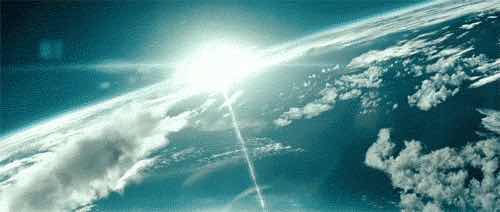
Because our planet is already haunting us
like a memorial portrait, as we write
our lost-cause civilizations off.
It turns inside my mind,
courtesy Google Earth, day and night:
with its perfect halo
of atmosphere, its cool webbing
of gossamer or clotted clouds, and the stilled golden
explosions of New York, Los Angeles,
Shanghai, Mumbai, Moscow, Istanbul,
Rome, Paris, London.


Judy Kronenfeld is the author of four full-length collections and two chapbooks of poetry, including Bird Flying through the Banquet (FutureCycle, 2017), Shimmer (WordTech, 2012), and Light Lowering in Diminished Sevenths, 2nd edition (Antrim House, 2012)—winner of the 2007 Litchfield Review Poetry Book Prize. Her poems have appeared in Cider Press Review, Cimarron Review, Connotation Press, DMQ Review, Ghost Town, Miramar, Natural Bridge, One (Jacar Press), Rattle, Valparaiso Poetry Review, and other journals, and in more than twenty anthologies.

Tuesday, June 25, 2019

WAYS TO AVOID BEN SHAPIRO'S TWITTER DISDAIN

by CL Bledsoe and Michael Gushue


Reinvent Mozart as a swastika.
Assert the superior caste of privilege-filled eyes,
while never mentioning your stigmatism.
Beige as the new black.
Be goddamned sure about something.
A hammer called reason to subvert any consideration,
Moral assumption as a knife to cut through the gray.
Go back in time and give Mohammed a hickey.
Dress all seed-vessels in the finest birthing habits.
Never look directly at those who rule us,
but use a mirror to avoid being turned
into stop motion playdough. Recite
The Pledge constantly under your breath:

There is a light that never burns out. I carry it 
under my tongue. When I stand on tiptoe, it will guide 
the unwashed through the wilderness.


CL Bledsoe is the author of seventeen books, most recently the poetry collection Trashcans in Love and the novel The Funny Thing About… . He lives in northern Virginia with his daughter and blogs, with Michael Gushue, at https://medium.com/@howtoeven 

Michael Gushue is co-founder of the nanopress Poetry Mutual Press, and he co-curates the reading series Poetry at the Watergate. His work can be found in journals such as Indiana Review, Third Coast, Redivider, Gargoyle, The Germ, and American Letters & Commentary and his books are Pachinko Mouth, Conrad, Gathering Down Women, and—in collaboration with CL Bledsoe—I Never Promised You A Sea Monkey. He lives in the Brookland neighborhood (“a shabby and decidedly unhip neighborhood” —New York Times) of Washington, D.C. 

Monday, June 24, 2019

SARAH'S LEAVING

by Jeremy Thelbert Bryant


“So long, Sarah Huckabee Sanders” by J.D. Crowe


In her heavy makeup and pearls,
she spouts cheap words no one
wants to hear—
sounds of nothingness,
mantras of division.

I think back to the restaurant in Virginia,
how they had heard all they wanted,
asked her to leave, sent her on her way.
People wept because she was an “honest” woman,
a god fearing being.
What god I ask, the one of greed,
of lust,
of war?

As I watch images of her now,
during the last days of her post,
I wonder if heavy rouge and white baubles are enough.
Can they lure voters to make her governor?
Will her southern church chirp call them
                to submission,
                convert them into believing the unbelievable?


Jeremy Thelbert Bryant is a poet and a writer of creative nonfiction. He is a graduate of the low residency MFA program at West Virginia Wesleyan College. His work may be found in TheNewVerse.News, Pikeville Review, EAOGH, Anima Magazine, and Prism. He finds inspiration in the red of cardinals, in the honesty of Frida Kahlo’s artwork, and in the frankness of Tori Amos’ lyrics.

Sunday, June 23, 2019

CUSTOMS AND CONCENTRATION

by Peleg Held


Child migrants sleeping on the ground at the McAllen, Texas Border Patrol station. —NowThis, May 19 2019


A scapegoat tkhine, the sound of the note
thinned into air, red string at the throat—
its knot sung to sleep in a clavicled swale—
marking her, keeping her, outside the Pale,
the deep-drumming pigment that lodged in the heart
the night that she drank down the well of their art,
the dregs of the umbra that darkened the mat
Tenemos preguntas, the click of the latch,
the last strand of horse-hair plucked from a bow
sung out through rosin, then cinder, then snow,
salt dropped like breadcrumbs while good people slept
in the town with a desk where papers are checked
and cages of souls who once dreamed across fire
covered on stone as the cold law requires.


Peleg Held lives in Portland, Maine with his partner and his dog Emitt. There is also the semi-feral cat, Smudge. And a kid or two. pelegheld(at)gmail.com.

NOT QUITE AMERICAN

by Myriam Arias


EL PASO, Texas (AP) — A legal team that recently interviewed over 60 children at a Border Patrol station in Texas says a traumatic and dangerous situation is unfolding for some 250 infants, children and teens locked up for up to 27 days without adequate food, water and sanitation. —NBC News, June 21, 2019


You always have been a lonely traveler,
haven’t you?

Lonely girl with no home;
your body is a house that you are not yet familiar with.

A country you were not born in
but you’re told it’s yours
you’re told it’s lovely
and if you could only see it.

But your body feels more like an almost
Like the distance between your mother’s hands and her home country
A space you don’t really belong in
but force yourself into.

An almost-
Mexicana
Americana
Que eres?
Niña de piel morena
con corazón de arcoiris.

You are the scars on your Mama’s back
and the gold coins in your Papa’s pocket.

Both a blessing and curse
you do not belong here.

What gave you the right
to sit in this American dream?

Dilute your adobe eyes
with the glimmer of white picket fences and nuclear families.

Let this sweet American air
fill the space in your lungs?

Inflate.
Deflate.

Your body will reject it.
Too sweet.

Lines of poems you will never write
will coat the inside of your mouth.

Choke on your words.
Swallow them.

     They do not quite belong here.


Myriam Arias is a third-year writing and literature major at University of California, Santa Barbara. She hopes her art moves forward her narrative and those of others like her so that their voices will be heard.