Guidelines


Submission Guidelines: Send 1-3 unpublished poems in the body of an email (NO ATTACHMENTS) to nvneditor[at]gmail.com. No simultaneous submissions. Use "Verse News Submission" as the subject line. Send a brief bio. No payment. Authors retain all rights after 1st-time appearance here. Scroll down the right sidebar for the fine print.
Showing posts with label vision. Show all posts

Monday, December 15, 2025

MAKE TYPEFACE GREAT AGAIN

by Pamela Kenley-Meschino


In Spanish, "colibrí" (with an accent on the 'i') means hummingbird. The term "calibri" (without an accent) is the name of the font. The font's name does not directly derive from the Spanish word for hummingbird, but rather was one of several names suggested by the designer that started with the letter C. U.S. Secretary of State Marco Rubio, a Hispanic American, has ordered a return to the Times New Roman font for official diplomatic documents, reversing a previous directive to use Calibri. He stated that the prior administration's shift to Calibri was part of "misguided diversity, equity and inclusion policies." Calibri, sometimes described as soft and modern, is typically considered more accessible more accessible for people with reading challenges thanks to its simpler shapes and wider spacing, which make its letters easier to distinguish. Photo: Ensamble Folclórico Colibrí.


Beware woke typeface—

Calibri, with its easy round 

appeal, its flaunting legibility,

degrading inclusivity,

has no place here.


Welcome back

Times New Roman’s

erect formality 

meant for clearer eyes,

a traditional font 

befitting conventions,

administrative virility

and dignity of office.


To curtail distraction

by over-shapely texts,

a topographical mandate

spells a return to type.


Pamela Kenley-Meschino is originally from the UK, where she developed a love of nature, poetry, and music, thanks in part to the influence of her Irish mother. Her poetry has appeared in Literal Latté, Bards Annual anthologies, The New Verse News, The Stafford Challenge Anthology, Verse Virtual, and has been featured on WNYC’s 2025 poetry month presentations. She is an educator whose classes explore the connection between writing and healing, as well as the importance of shared stories.

Tuesday, September 23, 2025

STICK BOYS

by Lynne Schilling

© Bidouze Stephane | Dreamstime.com


Like a tower of graceful giraffes, Ethiopian  

boys on bamboo stilts walk high over the land.


The boys smile; some have intricate designs

painted on their faces or long, straight legs. 


Their aerial travel allows them to spot the cows 

in high grass, avoid the bites of venomous snakes.


It makes me think of those who bend the knee,

smudge the line between right and wrong—


the bottom-lined CEOs, the well-endowed

university presidents, the media moguls,


the politicians and puffed-up agency heads, 

the bonus-hungry citizens—


They look weak and cowed on the ground

among the vipers.


While Lynne Schilling has been writing poetry on and off for forty years, she began writing  seriously four years ago at age 75.. She has published in Quartet, The Alchemy Spoon, Rue Scribe, MacQueen’s Quinterly, Lucky Jefferson and others. She has a poem forthcoming in contemporary haibun online. 

Thursday, January 18, 2024

HOWL FOR THE OWL

by George Salamon


The survival of one owl species hinges on the demise of another. That’s what the U.S. Fish and Wildlife Service argues in its proposal to allow the agency to shoot hundreds of thousands of barred owls (above) over the next 30 years in West Coast forests. The service says the barred owl, which is not native to the region, is crowding out the spotted owl, a close genetic relative… Human influence—as European settlers spread west—likely caused the barred owl to colonize the Pacific Northwest. Now, the proposal raises questions about how far people should go to save a species and the costs of righting a historic ecological wrong. —NBC News, December 25, 2023 


When the first owl flew
into our world it was at
noon, as the sun blinded
human vision to the world's
horrors, but the wise owl saw
the horrors of yesterday, and
those of tomorrow.


George Salamon thinks he understands why owls don't hang out much in the metropolitan St. Louis (MO) area.

Tuesday, January 16, 2024

BLACK AND WHITE

by Donna Katzin

for Peter Magubane


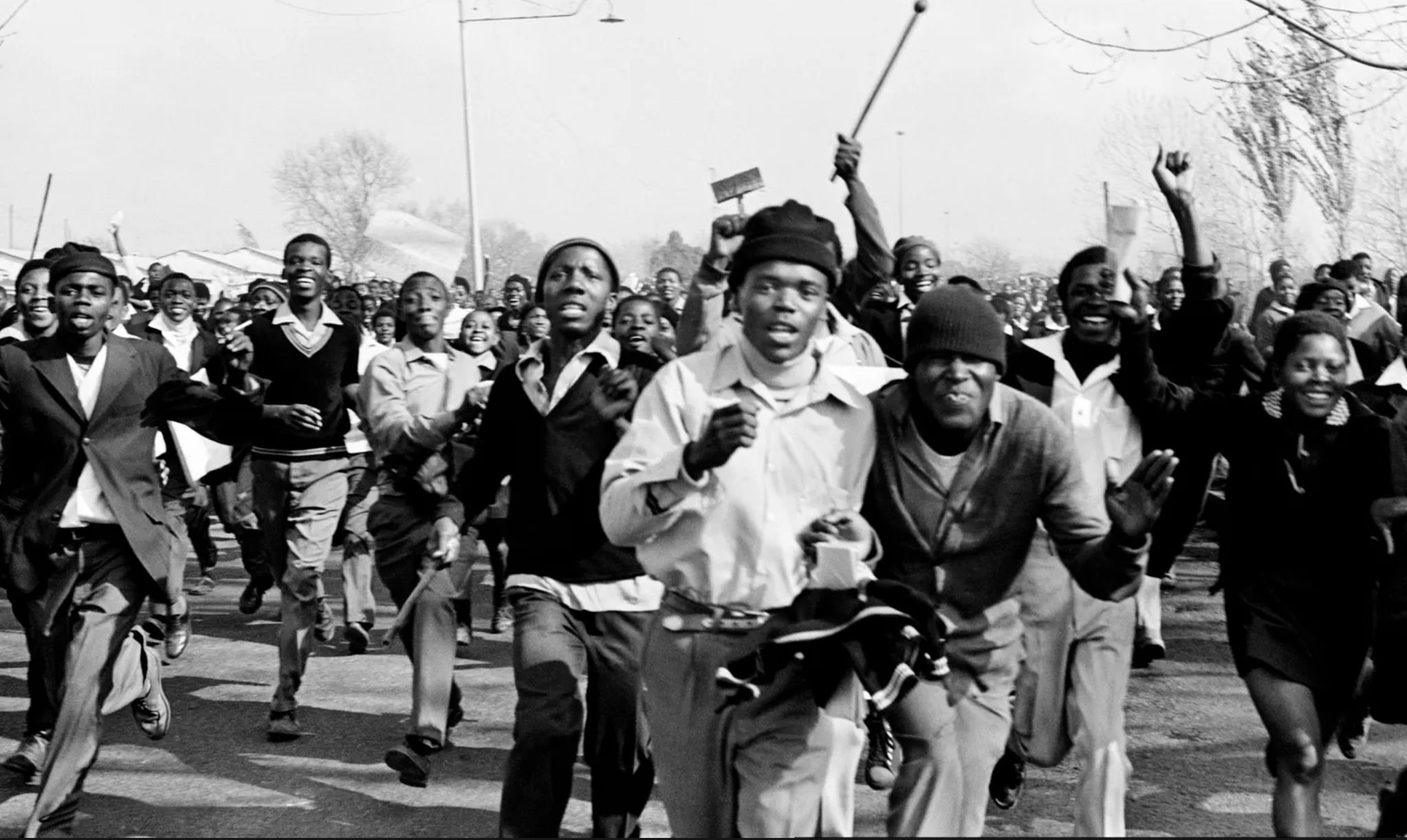
Born in Johannesburg in 1932, Peter Magubane documented the brutality of apartheid and suffered from banning orders, solitary confinement and beatings as a result. From teaching himself as a boy with a Brownie camera, he went on to work for the influential magazine Drum and became Nelson Mandela’s official photographer. He died on New Year’s Day aged 91.  Photo: The Soweto uprising on 16 June 1976, when more than 15,000 children protested against an editct making Afrikaans the medium of instruction in black schools. At first, the refused to be photographed but Magubane said a struggle without documentation was no struggle and they had to show the world what was going on in South Africa. The students agreed and this picture was taken by Peter Magubane. —The Guardian, January 12, 2024


With shadow and light
you engrave enduring images
in our collective consciousness,
lend us your eyes as microscope 
that bores deep beneath the skin,
telescope that scans beyond the stars.
 
Broken bodies scattered at your feet—
one camera concealed in a milk carton,
another in a loaf of bread or Bible—
you chronicle histories of struggle,
reveal the beast that lurks within
and humanity that is possible.
 
Confined to solitary
blocks of cold cement,
you do not let them hold
or break your indomitable will, 
bequeath your hammering heart
to our beleaguered world.
 
You squint far beyond the time
you have seeded with your vision,
reclaim the radiance of rainbows,
splendor of the setting sun,
knowing, somewhere,
it will rise again.
 

Donna Katzin has served as the founding and former executive director of Shared Interest, a 30 year old non-profit organization that facilitates access to credit for low-income Black Southern Africans. In that capacity, she was privileged to meet and collaborate with Peter Magubane, and honor him. She currently co-coordinates Tipitapa Partners, which helps feed impoverished children and empower their mothers in Nicaragua. She also serves on the Board of the Fund for Community Change, as well as the Tikun Olam Commission of Reconstructing Judaism—working on reparations in the U.S.  A proud wife and mother, she is a contributor to The New Verse News and author of With These Hands—poems about the "new" South Africa giving birth to itself.

Saturday, February 19, 2022

A SOLITARY MAN

by Mary K O'Melveny


For the past 27 years, Dennis Wayne Hope (above) has been in a Texas prison cell that is somewhere between the size of an elevator and a compact parking space. For one hour, seven days per week, or two hours, five days per week, he is let out to exercise—alone—in another small enclosure. The only people he comes into contact with are the guards who strip search and handcuff him. The last personal phone call he had was in 2013 when his mother died. More than a quarter-century in isolation has led him to hallucinations, chronic pain and thoughts of suicide. Solitary confinement is a sanitized term for torture. Mr. Hope, 53, whose plight was described by the New York Times, has petitioned the Supreme Court to hear his case on the grounds that his prolonged isolation is a violation of the Eighth Amendment’s bar against cruel and unusual punishment. Lower courts denied Mr. Hope’s petition and court observers are skeptical the Supreme Court will take up his case. So sure are Texas officials that the court, with its conservative majority, won’t agree to hear the case that they waived their right to respond to Mr. Hope’s petition for a writ of certiorari. —The Washington Post, February 16, 2022


For twenty-seven years,
I have not seen a bird’s shadow.
Nor felt a droplet of rain.
No one has touched me
save the guards who strip-search
me to take me to an indoor
cubicle for solitary weekly
exercise. They do hold my hands,
to fix them to steel handcuffs
required for our walks down
cement block hallways of a
Texas prison. In 2013, I received
my only telephone call.
My mother was dead.
 
Last month, my lawyers asked
the Supreme Court to weigh
the parameters of punishment,
to tell me if unusualness or
cruelty come to their minds
in circumstances such as mine.
Some say prison focuses one’s
viewpoint. If it tends toward
the myopic, there is good reason.
I would ask them to focus
their eyes on distant objects –
a task I can no longer perform
because my narrowed world
affords no view of light or distance.
A compact car would be too large
to park in my 6x9 foot cell.
 
Next, I would ask them to consider
how vocal cords can atrophy,
as muscle, ligament, mucosal
tissue diminish from lack of use.
I did not take a vow of silence
when I entered this place
but my voice has hollowed
as its volume faded and its pitch
turned to a thin reed-like whisper.
At first, I talked to myself. Even
sang. But soon enough, I was
not enough. Words failed me.
Now, my head aches constantly.
My heart pounds, my pulse races
as if I was running up a mountainside.
But all I do is sit on my metal slab
or stand and watch walls wave, shift
as though a fan was moving them
like air. Sometimes, demon spirits peek
through wearing pinpricks of light.
 
Some say if you do the crime,
you can’t complain about the time.
But duration and despair should not be one.
I do not sleep. I have no sense of space
or stage. My brain must work overtime
to construct reality from scant available
signals. I read about a 1950’s experiment
on rhesus macaque monkeys. After thirty
days of isolation, they turned away from
social interaction, became disconsolate.
Each day I remember less.    Less.
I hope the Justices will answer me
while I still know my name. While I can
still name most things I have lost.  


Mary K O'Melveny is a recently retired labor rights attorney who lives in Washington DC and Woodstock NY.  Her work has appeared in various print and on-line journals. Her most recent poetry collection is Dispatches From the Memory Care Museum, just out from Kelsay Books. Her first poetry chapbook A Woman of a Certain Age is available from Finishing Line Press. Mary’s poetry collection Merging Star Hypotheses was published by Finishing Line Press in January, 2020.

Tuesday, December 28, 2021

FOR JOAN DIDION WHO

by Mary K O'Melveny


Told it like it is    Like it was
  if we had been paying better attention
Made us see what she saw   and be grateful
 
Stared into storms  wearing night vision goggles
  in case we missed some essential point
Exposed each slant of light    tone of voice   shadowed figure
 
Crafted a perfect sentence   Drafted a fine line
Saw that a paragraph can hold more weight than gold
  if it opened our eyes wider   and we did not blink
 
Spoke with timbre of choruses and echoing canyons
 we could hear her whispers cutting through darkness
  in case we lost the soundtrack of our own lives
 
Understood more than most   Less is more
  there is little room for error   restraint can be operatic
   understatement can be perfect   is often preferable
 
Laid out the sorrowful news that we will not survive
  recast such tales as memoir   you always lose what you need
Told us don’t bother to weep    Timing is everything


Mary K O'Melveny is a recently retired labor rights attorney who lives in Washington DC and Woodstock NY.  Her work has appeared in various print and on-line journals. Her first poetry chapbook A Woman of a Certain Age is available from Finishing Line Press. Mary’s poetry collection Merging Star Hypotheses was published by Finishing Line Press in January, 2020.

Thursday, January 02, 2020

2020

by William Marr


during this year
you'd better not
think one thing
say another
do something else

we all can see right through you
with our perfect vision—
20/20


William Marr's poetry has been translated into more than ten languages and included in over one hundred anthologies.  Some of his poems are used in high school and college textbooks in Taiwan, China, England, and Germany. He is a former president of the Illinois State Poetry Society and lives in the Chicago area.

Tuesday, July 02, 2019

BILLIE JEAN KING'S GLASSES

by Diane Elayne Dees


I want to wear them because I want
to see what she sees—not a yellow
ball dropping lightly over a net,
just out of reach of an opponent—
but a world in which there are
no opponents, only others
with whom I have yet to cooperate.
I want to see righteous anger
as constructive, not reactive.
I want to see my rage start a fire
that purifies and transmutes
violence and injustice instead
of burning down a village.
I want to see women and men
side by side, each honoring
the energy of the other, not lobbing
accusations and calculating faults.
This is the vision I desire, the vision
I do not yet possess. This is why,
if only for a little while, I want
to wear Billie Jean King’s glasses.


Diane Elayne Dees’s chapbook I Can’t Recall Exactly When I Died is forthcoming from Clare Songbirds Publishing House; also forthcoming (Kelsay Books) is her chapbook Coronary Truth. Diane also publishes Women Who Serve, a blog that delivers news and commentary on women’s professional tennis throughout the world.

Wednesday, November 15, 2017

MEDITATION IN ROME

by Sharon Olson


School had not started and students at Rancho Tehama Elementary were still in the playground when staffers first heard gunshots in the neighborhood Tuesday morning, said Richard Fitzpatrick, superintendent of the Corning Union Elementary School District. “The bell had not rang, roll had not been taken, when the shots were heard,” he said. Staffers immediately began to lock down the campus, rushing students into classrooms and under desks when the gunman came around the corner toward the school, Fitzpatrick said at a press conference Tuesday. The gunman crashed through the front gates of the school in a white pickup truck traveling at high speed, he said. Authorities say this was part of a larger rampage through the rural community in Northern California that left five dead and 10 wounded. The man came out of the truck with a semiautomatic rifle and ran into the center of the school’s quad and began firing at windows and walls as staffers, including the school’s custodian, rushed students into classrooms under gunfire. One student was shot in a classroom while under a desk, Fitzpatrick said. That student was said to be stable. —LA Times, November 14, 2017


The gaze from Sant’Eustachio Il Caffe
reveals a stag atop the nearby church,
a crucifix sprouting between its antlers.
Stirring my cappuccino I think of Hubertus,
as Eustace is called in Belgium,
the hunter who saw his vision of the crucifix
in the forest of the Ardennes,
and asked his would-be victim
what he might do.

The stag counseled good hunting,
trimming the ranks of the herd.
I think of the X’s spray-painted
onto the carcasses of “fallen” deer
in my neighborhood,
marked for hauling away.

Fallen perhaps over-used as a euphemism
for dead soldiers, as if they had merely
stumbled, breaking rank in procession
towards the enemy at Waterloo,
Khe Sanh, Kanduz.

In my America gun cases beckon,
designer bags hold personal revolvers,
video games tally the number killed
for the game player with his joy stick,
the one who flunked anger management
and blamed the schoolmates who mocked
and bullied him, who now focuses his aim
on the heads of children in the crosshairs.

Inside the church lie the bones of Sant’Eustachio.
Painted onto the dome above, the wings
of the Holy Spirit, flung wide.


Sharon Olson is a retired librarian, a graduate of Stanford, with an MLS from U.C. Berkeley and an M.A. in Comparative Literature from the University of Oregon. Her book The Long Night of Flying was published by Sixteen Rivers Press in 2006. Her poems have appeared in such journals as Off the Coast, String Poet, Arroyo Literary Review, The Curator, Adanna, Organs of Vision and Speech Magazine, The Midwest Quarterly, Edison Literary Review, California Quarterly, The Sand Hill Review, and Cider Press Review. Two of her poems have been nominated for a Pushcart Prize. She currently lives in Lawrenceville, New Jersey where she is a member of the U.S. 1 Poets’ Cooperative, and since 2015 has been part of the Cool Women Poets critique and performance group, which gives readings in venues throughout New Jersey.

Saturday, October 15, 2016

NEVERMORE

by Susan McLean


Ah, distinctly I remember it was early in November
when the hearth-fire’s dying ember cast dark shadows on the floor.
As dry leaves went whirling, flying, suddenly I heard a sighing
as of someone softly crying, “Let me in! Unlock your door.”
Only this and nothing more.

Had she come again? I wondered.  As the storm clouds flashed and thundered,
in the throes of hope I blundered, flinging wide my chamber door.
But the vision I confronted was not her for whom I hunted.
Grief arrived and joy was blunted: through that doorway I deplore,
hope would enter nevermore.

Like a ghastly apparition on a grim and solemn mission,
an unnerving politician pushed his way into the room,
and I had the premonition that his access code to fission
soon would cause our demolition. Like a specter from the tomb,
in he came: the Trump of Doom.


Susan McLean is an English professor at Southwest Minnesota State University.  Her books of poetry are The Best Disguise and The Whetstone Misses the Knife.  She has also translated over 500 satirical poems of the Latin poet Martial, published as Selected Epigrams by the University of Wisconsin Press.  Her light verse has often appeared in Light and Lighten Up Online.

Tuesday, January 15, 2013

JERUSALEM IN SNOW, 1/10/2013

by Maryann Corbett


Image source: Occupied Palestine

The pious author of the book of Job

lacked maps of isobars to show him where

pressure allows the tongues of wet, warm air

delicately to probe
the hill country, tickling at slippery flows

where winter chill has settled on the height

of Zion. In his poems, only the might
of God breathes down the snows,
pure as surprises. What the psalm observed,

the morning news reveals: a world scrubbed clean.

Changed utterly. Pristine.

The stones of the Old City softened, curved;
old habits stalled; and humankind’s false starts

brought to a standstill. Ancient poets see

how snow grants us new vision, so that we

dream of our own changed hearts.


Maryann Corbett is the author of Breath Control (David Robert Books, 2012) and Credo for the Checkout Line in Winter, forthcoming from Able Muse Press. She has been a winner of the Willis Barnstone Translation Prize and a finalist for the Morton Marr prize, the Best of the Net anthology, and the Able Muse Book Prize. Her poems, essays, and translations have appeared in many journals in print and online, including River Styx, Atlanta Review, The Evansville Review, Literary Imagination, Measure, Subtropics, and The Dark Horse, as well as in a number of anthologies. New work is forthcoming in PN Review, Modern Poetry in Translation, and Barrow Street. She lives in St. Paul and works for the Minnesota Legislature.