Guidelines


Submission Guidelines: Send 1-3 unpublished poems in the body of an email (NO ATTACHMENTS) to nvneditor[at]gmail.com. No simultaneous submissions. Use "Verse News Submission" as the subject line. Send a brief bio. No payment. Authors retain all rights after 1st-time appearance here. Scroll down the right sidebar for the fine print.
Showing posts with label time. Show all posts

Monday, April 20, 2026

DARE TO BE HAPPY

by Chen-ou Liu


The neighborhood is a hush of humid air and mown grass. Time feels suspended, marked only by the rhythmic pulse of water hitting the driveway. For a moment, this white picket fence world is nothing but light and motion, before the next headline arrives—red banners scrolling, digits flickering upward.

on the front lawn
the sprinkler ticks like a clock
throwing silver arcs...
his toddler's laughter
chases a beagle's bay


Chen-ou Liu is the author of five books, including Following the Moon to the Maple Land (First Prize, 2011 Haiku Pix Chapbook Contest) and A Life in Transition and Translation (Honorable Mention, 2014 Turtle Light Press Biennial Haiku Chapbook Competition). His tanka and haiku have been honored with many awards.

Monday, March 16, 2026

PINS ON THE MAP

by J. Alan Nelson
 

After spending some of his prime years aiding German concentration camp survivors and guarding Nazi leaders tried for crimes against humanity at Nuremberg, a US second world war veteran is now believed to have become his country’s oldest known organ donor. The story of 100-year-old Dale Steele (above), who died in February after a head injury led to his being placed on life support, demonstrates how donors’ health is a more important consideration than how old they are, according to Live On Nebraska, an organ-procurement organization in his home state. “Mr Steele … is a powerful reminder that generosity has no age limit,” Live On Nebraska’s president and CEO, Kyle Herber, said in a statement. —The Guardian, March 13, 2026


Whenever I swear I don’t care anymore,
I open the phone, that glowing atlas,
and touch the red pins I dropped like blood drops
across the skin of the world.

One for the women I fucked in borrowed rooms,
their breath hot against my neck, thighs parting
like pages in a book I never finished reading.
One where Father left the dog behind,
old mutt howling at the empty driveway,
a childhood door slammed shut forever.

One where I straddled a pine like Frost’s secret rider,
sap sticky on my palms, wind laughing through needles.
One where I held the knife above an evil man’s throat,
his wife asleep beside him, innocent as milk,
and mercy rose up, sour and sudden,
and I walked away empty-handed.

One for the half-mile district win,
lungs burning, crowd a blur of small-town faces.
One for the bear in the Rockies,
black eyes meeting mine, both of us startled
into stillness, two animals deciding not to fight.

One where I sank into Icelandic snowdrift,
white world swallowing me whole,
cold like a lover who won’t let go.
One for the switchblade in Mexico,
cold steel kissing my throat,
I tasted metal and my own pulse.

One where I crashed Clinton’s party,
slipped past Secret Service like a dream,
shook the president’s hand, felt history
warm and ordinary in my grip.

I pin these moments still,
geography of scars and small triumphs.

Late nights when the step counter mocks me,
a few thousand short of ten,
I walk the empty streets at ten p.m.,
beer can sweating in my fist,
streetlights buzzing like tired blues.

On my pointer fingers, tattoos: RS and LP,
right starboard, left port,
so even drunk I know which way the ship turns.

And somewhere in Nebraska,
a hundred-year-old veteran, Dale Steele,
WWII quiet in his bones,
gives his liver after death,
organ young as three, they say,
regenerating cells like a river keeps running,
old body gifting what still lives.

I think of him when I pin another dot:
a man who outlasted war, depression, time,
then handed over the soft machine inside him
so someone else could keep breathing.

The map glows.
I zoom in, zoom out.
Infinity folds in on itself,
tessellations, impossible stairs,
hyperbolic curves bending away forever.

Yet here I am,
walking home under stars,
beer almost gone,
still pinning,
still caring,
one small step at a time.


J. Alan Nelson, a poet, actor, lawyer and journalist, has been nominated for a Pushcart Prize, Best of Net and Best Microfiction. He played the lead in the viral video Does This Cake Make Me Look Gay, the verbose “Silent Al” in HBO’s Emmy-winning SXSWestworld, and narrated New York Times videos on AIDS programs in Africa.  

Tuesday, February 03, 2026

CHOSEN

by Linda Parsons


AI-generated graphic by NightCafé for The New Verse News.


You, yes, you. On the porch glider of memory, 

thinking again of your grandmother’s grease-

stained kitchen and how she saved you. You, 

in the first snow of the year, the burdened photinia 

limbs, the night’s blue note. I mean you. You 

who’ve been griping and gnashing your teeth 

in the constant upheaval—not just our country’s 

bruised fist, but the world entire, its tectonics adrift. 

It was your idea, when the roll was called up yonder, 

to take up your pallet, to rise like Lazurus, 

his winding sheet of myrrh and aloe trailing behind. 

To say, Me, I’ll go. I’ll go to that time, that cliff 

and split sky, that rage of brother against brother 

against sister, unfriending right and left. 

Left from right. It’s my time. My time to be 

a lighthouse, to shine far and wide over veined 

stones and broken vows alike, though my heels 

bleed, my steps falter. My time to march 

on the winter streets and hold high my sign: 

God is watching you kill.


Remember 

your Ecclesiastes: Time and chance happen 

to us all. And what will you do with this time, 

this chance to sweep your beam along the rocky 

shoreline, to pull whoever outlasted the nor’easter 

back to breath? This is your time—to spend 

like a wastrel or shower the heavens with a gracious 

plenty. You engine of steam and plow. You 

shoulder to the squeaky wheel. You asked for it. 

You volunteered to help turn the tide 

and guide this mother home. 


Linda Parsons is the Poet Laureate of Knoxville, Tennessee. She is also the poetry editor for Madville Publishing and the copy editor for Chapter 16, the literary website of Humanities Tennessee. She is published in such journals as The Georgia ReviewIowa ReviewPrairie SchoonerSouthern Poetry Review, Terrain, The Chattahoochee Review, Shenandoah, and many others. Her sixth collection is Valediction: Poems and Prose. Five of her plays have been produced by Flying Anvil Theatre in Knoxville. 

Saturday, September 20, 2025

LAMENT FOR THE TIMES

by Ann Grogan

after George Eliot, “The Choir Invisible” and William Henry Channing, “My Symphony”


George Eliot prayed that she reach
the purest heaven;
be the cup of strength to those in agony.
I cannot seem to save myself.

I pray only to survive while
grasping at the crumbling edges 
of a giant hole into which I fall.
I cannot seem to save myself.

I try to smile, try to join in,
feed pure love, ignore the vile,
turn the world back to being kind.
I cannot seem to find the time.

What sweet luxury Channing had,
to advise we “bear all cheerfully… 
await occasions, hurry never.”
I cannot seem to find the time.

I don’t want to live in a world
where immigrants are not respected
or given dignity. 
And yet it seems I do.

I don’t want to live in a world
where women bleed out in cars because
craven doctors betray oaths to care for us.
And yet it seems I do.

Better Buddhist than bleary-eyed,
refusing the light that drives me on
to cry for help as we drown.
I cannot seem to find the light.

I try the common, I try the quiet,
I try to listen then to sing,
but stars refuse to shine on me.
I cannot seem to find the light.


Ann Grogan is a joyful octogenarian, retired lawyer, and emerging poet who lives in San Francisco, CA. Her writing promotes the unequivocal permission to pursue one’s passions at any age. Her poems have appeared in Little Old LadyThe Prairie ReviewQuerencia, the University of Vermont’s Continuing Education Newsletter, and on KAWL Public Media “Bay Poets”, and is forthcoming in Amethyst Review. She’s the author of two volumes of poetry, Poetic Musings on Pianos, Music & Life. Her music and poetry website is rhapsodydmb.com.

Friday, January 31, 2025

THE GULF OF AMERICA, NÉE MEXICO

by Susan Ayres


The U.S. Department of the Interior announced on Friday that they will implement President Trump’s name change for the Gulf Coast.(wjhg)
 

                        I laugh at what you call dissolution,
                        And I know the amplitude of time.
                                                            —Walt Whitman
 

of fears and worries. Will the rocks smash
her if the saltwater lets her go? In the muted
submersion there’s an isolation. The air
 
bubbles rise in a tickle. Small fish nibble
her toes. It’s not like she’s fallen to pieces.
She’s just lost her reason, her name.
She’s the brain mush and muscle mash
 
of dark swirls in the clear green water,
the murky way men possess women. Her particles
bond to the tickles. The waves push her
forward with the incoming tide. She laughs
 
at what they call dissolution. Floating
face down she knows the amplitude of time.


Susan Ayres is the author of Walk Like the Bird Flies (Finishing Line, 2023) and Red Cardinal, White Snow (Main Street Rag, 2024). Her work has been nominated for a Pushcart Prize, and her poems and translations have appeared in numerous journals. She studied Spanish in Cuernavaca, Mexico, practiced karate for nine years with her son, and now spends time in Texas writing, collaging, teaching, and learning tai chi.

Tuesday, July 23, 2024

FROM NOW UNTIL NOVEMBER

by Thomas J. Erickson


There are decades where nothing happens
and there are weeks where decades happen.
                                                    —Lenin

Out near the trout stream,
there is “the Pine Tree”

a towering white pine that somehow
escaped the blade of the lumberjack.

It was a signpost and a beacon
and we could see it from anywhere

while we walked across the plains to fish there
—me, Joe and Dad and Ed

until the dusk called us home for blueberry pie
and trout and potatoes fried in lard.

That was decades ago. Earlier this summer,
the tree started to fall. 

I was afraid it would be down
in a matter of weeks.

Today, though, the tree is still there. By November,
we might still be able to see it on the horizon.


Thomas J. Erickson is an attorney in Milwaukee where he is a member of the Hartford Avenue Poets. He likes to sit in court and write poetry before his cases are called.  His latest poetry book is Cutting the Dusk in Half (Bent Paddle Press, 2022).

Wednesday, November 15, 2023

TO A CHORUS OF TEARS

by tom bauer


It seems inevitable his eyes would look like that
singing that song, effulgent with yearning
for things lost, as the river weaves towards
the past. Reminds me of cartoon eyebrows,
pointed in an inverted ‘V’, like a tent,
anguished peaks over wounded disks, singing
what might be the saddest song ever made.

An invisible step leads to this next question,
on foot, an actual physical object
moving in space, in the moment of space,
not merely that moment witnessed onscreen,
a moment now in the past, outside this one,
this moment here with the keyboard, the echo,
the cat on the radiator nesting his head.

Are we free? As time waves out, are we free?
Free of the pain, the breath, the trees and light?
For it seems we are not free on earth, to choose
to run or fight, to give or take, we are
in moments welded to our choices,
fixed outside freedom, choosing what we must.
So are we free, then, when we die? Is that it?


tom bauer lives in montreal with his sons and plays boardgames.

Saturday, October 21, 2023

SABBATH

by Chris Reed


The deepening fall stalls my step,
invites a seasonal sabbath,
a slowing of time, luring me
to witness the dying world,
the retreat of light, warmth, color,
a trail of endings,
this yearly dress rehearsal.

Here is the world. 
Leaves, red-rimmed, rustle silently
like yesterday’s still photos from Gaza,
Israel, Ukraine, blood-tinged. 
The deck is wet from recent rain,
as water runs out in war-torn lands,
runs out for all, as rivers 
and aquifers shrink, while torrents
wash cities into the sea.

A rest. A time away from politics,
like leaving the red-faced relatives,
arguing in the sunroom, laced
with whisky fumes, surrounded
by blue-blossomed African violets.
I’d sneak into the kitchen 
filled with the smells and warmth 
of my grandmother’s baking bread
as she hugged me and nodded,
a knowing smile on her face.

Was it in Coetzee, I read that politics
is just a form we use for the hate
and frustration already there?
Was it in Miller, I read that when
as children, love is denied, politics
and how we treat our own children,
are where we fine-tune our cruelty?

The leaves turn paler, start to yellow,
the sky, a cleaner blue after the rains.
Sabbath is about sitting with gratitude,
sitting with possibilities,
sitting with some kind of god, 
some kind of love.
I wait.


Author’s NoteThe seed for this poem was this week's New York Times story about the Amazon River.


Chris Reed is a retired Unitarian minister. Her poems have recently been published in River Heron Review, The NewVerse News, and US1 Worksheets, among other journals.

Wednesday, April 26, 2023

DOES TIME HAVE COLOR TOO?

by L. Smith


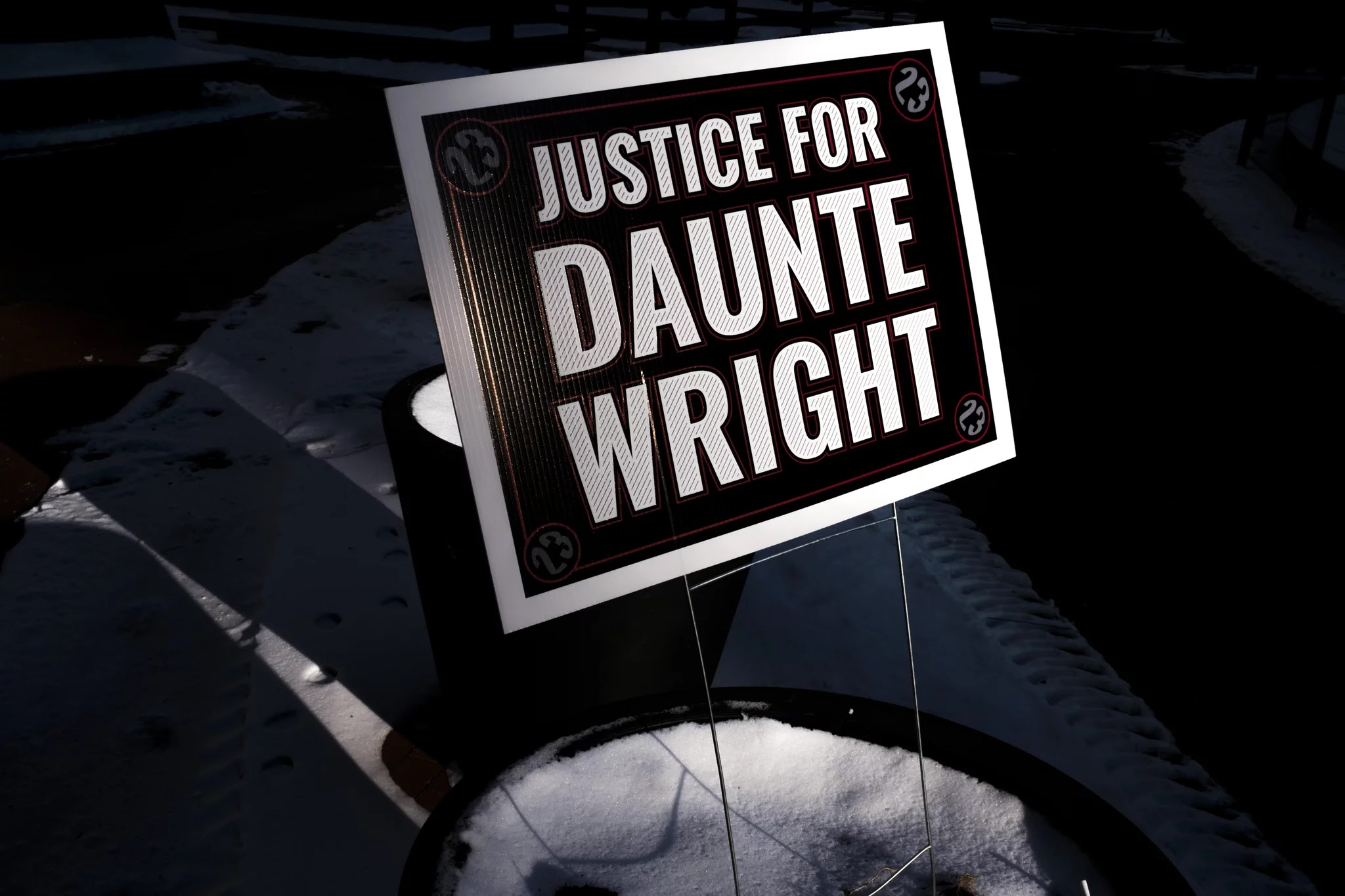
Disgraced Minnesota police officer Kim Potter walked free from prison after serving just 16 months for shooting dead Daunte Wright when she mistook her gun for a Taser during a traffic stop. Potter, 50, was released from Minnesota Correctional Facility-Shakopee in the early hours of Monday morning to serve the remainder of her sentence on supervised release. —The Independent (UK), April 24, 2023


So, does time have color, too?
Why do they get less time for the same offense that, say, we might do?
Is their time more valuable than, say, mine?
I mean, ain’t we living on the same clock? Same timeline? Same century?
Maybe we need to leave the time up to the jury, because the judge is too easily nudged by emotion. Are you sentencing the crime, or are you sentencing the color? Are you sentencing the crime, or are you crying for a mother? Are you sentencing the crime, or are you sympathetic to the other?
 
Is one color more fragile than the other? You know the phrase, right? —"Don’t do the crime,
if you can’t do the time.” Does that not apply for every color?
What? Y’all think we got a time machine? Think time go by for us at warp speed?
Is time not supposed to affect the brother like it does the other?
Y’all don’t age the same, but them years don’t go by no faster for us.
We age on different scales, but them years go by the same. 
 
I thought time was about alignment, about the crime,
about time to match the crime—not the color. Not how sullen one is once seized.
But it seems the brother gets more time than the other because of his color.
Does color determine risk? After all, who has the means to take the most risk?
The brother? Or the other?
 
Or is it: don’t do the crime, unless you got the right color? 
I mean, can y’all meet us in today? Can we at least decide time like we living in the same decade?
Whose family will suffer most under the cloak of the time?
During the absences, the voids, the gaps, the setbacks brought on by the time? Whose family is already behind?
 
Why can’t white time and black time be on the same damn black line?
I didn’t know time had color, too.
I guess time, like fairness, are both abstract, are just a construct. 
Time being obstruct for the fair-skinned,
abundant for the brother, but absent, lightened, or lifted for the other.
Intangible for the other, hard-lived for the brother.
Time itself is colored obtuse.
Color makes time profuse.
For the colored, time is abused.
And in today, time is a noose.
I didn’t know time had color, too.
And since it does, why can’t our time have the color of you?


L. Smith, a New Orleans native, is a writer, multi-certified, English and master reading teacher, who has freelanced for local newspapers. Her poems “Black Man Running” and “Worse Than Rodney King” have also been published in The New Verse News. She has an anthology of poems and prose set to publish spring 2023 that her mother and daughter created space for her to write. She also has begun this blog for writer teachers.

Sunday, January 01, 2023

A YEAR'S LAST FLIGHT

by David Chorlton


The waking skies of summer
opened like a hand of cards spread daily
when the white sun rose
and a cloud held Heaven’s fire close
to Earth while all was golden light behind
Four Peaks.
                     Each day
broke into song against a stage set brightly
for the doves and mockingbirds and
flickers who arrived without
a campaign slogan or
a lie. Pigeons flocked together for safety
while hawks and candidates
hunted alone through dry heat
and monsoons. Anniversaries flew by
with months sliding
down a rainbow to
                                   disappear the way
time does when it has used up
its energy and wants to sleep the winter sleep
that follows an election when all
that’s left are losers crying foul
and birds lost in migration
showing up at the most unlikely
destinations. There is one late rain
turning to mist
                            on the south side
of a desert mountain. And hummingbirds
for whom each day is much the same as
the one before it. They are driven
by their unending appetites
and swear allegiance to the sugar
hanging from the sky.


David Chorlton is a longtime resident of Phoenix with great affection for the desert. His newest book is Poetry Mountain published by Cholla Needles Arts and Literary Library in Joshua Tree, CA. 

Monday, September 05, 2022

ON ACRONYMS (G.O.A.T.) AND ACCOLADES (GREATNESS)

by Jen Schneider


I’ve always believed in the power (mostly potential) of greatness. Up and down streets of small-town USA. It’s the American way. From the East to the West. Up and down coasts. Across the boulevard. Behind boarded storefronts. Above tent cities and soaring skyscrapers. Gold rushes (and crushes) as believable as spinning compass dials. Proof in palms. Sweat both a track and a sweet tactic. Electricity both pushes and pulls. Magnetic magnanimity. All senses engaged. Eyes sparkle. All moves traced. Energy (& greatness) on display. 

Tonight, I witnessed it. The G.O.A.T. First-hand. On live TV (with an intermittent signal). From the irregularly regular comfort of a green corduroy couch. All limbs locked. All cushions plucked. Some patched. Others poked. Even the puppy ceased chewing (both cushions and bones) to watch (perhaps chase). Greatness a moving target. And a mobilizer. Time may tick (and trick) but greatness warms then lingers. In layers (six U.S. Open titles and tiers) and longing. Of myths and mothers. Of champions and messages that extend championship miles. Of catsuits and ankle-grazing boots. In smiles and original styles. Hi-tops and lo-cuts. Sequins and Lycra trims. Authentic and relentless. Shine and sheer. All dress coded. All rackets loaded. 

All the world’s a stage. Bounded of boundaries erased in thin air. Fans in stands. Teams behind the scenes. Youngsters with big dreams. Bottoms boosted by stacks of paper reams. Elders with small screens and oversized spectacles. Spectators (both in and of person) cup (and capture) promise in the palms of their hands and the sweetness of their gasps. Puffs of breath signal. Proof of behavior beyond all reasonable dreams. From hard courts to grass lots. From clay corners to concrete towers. From humble beginnings of seeds and sprouts. We’re only as strong as our supports. Even the always ready-for-sleep canine got caught up in the game. Foundations fuel fire. Balls of soft yellow fuzz inspire both chases and champions. Also companions. 

As the biggest names in sports flooded the airwaves, my husband pulled his racket from the attic. I considered my own tutu (long boxed). Grabbed Nikes, shorts, and night-lit keys. I laced, then tied my rubber-soled sneakers. His were a tad too tight (along with the shorts). Mine a tad too bright (neon green no longer felt right). Sparkle and lace always a fan. It was late but we made it a date. Leash on the dogs. Feet on pavement. Rackets in hand. We’ve never been dressed of accolades. Kool-Aids our beverage of choice. Tonight, we ran then hit then hollered. Rates (accuracy and time) no longer mattered. 

Greatness is gentle. A guide with nothing to hide. We were happy to be (beside and then on the court). There was no need to ace. No need to race. Greatness not only inspires it never tires. Age just as much as adage as a fuel for new stages. 

It’ll be a while, I think. To challenge the greatness, we saw on display. No desire to conform. Spectacular in a self-chosen uniform. Stats may stock and stack. Always at the ready. Some to be stored and others to react. Commentators eager to even all scores. Time is tricky. It passes in a blink. It’s the (even when fleeting and even when tried) American way. Tonight, I witnessed greatness. Under open air. Dances, daring, and destiny on magnificent display. 

Thank you, Serena. Your impact (and all you’ve made seen) will extend long and far beyond your effect. What I’ll remember most from my watch (and your reign) is your smile and your irrepressible passion for always, without fail, going the extra mile. Not to mention your incredible sense of fashion. You may not know our names, but your game inspires dreams beyond the threats of time and traditional means. Of G.O.A.T.s and accolades. Time and again—Greatness on display. 


Jen Schneider is an educator who lives, writes, and works in small spaces throughout Pennsylvania. Recent works include A Collection of RecollectionsInvisible InkOn Habits & Habitats, and Blindfolds, Bruises, and Breakups.

Wednesday, May 04, 2022

CHOICES: AN ABORTION SONNET

by Anne Graue


I sat muted in a waiting room, stared at mauve and teal
paintings framed in un-brilliance, the desk Formica. The phone
rang—no ring tones in ‘82—not quite silence, glances not too close—
I knew her—she went to my high school—we both waited.
 
When is a raven like a writing desk?
 
I hate riddles! They follow a maddening logic. The Mad
Hatter and March Hare sit at court, judging. The dormouse asks,
 
Would you like some more tea?
How can I have more when I haven't had any?

Rabbit's fur is softer than anything I’ve ever touched.
 
The act of choosing is easy, and there
in that room tears fell like a solution
and control. Recover, reset the clock.
 
I'm late! No, I got there just in time.
 

Anne Graue exercised her right to choose in 1982, a private decision that was right for her at the time. She is a poet who believes in personal choice and privacy and that there are times when some things need to be public. She wishes for freedom of choice for her daughters—for all daughters. 

Wednesday, March 23, 2022

DON'T TOUCH MY DREAMS

by George Salamon


Illustration by Beppe Giacobbe for Harper’s Magazine


"Can technology shape our dreams?" 
—Michael W. Clune, "Engineering our dreams," Harper's Magazine, April 2022


My dreams are true, because they occur,
they are false, because only I see them.
It's an awe-inspiring arrangement, it
is both darkness and light, it frustrates
and enlightens, it is a human thing.
The heart beats as we sleep, our
eyes write down the stuff of dreams,
dreams remain within and out of our
world.

Our soul is endowed with two eyes,
one watches the passing of hours on
the clock, the other sees through the
the borders of time, until watching
passes into seeing through, and the
dream endures within us.
I don't want technology to tamper with
this burden and gift.


George Salamon is not happy about what technology has done to "engineer" our engaging and communicating with each other and wants it to keep its metallic hands off our dreaming, the happy dreams and nightmares. 

Tuesday, March 08, 2022

ONCE UPON

a triptych for Ukraine, March 2022

by Lana Hechtman Ayers


I. Shush! Don’t Wake Her
 
See her now,
home from
the cancer ward,
in her own bed
in her own room,
curled around the fuzzy
brown teddy bear nearly
as big as she is at four,
fur of its right ear matted
down from sucking,
emerald neck ribbon frayed,
glossy hazel eyes shining
in the toadstool nightlight’s
amber glow. She sleeps atop the sky
blue coverlet hand embroidered
with sunflowers by her grandmother,
The white nightgown with flourishes
of willow leaves tangles around
her too-thin legs, and one chubby
thumb presses against her lips
that are as rosy as imported
cherries from her last birthday
celebration she dreams of
tasting again. From elsewhere
a clang wakes her and she
reaches for the waning
crescent moon that hangs
in the bedroom window
like one of her mother’s
dangly gold earrings
just as the bombs
begin to fall.
 
 
II. Once Upon a Time
 
Swallow the clatters of war tanks, bullet ratatat's, crashes of broken glass.
Hear to the red smoke as it shrieks down chimneys,
 
around drafty windows into the house, down the hall to the bedrooms.
Inhale the atonal black fire as it incinerates the fairy kingdoms of childhood to ash.
 
This is not the bedtime story any parent hopes to tell their children.
Look out your window.
 
If the night is clear and calm, or
if all that rains down from the sky is water,
 
ask yourself, how can I help parents in far off lands
find a happily ever after for their children
 
this one night
to the next?
 
 
III. Elegy for War
 
After the last bombs exploded,
silence deafened
the world for several decades.
People took to speaking
in gestures,
holding arms out in front
of themselves, wide open,
which led to stepping forward
into more hugs,
led to extravagant foraging
for wild berries.
Vehicles of insurgence
morphed into homes for bats
and rats and only grouchy bears
ever ventured near.
NATO transformed into
a travel agency,
with free week-night stays
across Greenwich Mean.
Everyone everywhere
shared recipes for soup.


Lana Hechtman Ayers has shepherded over eighty poetry collections into the world in her role as managing editor at three small presses. Her poems have appeared online at Rattle, Escape Into Life, Verse Daily, and The Poet’s Café, as well as in print journals and her nine published collections.

Sunday, January 30, 2022

CONFIRMATION TIME

by Jane Patten


The process begins—
But confirmation
Will depend
Upon its closeness to the midterms 
Or what it costs to send
A moderate to the court,
Saturn lying opposite
The Sun or
The last of the Super Moon
Shining bright, 
Agreement from the Right
And well-laid plans
To obstruct and strike again.


After retiring and moving to Huntsville, Jane Patten decided to write about her adventures, including growing up in Delaware and her career as a teacher in rural Georgia. Her writings have been published in Out Loud HSV: A Year in Review anthologies, The New Verse News, Reckon Women, and Reckon Honey.

Tuesday, December 28, 2021

FOR JOAN DIDION WHO

by Mary K O'Melveny


Told it like it is    Like it was
  if we had been paying better attention
Made us see what she saw   and be grateful
 
Stared into storms  wearing night vision goggles
  in case we missed some essential point
Exposed each slant of light    tone of voice   shadowed figure
 
Crafted a perfect sentence   Drafted a fine line
Saw that a paragraph can hold more weight than gold
  if it opened our eyes wider   and we did not blink
 
Spoke with timbre of choruses and echoing canyons
 we could hear her whispers cutting through darkness
  in case we lost the soundtrack of our own lives
 
Understood more than most   Less is more
  there is little room for error   restraint can be operatic
   understatement can be perfect   is often preferable
 
Laid out the sorrowful news that we will not survive
  recast such tales as memoir   you always lose what you need
Told us don’t bother to weep    Timing is everything


Mary K O'Melveny is a recently retired labor rights attorney who lives in Washington DC and Woodstock NY.  Her work has appeared in various print and on-line journals. Her first poetry chapbook A Woman of a Certain Age is available from Finishing Line Press. Mary’s poetry collection Merging Star Hypotheses was published by Finishing Line Press in January, 2020.

Friday, October 01, 2021

BURROWING

by Farah Art Griffin


“Into the Void” by DINA D’ARGO, 56, SPRINGFIELD, TENN. Acrylic on canvas via The Washington Post. “‘Into the Void’ symbolizes stepping into the unknown — the idea of life ‘after the pandemic’ and the insecurity of not knowing what lies ahead.” 


still burrowing —
drowning in yesterday's time
past grips us in its palm
wounds
            still wet
            still dripping
memories
            still clear
            still swimming
cave of unforgotten sorrow —
echoes in the dark


Farah Art Griffin is a literary and visual artist. She holds an EdM in Arts in Education from Harvard University. Her work is forthcoming in The American Journal of Poetry.

Friday, September 24, 2021

EVEN THE DOG

by Barbara Loots


Three family members whose bodies were found in the living room of a Glenaire house over the summer all died of natural causes possibly related to the untimely  death of the home caretaker… The family dog was also found dead next to a toilet in the bathroom. Kansas City STAR, September 21, 2021


No one knew it when the old man died.
The uncollected mail, unanswered phone,
untended grass.  Nobody notified
authorities.  He’d always coped alone
with caring for his sister and his mother,
dependent as the dog for food and drink
on one who didn’t want to be a bother
to friends or neighbors.  What are we to think
of this small tragedy?  Whom shall we curse?        
Who counts inconsequential lives like these,
as millions vanish from the universe
from hunger, guns, disaster, and disease?
Humanity has nothing new to learn.
When time has ended, still the stars will burn.

 
Barbara Loots wonders why we worry when we are all so small in the overall scheme of things.