Guidelines


Submission Guidelines: Send 1-3 unpublished poems in the body of an email (NO ATTACHMENTS) to nvneditor[at]gmail.com. No simultaneous submissions. Use "Verse News Submission" as the subject line. Send a brief bio. No payment. Authors retain all rights after 1st-time appearance here. Scroll down the right sidebar for the fine print.
Showing posts with label trees. Show all posts

Friday, July 31, 2026

A ROTTEN TIME

by Marge Piercy


After violent months of war

no one can win, men with

assault rifles doing what they

were built to do, kill many,


world burning, people dying

of heat, hurricanes stronger

more often, tornadoes

fiercer, drought scorching


land to desert, Animals,

trees dying off and gone,
let’s not just hope, pray

but work to leave an earth


we’re not guilty of spoiling.

Despair is just laziness.


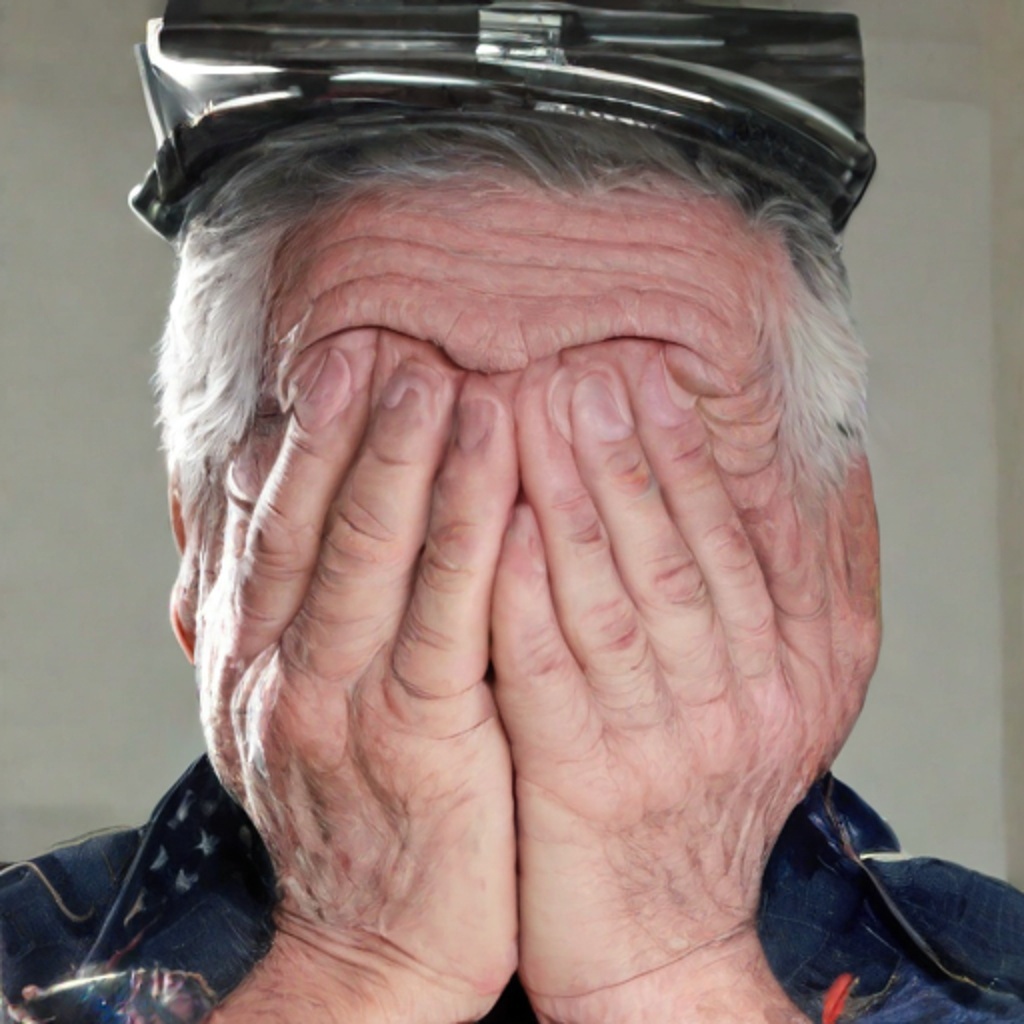
AI-generated graphic by NightCafé for The New Verse News.


Marge Piercy is the author of twenty one poetry collections and seventeen novels, including Woman at the Edge of Time, and SEX WARS. A lifelong feminist, socialist, and anti-war activist, her writing has been exploring labor, environmental justice, and the struggle for a more equitable world over the last five decades.

Thursday, July 30, 2026

PUBLIC TRUST

by Dustin Miller

this morning
a woman walked alone
through the park

early sixties maybe
black mullet
lycra shorts 
cutoff cotton shirt

the sleeves removed
close to the seam

across her chest
in white and red:

TRUST GOD 
NOT GOVERNMENT

i heard instruction
or warning

the path continued
smooth beneath her

trust GOD
not government

sprinklers turned
their measured arcs
across the grass

trust god 
NOT government

a city truck
moved slowly
along the curb

trust god 
not GOVERNMENT

trash emptied
branches cleared
a bench bolted into shade

four words
and already
i had made her unreasonable

given her
the voice
i needed
the shirt to have

i believed the park
proved me right
because i trusted
the government enough
not to see it

the path
the water
the doggy bags
the expectation
that she could walk alone
and keep walking

but the stress was mine

nothing on the shirt
said where
to place the weight

nothing told me
what had failed her
what had held
what god meant
inside her mouth

or whether the shirt meant anything
beyond the shirt

she passed beneath the trees

black cotton gathering
beneath one arm

for several steps
god disappeared

then government

then both returned
with her stride

the path held her weight

she did not thank it


Dustin Miller is a Dallas-based poet whose work appears or is forthcoming in Cathexis Northwest Press, Eunoia Review, Jackdaw Review, Audience Askew, Icebreakers Lit, and Wingless Dreamer. His poems explore embodiment, desire, language, queer identity, place, and the systems that shape intimacy.

Wednesday, April 08, 2026

TWO-WEEK TRUCE

by Howie Good


Trees with buds

under the rubble 


Howie Good is a widely published but little-known author.

Saturday, January 31, 2026

THE DYING BREATH

by Rose Mary Boehm

In a new image taken by the James Webb Space Telescope, the dying breaths of the star at the heart of the famous Helix Nebula are exposed in wonder and radiance. —Good News Network. Photo: NASA, January 20, 2026


"As above, so below," the famous aphorism by a mythical teacher and a mythical text. 


In the Emerald Tablet the ancients already knew about the relationship between the macrocosm and the microcosm. So, as a star dies and we see its dying breath pushing outward like a cloud of seeds to form new stars when their time has come, so the humble dandelion’s delicate umbrella-equipped seeds go with the wind to settle on another meadow and become new dandelions when their time has come, the spiders die soon after producing their egg sacs, and the spiderlings disperse into the world by ballooning: using the breeze and sometimes atmospheric electric fields to travel far, settling, mating, and laying egg sacs when their time has come.


"As above, so below"—instead of neurons sending electrical signals through axons, stars use magnetic field lines. Trees connect through the complex mycelia network, and we have more than 86 billion neurons in the brain, and a more or less equal number of other cells. Neurons and neurotransmitters are our mycelia. 


When my grandfather died, I saw a small silver cloud leaving his open mouth.


A German-born UK national, Rose Mary Boehm lives and works in Lima, Peru. Author of two novels, eight poetry collections and one chapbook, her work has been widely published mostly by US poetry journals. A new full-length poetry collection is forthcoming in 2026.

Thursday, May 22, 2025

EMPTY SPACES

by Adam Bagdasarian


AI-generated graphic by Shutterstock for The New Verse News.


There is no pill or drink for this
No pill for the rubble of home
for the dust of flesh
the ash of bone

No drink for the season-less years—
for the trees, for the water
the sunlight one cannot feel
or the empty plate of the evening meal

Each new day comes D.O.A.
rewound, somehow and replayed
rewound and played
rewound, replayed


Adam Bagdasarian’s Forgotten Fire was a finalist for the 2000 National Book Award. In 2002,  First French Kiss and Other Traumas was a finalist for the ALA Top Ten Best Books for Young Adults.

Tuesday, May 13, 2025

WHAT KIND OF TIMES ARE THESE?

by Bonnie Naradzay


Israel has grandiosely labeled its latest genocidal move "Operation Gideon's Chariots" wherein, moving from siege to seizure, it plans the bloody conquest, ethnic cleansing, and permanent recolonization of Gaza, using the rhetoric of holy war to justify unholy mass destruction - this, even as many of the Palestinian children who've somehow survived their savage 18 months of carnage now slowly starve to death. Photo: Osama Al-Raqab, 6, is one of tens of thousands of Gazan children slowly starving. Screenshot from NBC. —Common Dreams, May 6, 2025


What kind of times are these,
asked Brechtwhen a conversation 
about trees is almost a crime 
because it entails a silence about 
so many misdeeds!  And so
is it fitting to converse about
the ephemeral cherry blossoms
that graced the Tidal Basin trees.?
Elected felons spout obscenities. 
“Have you no sense of decency,” 
someone finally asked McCarthy.
I have grown numb to incivilities. 
The Slaughter of the Innocents
continues again without a pause,
since Israel broke the ceasefire
two months ago and halted
all food, water, and medicine.
Yet people here are arrested
and deported for decrying 
the deliberate slaughter
and starvation of the people
of Gaza, the burning of tents 
in “safe zones” where 
the displaced are sleeping.
Israel calls its war crimes
“Operation Gideon’s Chariots.”
What kind of times are these?
Yesterday, and again today,
for those still counting, 
Israel detonated drones 
and US-made bunker bombs 
in Gaza, killing over 100 
people each day; and 27 
children were said to have 
starved to death already today 
you could count all their ribs 
in these dark times
when we cannot see
the forest for the trees.


Bonnie Naradzay’s manuscript will be published this year by Slant Books.  For years, she has led weekly poetry sessions at homeless shelters and a retirement community.  Poems, three of which have been nominated for Pushcarts, have appeared in AGNI, New Letters, RHINO, Tampa Review, EPOCH, Dappled Things, and other places. While at Harvard she was in Robert Lowell’s class on “The King James Bible as English Literature.” In 2010 she was awarded the University of New Orleans Poetry Prize – a month’s stay in Northern Italy – in the South Tyrol castle of Ezra Pound’s daughter Mary.  There, Bonnie had tea with Mary, hiked the Dolomites, and read drafts of Pound’s translations. 

Tuesday, April 22, 2025

CLIMATE CHANGE

by Michael Gould


Copyright (and/or) © 2025 Earthday.org. This work is licensed under CC BY-NC-ND 4.0


In a forest, sitting on a fallen log
with my best pal, my gal, my dog
at my side, on constant alert
for any sign of harm or hurt
that might come our way
we’re having fun, so much
on this sunny day
feeling like life has just begun
the air is fresh, spring’s just sprung
and the leaves are newly green
meanwhile city life is dirty and mean.
 
Trees and streams inspire our dreams
so too the sounds of buzzing bees and birdsong
here, far from the smog, I’m breathing
in sync (!) with a dog; lost in thought
fully being who we are
not trying to be what we are not
and I say, we came for the good air
and so that you could wag your tail.
 
Oh, nature
serene and sweet
your perfect scheme has become obsolete
earth’s climate is changing, and here we sit
wondering when the shit will hit the fan.


Michael Gould is a gay Canadian New Zealand writer whose poetry has appeared in publications, academic and popular, in Aotearoa New Zealand, Australia, the United Kingdom and the United States. In 2021, at the age of 71, he was awarded by the New Zealand Society of Authors as an emerging poet. He is also the author of Surrealism and the Cinema: Open-eyed Screening (1976), one of the first English language books on that topic. He lives in Wellington (NZ).

Wednesday, April 09, 2025

A POEM

by Pulkita Anand


Write a poem using the rhyming of the hollering peacock and deer.

Use metaphor to describe their running helter-skelter. Do mention the arrest of the vulnerable students. Include the numbers: forest areas, trees cut, displaced birds, temperature rise, dead animals. Add a phrase about how some animals were buried before dying. 

Typographically present the stubs and remains after devastation. Use rhetorical questions: Where will they go? Why are they destroying forests? What crime? What punishment? Should development be at the cost of dead sentient beings? Use all your senses to describe the joy in a forest. Compare then and now. 
Use other poetic devices to draw readers’ attention towards their heated future. End with a bird song or end with a couplet about global warming or a burning planet or nothing. 

Consider titling the poem Green vs Greed.


Pulkita Anand is an avid reader of poetry. She has translated one short story collection, Tribal Tales fromp Jhabua. Author of two children’s e-books, pher eco-poetry collection is we were not born to be erased. Her creative works have been widely published in journals.

Wednesday, February 05, 2025

GOOGLE EARTH GAZA

by Robinson Terry


Before:
Bright white roofs greet the camera.
Square irises shaped like a city,
orderly rows of houses, 
neat columns of streets, and 
thin shadows that hug the edges of so many homes. 
Green trees scattered about
in no particular pattern—
though there are parks
just as surely as there are people—
even if the picture can’t catch or corroborate their existence,
they exist. 
 
After: 
leveled earth 
devoid of shape and structure
every building reduced to a basement
every basement staring up
at a sky that will never reach down far enough 
to grant them light 
fat shadows like a smattering of so much blood 
no design to the destruction
label it hazardous and call it a target
to justify wiping it from the surface:
a target has no depth 
a target is always flat 
a target only exists on a screen
no—human beings were not the targets
a target can only be a building
not who built the building
they are not on the screen
they are not seen—
never were 


Robinson Terry is an English teacher living in Syracuse, NY. He has previously been published in Better Than Starbucks and The Broadkill Review. 

Wednesday, December 25, 2024

CHRISTMAS EVE: NEARING MIDNIGHT IN NEW YORK

by Langston Hughes 


The Christmas trees are almost all sold
And the ones that are left go cheap
The children almost all over town
Have almost gone to sleep.
The skyscraper lights on Christmas Eve
Have almost all gone out
There’s very little traffic
Almost no one about.
Our town’s almost as quiet
As Bethlehem must have been
Before a sudden angel chorus
Sang PEACE ON EARTH
GOOD WILL TO MEN!
Our old Statue of Liberty
Looks down almost with a smile
As the Island of Manhattan
Awaits the morning of the Child.


Langston Hughes (February 1, 1901 – May 22, 1967) was an American poet, social activist, novelist, playwright, and columnist. One of the earliest innovators of the literary art form called jazz poetry, Hughes is best known as a leader of the Harlem Renaissance. Hughes wrote “Christmas Eve: Nearing Midnight in New York” in 1914.

Tuesday, July 09, 2024

UPROOTED ON ROUTE 99

by Kathryn Stepanski


A beloved palm and pine tree mark California’s center. Now they’re being cut down. —The Guardian, July 6, 2024


Where Northern California meets Southern California they stand,
Phoenix Canariensis and Cedrus Deodara.
The palm and the cedar pine
on the route from Calexico to Vancouver,
over a hundred years their roots have grown.
To be chopped down as highway lanes expand,
turning into asphalt at the fate of Caltrans.


Kathryn Stepanski is the author of The Career Search Book. Her writing has appeared in The Oakland Tribune, San Francisco Bay Guardian, Burner Magazine, and Jokes Review. She is a teacher in Oakland, California.

Saturday, March 23, 2024

THE IN-BETWEEN

by Kathy Conway


For a month, we’ve noticed 

tender green sprouts—

too early not to freeze or

be trampled, often poking

out of dried-brown leaves 

of last fall. Do you hear

their crinkle in

the breeze? 


On our walks, we’ve created 

a game—are they crocus, 

jonquils, tips of hosta? We’ve 

savored forsythia and lilac buds, 

the red tint of oaks, the pale 

green of maples. 


I have always loved early 

Spring’s pops of color, signs

of growth and new life to come;

births and passings of loved 

ones, of this year’s departed 

and a yet-to-be-born

grand-nephew.


This spring, we also have the brown 

water of floods and mudslides, 

the yellow and red flames of fire, 

leaving grey-black ash and debris

in war zones—Ukraine, Gaza, 

Haiti. And the orange man—I’ll 

not use his name—threatening 

a bloodbath.


Kathy Conway lives and writes in New England and is increasingly frustrated with the state of the world.

Thursday, March 14, 2024

THE ARAVA

by Betty Cohen


Fathom deputy editor Jack Omer-Jackaman speaks with Tareq Abu Hamed and Eliza Mayo of the Arava Institute for Environmental Studies, an academic research centre operating with the premise that cooperation on environmental issues that impact all the people in the Middle East is an effective path to building cooperation among communities that have been locked in conflict for generations. The student body of the Arava Institute, located on Kibbutz Keturah, just north of Eilat in the southernmost part of Israel, is comprised of one-third Israeli Arabs, one-third Jewish Israelis and one-third internationals from neighboring Arab countries. Over the course of an academic semester, these students work together on solutions to issues such as climate change and water scarcity and cleanliness, while developing trust and working relationships. (Source: Intermountain Jewish News, February 22, 2024)


I sit on the stone patio
of the apartment
on a kibbutz
in the desert
which settlers
have brought to bloom.
Trees cast shadows 
patterning the red bricks
with shadows of leaves.
Indoors ten-inch tan tiles
form the cool floor
of the rented furnished
two bedroom apartment.
This visit is to meet
my newborn great-grandson.
The air is thick with silence,
the sky pale blue.
Prior to settling in the desert
to make the desert bloom,
his father, my grandson,
lived with me.
When the kibbutz
was newly formed
a neighboring Palestinian farmer,
across the border,
came to present the kibbutz
with a camel,
his token of Peace,
which still reigns
here in the Arava.


Betty Cohen, a Princeton NJ resident, is now in Arava to see her great-grandson. She introduced this poem via Zoom to her Princeton-area weekly poetry workshop colleagues.