Guidelines


Submission Guidelines: Send 1-3 unpublished poems in the body of an email (NO ATTACHMENTS) to nvneditor[at]gmail.com. No simultaneous submissions. Use "Verse News Submission" as the subject line. Send a brief bio. No payment. Authors retain all rights after 1st-time appearance here. Scroll down the right sidebar for the fine print.

Wednesday, January 16, 2013

FIREWALL

by Michael Brockley


"The Pequod in the Waves" by Robbie W Hudson. Pencil on paper, 180 x 260cm.
                                                                                                                                                                                 “Viewed through the lens of history, Obama represents a new 21st century politician: the Progressive Firewall.” --Douglas Brinkley, Rolling Stone, November 8, 2012


You are the kind of woman who wears jewel-colored scarves. The kind who photographs abandoned homes and immigrants at crosswalks. On a Whidbey Island beach, you sat beside a man who owns volcanos. At the close of the year the President reread the tragedy of the white whale. In the month his hair turned gray. A walrus tossed its body onto the blond sand. It bellowed while the man who owns the Black Hills admired your photographs of totem poles. The snow clinging to Mount Rainier. The undaunted shadows of Lewis and Clark over the Cascades. Behind your resort patio, a woman in a yellow poncho walked with the fog along a hiker’s path. Her wolfhound barked at the walrus as it lumbered onto a barnacled pier. A Cessna skywrote dusk into the sky. You told the owner of Niagara Falls the President’s favorite comic book hero is Conan the Barbarian. He pretended to be the Cimmerian reiver while crooning “Let’s Stay Together.”  Shadows climbed the volcano in the mountains east of your sunset. You had photographed its trail sign earlier that day.  A caution for a firewall President ascending to the crow’s nest of a landlocked Pequod. “Falling can be dangerous.”


Michael Brockley is a 63-year old school psychologist who has worked in special education in rural northeast Indiana for 25 years. He has poetry publications in Wind, The Windless Orchard, Spitball, The Indiana Review, The Indiannual, The Spoon River Quarterly, The River City Review and The Ball State Literary Forum. Tom Koontz’ Barnwood Press published his chapbook Second Chance in 1990, and Brockley has lately placed work in Indiana publications such as Maize, Country Feedback, Flying Island, The Tipton Poetry Journal and Facing Poverty. A video of Brockley reading his “Hollywood’s Poem” which was published in Facing Poverty can be found on YouTube. His poem “When the Woman in the White Sweater Asked at the Cancelled Charles Simic Reading Asked If I Was David Shumate” was nominated for a Pushcart Prize by Barry Harris of the Tipton Poetry Journal. Recently, Brockley’s poems have appeared in The New Verse News.

Tuesday, January 15, 2013

JERUSALEM IN SNOW, 1/10/2013

by Maryann Corbett


Image source: Occupied Palestine

The pious author of the book of Job

lacked maps of isobars to show him where

pressure allows the tongues of wet, warm air

delicately to probe
the hill country, tickling at slippery flows

where winter chill has settled on the height

of Zion. In his poems, only the might
of God breathes down the snows,
pure as surprises. What the psalm observed,

the morning news reveals: a world scrubbed clean.

Changed utterly. Pristine.

The stones of the Old City softened, curved;
old habits stalled; and humankind’s false starts

brought to a standstill. Ancient poets see

how snow grants us new vision, so that we

dream of our own changed hearts.


Maryann Corbett is the author of Breath Control (David Robert Books, 2012) and Credo for the Checkout Line in Winter, forthcoming from Able Muse Press. She has been a winner of the Willis Barnstone Translation Prize and a finalist for the Morton Marr prize, the Best of the Net anthology, and the Able Muse Book Prize. Her poems, essays, and translations have appeared in many journals in print and online, including River Styx, Atlanta Review, The Evansville Review, Literary Imagination, Measure, Subtropics, and The Dark Horse, as well as in a number of anthologies. New work is forthcoming in PN Review, Modern Poetry in Translation, and Barrow Street. She lives in St. Paul and works for the Minnesota Legislature.

Monday, January 14, 2013

RAW STUFF

by Carolyn Gregory


guns and dolls
Their guns become their dolls,
each with a girl's name on it
and carved tattoo
they caress and polish
like vintage cars

With summer on their hands
and nothing playing at the movies
after the slasher film goes
the way of its bloody machete,

they train on tin cans
popping off little soldiers
on a fence,
steady as she comes
before antlers and coyotes follow --
no time for sentiment

Back with their kill,
they puff up chests and strut
as they continue
making men out of raw stuff,
rifle in a backpack,
Glock in a leather pocket.


Carolyn Gregory's poems and essays on music have been published in American Poetry Review, Main Street Rag, Bellowing Ark, Seattle Review, and Stylus. She was featured in For Lovers and Other Losses. She was nominated for a Pushcart Prize for poetry in 2011 and is a past recipient of a Massachusetts Cultural Council award. Her book, Open Letters, was published by Windmill Editions in 2009 and her next, Facing the Music, in 2012. She has been working on a series about the history of guns in America for several years now.

Saturday, January 12, 2013

GUN CONTROL

by Jonathan Flike


Revolution dreams every policy
opposed to red elephant values
Southern successions revisited
saving colors that don’t run
from freedom hating Kenyans,
change witch doctor huts to prefabs
justifying semi-auto ownership
and mass killing violence with
discount T-shirt slogans,
“guns don’t kill people
people kill people.”
Simple facts that baseball bats
murder less than quickly changed clips
on unsuspecting movie goers
temporary burdens on six
pallbearers carrying bodies
safe to the grave
the only safety guaranteed
soon forgotten by the masses.
Public discourse talks of
policy’s failure to divert death
in totality never touching
the golden cow with a
butt branded number two,
refuse the compromise saying
one life saved is worth more
than circular retorts
clouded necessity for
exploding shells
stashes of bullets
caches of guns
simply to hoard
till the day the Democrats
come to take it all away
failing to confirm America
lacks any form of
self-control.


Jonathan Flike
is a writer, artist, and starving student. His poems have appeared in Viewpoints and Wilde Magazine. Jonathan’s first major collection of poetry, Tales from Room 225, was published in June, 2011. His second collection, It Gets Worse, is set for a February 2013 release date.

Friday, January 11, 2013

CONFUSED

by Eloise Bruce


The bottom of the ad reads, "If it's good enough for the professional, it's good enough for you." Image source: Business Insider.


When you relish Mossberg, Rock River and Rugger
how do we know if you are a good man or a bad man?
Maybe of two minds, you are a good man who kills the bad man

or vice versa?  Are you the kind of man following orders
to shoot students to death in Kent Ohio.
Are you an autistic boy with an AR-15 assault rifle

or a crazy man or maybe a bad woman
with a sig Sauer semiautomatic?
You can get an assault weapon in mossy oak pink camouflage.

Are you wearing a uniform or a badge
and aiming a Glock 9-millimeter while worshipping
the Berretta, Bushmaster, Colt?

Are you armed like the deputy
was at Columbine?  Did you fire at the bad boy?
Did you miss? did he miss?


Eloise Bruce’s book Rattle was published by CavenKerry Press, and she is a member of the poetry and performance group Cool Women.  She has been involved with Playwrights Theatre’s initiative for Poetry Out Loud from its beginning in 2005.  A a Teaching Artist in schools throughout New Jersey, she focuses on poetry and theatre. She teaches for the Arts and Education Center working with middle school writers.  A fellow with the Cloud Institute for Sustainable Education, Bruce is currently working with Young Audiences of New Jersey and Eastern Pennsylvania on Beyond Recycling, a project allowing children to explore sustainability through the arts.

Wednesday, January 09, 2013

CLIMATE CHANGE

by David Chorlton
 

Image source: The Climate Reality Project
 
After the recorded message
came a living voice
asking for help in stopping the president
weeks before his inauguration.
Which of these issues do you think
is most important?
I said Climate change,
she spoke right over me, beginning with
Voter fraud, and I repeated myself.
Then she suggested the assault
on second amendment rights.
Climate change.
She pretended not to hear, and went on
to repealing Obamacare.
I told her nothing else would matter
when the planet gasps for breath.
She named the candidate
who would lead the way
and asked if I’d help.
Why did you call this number?
She told me I must have supported the cause
in the past. I told her
What matters is Climate change.
She assured me it isn’t too early
to begin sending money.
Let me get this right; we’re heading
into the future fully armed
with God’s love to guide us,
the stars and stripes flying, marching to Souza
and glory bound. She paused a few seconds
before saying
Yes, and I could tell right then
that in politics, the climate
will never change.
 
 
David Chorlton has lived in Phoenix since 1978, and still sees his surroundings with an outsider's eye. This helps his writing projects, which include a new poetry collection, "The Devil's Sonata," from FutureCycle Press.

Tuesday, January 08, 2013

THE YEAR IN REVIEW IN PICTURES: AN ABRIDGED SECTION

by Alan Catlin

2012 Collage by Laura Serra


“Every war is ironic because every war is worse
than expected.” Paul Fussell 1924-2012


American sailors with captured Somali pirates
Thousands of people return home after ten years of war, Darfur
Frozen child, refugee camp, Afghanistan
Man on fire running, New Delhi
Nik Wallenda highwire walking over Niagara Falls Gorge
Kim Jong reviewing the troops, May Day, North Korea
Human skull and bones mass grave, Mazar I Sharif, Afghanistan
Pussy Riot in Moscow Courtroom cage
Wendy Maritza Rodriquez after seeing the corpse of a relative
Forty six new graves cut in a field, Krymsk, Russia
Statue of Blessed Virgin Mary after the fire, Breezy Point, Queens
Aerial View of Manhattan showing blackout of the city after Sandy
Israeli family braced for incoming rockets near Ashdod
Palestine residents clearing debris, Gaza City, the next day
Night in Syria after airstrike in Aleppo
26 killed, 20 children, 6 adults, Newtown, Connecticut elementary
            school massacre (not shown)


Alan Catlin has published numerous chapbooks and full-length books of poetry and prose, the latest of which, from Pygmy Forest Press, is Alien Nation.


Monday, January 07, 2013

KNOW WHAT I MEAN

by Stefanie Pickett Buckner


Image source: Weather Whys, TAMU


Heat lightning awakens me and fragments of sky
at midnight—
a brief but rapid winking through the bedroom
window— then surrenders again to dark
night air. Thick thunder soon accompanies this
momentary light. My husband sleeps, his hand snug
in the curve of my waist, each finger pressing into my flesh
deeply at different times. He is reliving scenes from Iraq
in another “dream.” I pretend he is playing one of Mozart’s Sonatas,
perhaps in C. I close my eyes, but hear the sky groan. Tired
or not, we sense violence when it’s there.

In the morning, we sit by the bay window, drink coffee, and read
news about a movie theater massacre—a deranged man who shot
Batman fans with a grin on his face
at midnight—
where 12 people are dead and 58 injured.
We watch cell phone footage, hear the screams, listen
to victims’ stories, gasp and sigh, swallow hard, shake our heads.

Thunder still fumbles heavy and clumsy through
the house as the sun tries to rise. The lonely orchid in the corner
vase quavers at the sound, but stands erect and delicate despite it
all. It shares news too—of looking up while landing
inside a major chord—of every note, light, petal, and touch ending
in resolution—of hearing storm but believing
in sonata—

I grab my husband’s hand, pull it towards my waist,
and ask him to play Mozart again. He smiles but doesn’t
know what I mean.


Stefanie Pickett Buckner’s poetry has appeared in Byline Magazine, Time of Singing, Sacred Journey, The Penwood Review, SP Quill Quarterly Magazine, Ruah, and Lyric.

Sunday, January 06, 2013

GHOST GUMS

by Martha Landman


Ghost Gum, Mount Sonder, MacDonnell Ranges 1953 by Aboriginal artist Albert Namatjira. Photograph: National Gallery of Australia, Canberra 2010.

“Australia's totemic 'ghost gum' trees burnt in suspected arson. Two trees made famous in Aboriginal artist Albert Namatjira's watercolours were due to be placed in national heritage register. “--The Guardian, 4 January 2013.


A didgeridoo weeps
pristine tears
in Albert Namatjira's grave

Evilly, a fire
belly laughs
Australian desert coloured in ash

twin ghost gums
topple in
smouldering mourn.


Martha Landman is a South African-born Australian poet residing in tropical North Queensland.  She has published on- and off-line.

Saturday, January 05, 2013

FORENSICS

by Tony Brown

Milky Way Clock by Henrik Amberla. Image source: I New Idea Homepage


We have exhausted all leads

as the clock runs out.

People died. Who and what

we should blame is not clear.

If there’s a connecting thread

or line to explain what led to…this,

it remains unseen. It’s not a conspiracy thing;

shit’s just complicated.  Maybe some of it

is about malice, but mostly

it’s about acceptance

of unintended consequences

and ignorance of how to stop

thinking we are so damn omniscient.

We’re not, of course; that’s obvious.

We’re blind little beggars or huge deaf kings.
No one is paying attention,

or paying for us to pay attention.

We’re broke and we’re out of time.

If we want to know who did what,

if we are ever to learn that,

we are going to have to start time again.

Build a world differently — more windows and doors,

fewer walls.  And most of all

we’re going to have to build a better clock.

Something with longer hours, days, years.

Something based on the Mayan model, perhaps,

with lots

of resets.


Tony Brown,  a three time Pushcart Prize nominee,  lives in Worcester, MA, and is one half of the poetry and music duo The Duende Project.

Friday, January 04, 2013

ON A CITY BENCH

by B.Z. Niditch


Rinsing dollops
of rain shadows
on a city bench
before the new year
through a foreign
body of thoughtful
reflection,
with his dark glasses
and unshaved manner
in veteran overalls
from another era
since the cold war
of another season
took a few years
off him,
wearied from exile
homeless,
yet still marching
for peace
now with a walker
on rubble
of pavements
pacing near
the back waters
on your city bench
exhausted
in stretched
out fatigues.


B.Z. Niditch is a poet, playwright, fiction writer and teacher. His work is widely published in journals and magazines throughout the world, including: Columbia: A Magazine of Poetry and Art; The Literary Review; Denver Quarterly; Hawaii Review; Le Guepard (France); Kadmos (France); Prism International; Jejune (Czech Republic); Leopold Bloom (Budapest);  Antioch Review; and Prairie Schooner, among others.  He lives in Brookline, Massachusetts.

Thursday, January 03, 2013

MY SIX-MONTH DAR MEMBERSHIP

by Tricia Knoll


The Joining

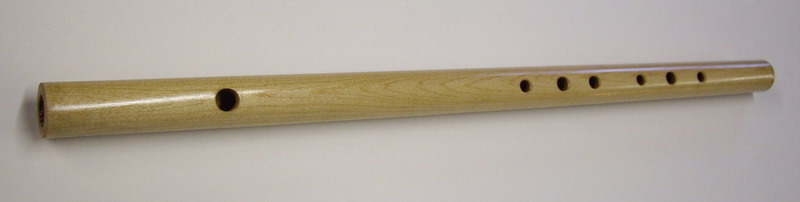
Because of a maple fife.

My mother did the hard work
chasing down county seats
tracing that Webb girl,
genes where you got a second toe
longer than your big one.
The shoe fits when you honor that toe.

My grandmother, widow of the warden
wanted the grid filled
back to the Webb House,
that bawdy tavern
Braintree’s seat of battle plans.
My mother did the bidding
of grandmother’s nagging, finding

Jabez Cleveland, a fifer
in the Connecticut 8th regiment
died, thirty-eight at Bunker Hill.
He played a simple six-hole flute
of infantry battle calls
wake ups, soldiers, marching tunes
over greens, through woods
in-the-reeds shepherds songs
legacy of wind in thigh bone.

His thick blood of revolution
cries in my veins
--and in yours--
this must end
and heats me up
too many flag-draped coffins
limb from limb
so much this earth has given

Keep the simple six-hole flute
at your fingertips, my girls,
your pulse a beating drum.

The Parting of Ways

I thought learning
of generals and simple bravery
powder horns and compasses
would help me know

Jabez and his flute
the stepping drum
his blood, mine
that of my girls

Then bowed gray heads
chins to chests with golden pins
ask God
to bless America
there the flute calls me elsewhere

My Jabez plays
a humpback whale song,
a mother’s shrill screams in Gaza
above a bloody baby cradled,
plays for soldiers on both sides
wanting home
for monarchs out of milkweed,
AIDS orphans --
an aching god does not single out
the few

or ignores adopted babies
Bangladesh, Korea,
China, the Ukraine --
their blood becomes
our dearest family blood
they too may
hear a Jabez and his fife

I tuck his tune inside
my breath of reed
and boiling breast
to change direction.


Tricia Knoll is a Portland, Oregon poet who is also a master gardener and a frequent writer of letters to the editor of The Oregonian. Recent poetry publications include RAIN Magazine, VoiceCatcher, Verseweaver, Muddy River Poetry Review, and Pirene's Fountain.

Wednesday, January 02, 2013

THE PERSISTENCE OF MEMORY

by Blaise Allen


For years, I thought not wearing a watch
would protect me from the passage
of time, refused to wear them, stayed
ignorant of passing hours and minutes.
After all, we have cell phones if we really need
to know. The sun rises when I wake to pee.
It sets at dinner time, depending on the season.
Sleep happens, never according to schedule.
It’s not my own life I fear rusting away in bits:
It’s the tarnish in my dad’s hair, the scars
from heart surgery on my mother’s body,
my younger sister’s wrinkles, and mid-life grays.
It’s the dog going blind. My husband’s painful
arthritis.  And, the certain knowing, that one of us
will leave before the other. Banish that thought:
along with watches, things that tock, and balls dropping
as we count down final seconds to the New Year.
It’s the fervent wish to outlaw every clock. To melt
all time-keepers in the desert as in Dali’s landscape.
To bend time to our liking, forgo the relative end   
 of our ticking.

Blaise Allen, Ph.D. lives in South Florida and is the Director of Community Outreach for the Palm Beach Poetry Festival.

Tuesday, January 01, 2013

AFTER

by Shirley J. Brewer


                 — Want to help Newtown? Donations, yes. Teddy bears, no.
                         West Hartford News, December 26, 2012


A thousand brand new toys
fill this Newtown warehouse
stuffed with grief from far away.

In a house of loss, parents hug
one old teddy bear—
the fur loved off its face.


Shirley J. Brewer (Baltimore, MD) is a poet, educator, and workshop facilitator. Her poetry has appeared in The Cortland Review, Comstock Review, Passager, New Verse News, Innisfree Poetry Journal, and other publications. Her poetry chapbook, A Little Breast Music, was published in 2008 by Passager Books. A second book of poems, After Words, is forthcoming in early 2013 from Apprentice House/Loyola University.